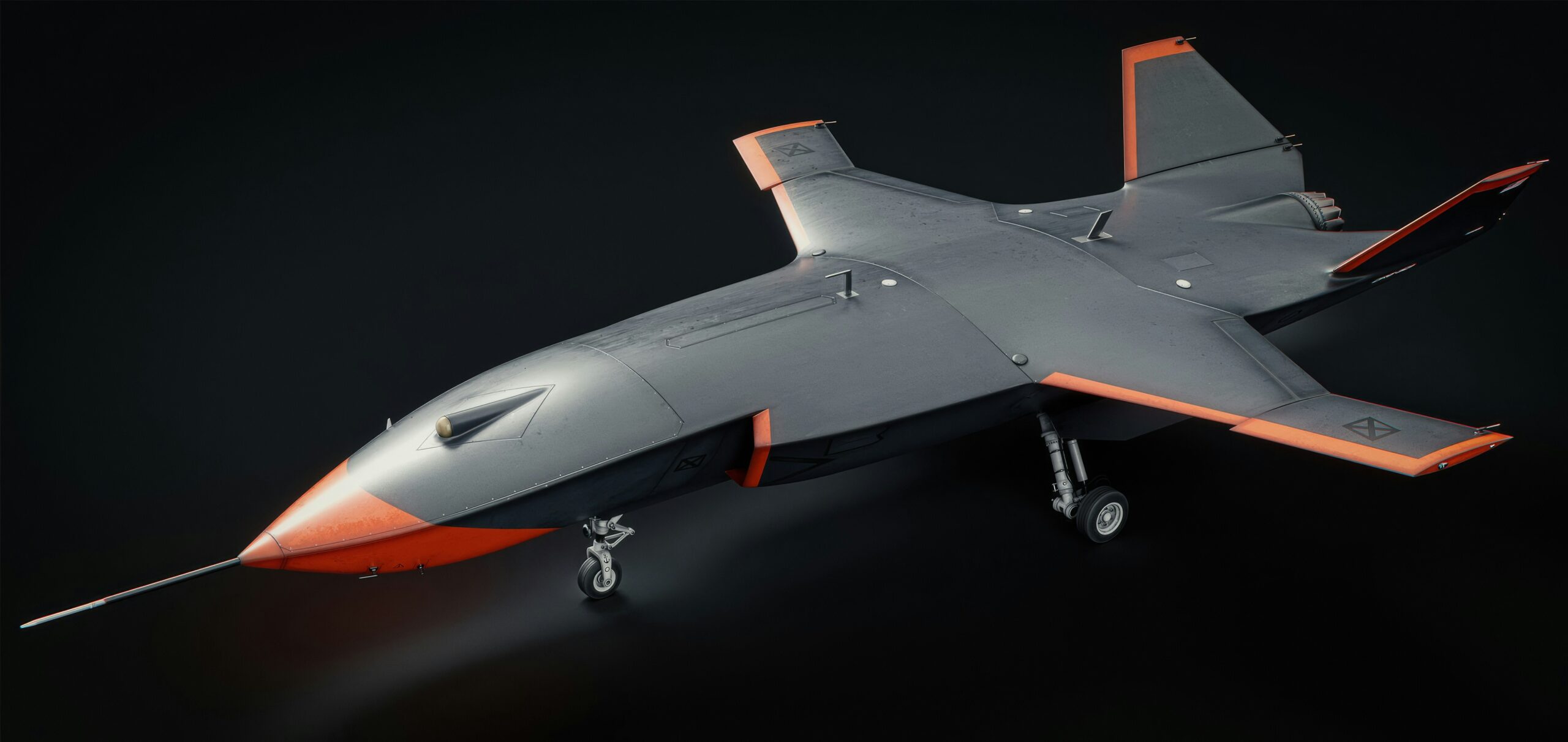
Russia is rapidly producing cheaper, smarter drones and missiles, creating a new challenge for Ukraine and the U.S. and exposing weaknesses in traditional air defense.
Focus Keyphrase: Russia cheap smart weapons
Secondary Keywords: Russia weapons production, Russian drones, Ukraine air defense, Russia military technology, drone warfare, cheap missiles, Ukraine war, NATO air defense, Russian defense industry
Russia Is Learning How to Build Smarter Weapons at Lower Cost
Russia is rapidly changing the economics of modern warfare.
New generations of Russian drones and missiles are combining relatively inexpensive components with increasingly sophisticated navigation, targeting and evasion capabilities. According to a recent Wall Street Journal report, Russian engineers are producing new weapons at a pace that is creating significant challenges for Ukraine and the United States.
The development represents an important shift in the war in Ukraine. Instead of relying exclusively on expensive, highly sophisticated weapons, Russia is increasingly emphasizing mass production, relatively low costs and rapid technological adaptation.
That combination could prove more important than having the most advanced individual weapon.
The New Russian Weapons Challenge
Among the systems highlighted in recent reporting are newer jet-powered weapons, including the Geran-5 drone and Banderol cruise missile.
These systems illustrate how the traditional distinction between drones and missiles is becoming increasingly blurred.
Modern unmanned weapons can incorporate:
- More advanced navigation
- Improved targeting
- Electronic-warfare resistance
- Higher speeds
- Longer ranges
- Autonomous or semi-autonomous capabilities
- Commercially available electronic components
Russia’s advantage is therefore not necessarily that every new weapon is revolutionary.
Instead, its defense industry has increasingly demonstrated an ability to modify existing designs, test them in combat and rapidly manufacture improved versions.
That creates a very different military innovation cycle from the traditional Western model, where developing and procuring a new weapons system can take years.
The Cost Problem for Ukraine and the West
One of the biggest strategic problems is the economics of interception.
A relatively inexpensive drone can force an opponent to use an extremely expensive missile to destroy it.
That creates an unfavorable equation for air-defense systems.
If Russia can launch large numbers of relatively cheap aerial weapons while Ukraine must use expensive interceptors against them, the attacker can potentially impose enormous costs on the defender.
This does not mean Russian weapons are unstoppable. Ukraine continues to intercept large numbers of incoming drones and missiles and has developed its own rapidly evolving drone industry.
But the financial mathematics of air defense have become increasingly important.
The war is becoming a contest not only between weapons systems but also between production capacity, engineering speed and cost per engagement.
China’s Role in Russia’s Military Production
Another important element is Russia’s access to Chinese components.
The Wall Street Journal reports that Russian weapons programs have benefited from widely available Chinese electronics and other dual-use technologies.
This highlights a broader challenge facing Western sanctions.
Modern weapons can contain thousands of components, and many technologies originally developed for civilian markets can potentially be incorporated into military systems.
The result is that sanctions can make procurement more difficult without necessarily eliminating access to every component required to build sophisticated weapons.
Russia has also demonstrated an ability to redesign systems around available parts.
That adaptability matters because modern warfare increasingly depends on electronics, sensors, communications, navigation systems and computing power.
Ukraine Faces a More Difficult Air-Defense Environment
Ukraine has already faced years of Russian missile and drone attacks.
The newest generation of weapons could make the problem more complicated.
Russian attacks can combine different types of systems, forcing Ukrainian air defenses to respond to multiple threats simultaneously.
This creates a saturation problem.
Even highly effective air defenses can become vulnerable when large numbers of targets arrive from different directions and at different speeds.
Russia’s broader missile and drone campaign has also evolved geographically and operationally during the war, according to analysis from the Center for Strategic and International Studies.
The objective is therefore not simply to build a weapon capable of penetrating defenses.
It can also be to create so many simultaneous threats that defensive systems become overwhelmed.
Ukraine Is Innovating Too
Russia’s progress should not be interpreted as Ukraine simply falling behind.
Ukraine has become one of the world’s most important centers of military drone innovation.
Ukrainian companies and military units have developed increasingly sophisticated unmanned systems, while the country is also moving toward AI-assisted weapons technology. Recent reporting indicates that Ukrainian developers are working on integrating AI into strike missiles as well as drones.
Ukraine’s advantage has often been its ability to rapidly adapt commercial technology to battlefield requirements.
The competition is therefore becoming a technological race between two countries that are learning directly from combat.
That creates a feedback loop:
battlefield experience → new technology → testing → modification → mass production → battlefield deployment.
The side capable of completing that cycle fastest can gain an important advantage.
The U.S. and NATO Face a Different Problem
The implications extend well beyond Ukraine.
For the United States and NATO, the issue is whether existing military procurement systems can respond quickly enough to an era of inexpensive autonomous weapons.
Western militaries have traditionally invested heavily in sophisticated platforms and precision weapons.
Those systems remain extremely valuable.
But a future conflict could involve millions of comparatively inexpensive drones, decoys and missiles.
That raises a fundamental question:
Should a $1 million defensive missile be used against a much cheaper attacking drone?
The answer cannot always be yes.
NATO has already recognized the growing importance of counter-drone capabilities and has committed substantial resources to the problem. The alliance has pledged more than $40 billion toward counter-drone efforts, according to the WSJ report.
The next generation of air defense will therefore likely require a mixture of technologies rather than relying primarily on traditional missile interceptors.
The Rise of Low-Cost Air Warfare
The Ukraine war is demonstrating that future conflicts may be fought by enormous numbers of relatively inexpensive autonomous systems.
This changes military strategy.
Instead of asking only:
How powerful is the weapon?
Military planners increasingly need to ask:
- How much does it cost?
- How quickly can it be produced?
- How many can be deployed?
- Can the weapon operate without satellite navigation?
- Can it resist electronic warfare?
- Can the design be modified quickly?
- How expensive is it to intercept?
The answers could determine the outcome of future conflicts.
A technologically sophisticated weapon that takes five years to produce may be less strategically useful than a slightly less capable system that can be manufactured by the thousands.
A Warning for Western Defense Industries
Russia’s rapid weapons development also presents a warning for the United States and European countries.
The traditional defense industry is built around large contracts, complex platforms and lengthy development cycles.
The drone revolution is pushing the industry in the opposite direction.
Military forces increasingly need:
speed + scale + low cost + adaptability.
This could accelerate investment in smaller defense companies, autonomous systems, artificial intelligence, robotics, electronic warfare and low-cost interceptors.
The future defense industry may look less like the traditional market for fighter jets and tanks and more like a combination of aerospace, software, semiconductor and manufacturing industries.
What Russia’s Weapons Production Means for the Future
Russia’s growing ability to produce relatively inexpensive but increasingly sophisticated weapons does not guarantee victory in Ukraine.
Russia still faces technological, economic and military constraints, while Ukraine continues to innovate and receive substantial Western support.
But the shift is strategically significant.
The war is demonstrating that mass production can be as important as technological sophistication.
Russia’s ability to combine combat experience, commercial electronics, engineering adaptations and industrial production is creating a new challenge for Ukraine.
And the lesson extends to Washington, Brussels and other Western capitals.
The next major military advantage may not come from the country that builds the most sophisticated weapon.
It may come from the country that can build good-enough weapons faster, cheaper and in vastly larger numbers.
Why This Matters for Global Security
The Russian experience is likely to influence military planning for decades.
Ukraine has become a laboratory for modern warfare, while Russia has demonstrated how rapidly a large defense industry can adapt under wartime pressure. Ukraine is simultaneously developing its own advanced drone and AI capabilities.
For NATO, the strategic challenge is clear: future air defenses must be capable of defeating large numbers of inexpensive weapons without exhausting extremely expensive interceptors.
For investors and the broader global economy, this could also accelerate spending on drones, artificial intelligence, robotics, sensors, semiconductors, electronic warfare and defense manufacturing.
The Ukraine war is therefore becoming more than a conflict over territory.
It is also a competition over industrial capacity and the future economics of warfare.
Frequently Asked Questions
Why are Russia’s new weapons important?
They combine relatively low production costs with increasingly sophisticated navigation, targeting and evasion technologies, potentially allowing Russia to deploy large numbers of weapons.
What is the biggest challenge for Ukraine?
Ukraine must defend against increasingly complex and numerous drone and missile attacks while managing limited and expensive air-defense resources.
Is Ukraine also developing advanced weapons?
Yes. Ukraine has become a major center for drone innovation and is increasingly exploring AI-assisted drones, missiles and other autonomous systems.
Why are cheap weapons strategically important?
A low-cost attacking weapon can create a major financial burden if the defender must use an expensive interceptor to destroy it.
What does this mean for NATO?
NATO countries may need to expand investment in low-cost interceptors, counter-drone systems, electronic warfare, autonomous weapons and high-volume defense manufacturing.
Sources & Further Reading
- The Wall Street Journal — Russia Is Churning Out Smart, Cheap New Weapons Faster Than Ukraine or the U.S.
- CSIS — The Geography of Coercion: Russian Missile and Drone Campaigns in Ukraine
Disclosure: This article is an independent news analysis based on publicly reported information and does not represent the views of any government, military organization or defense contractor.




0 Comments