
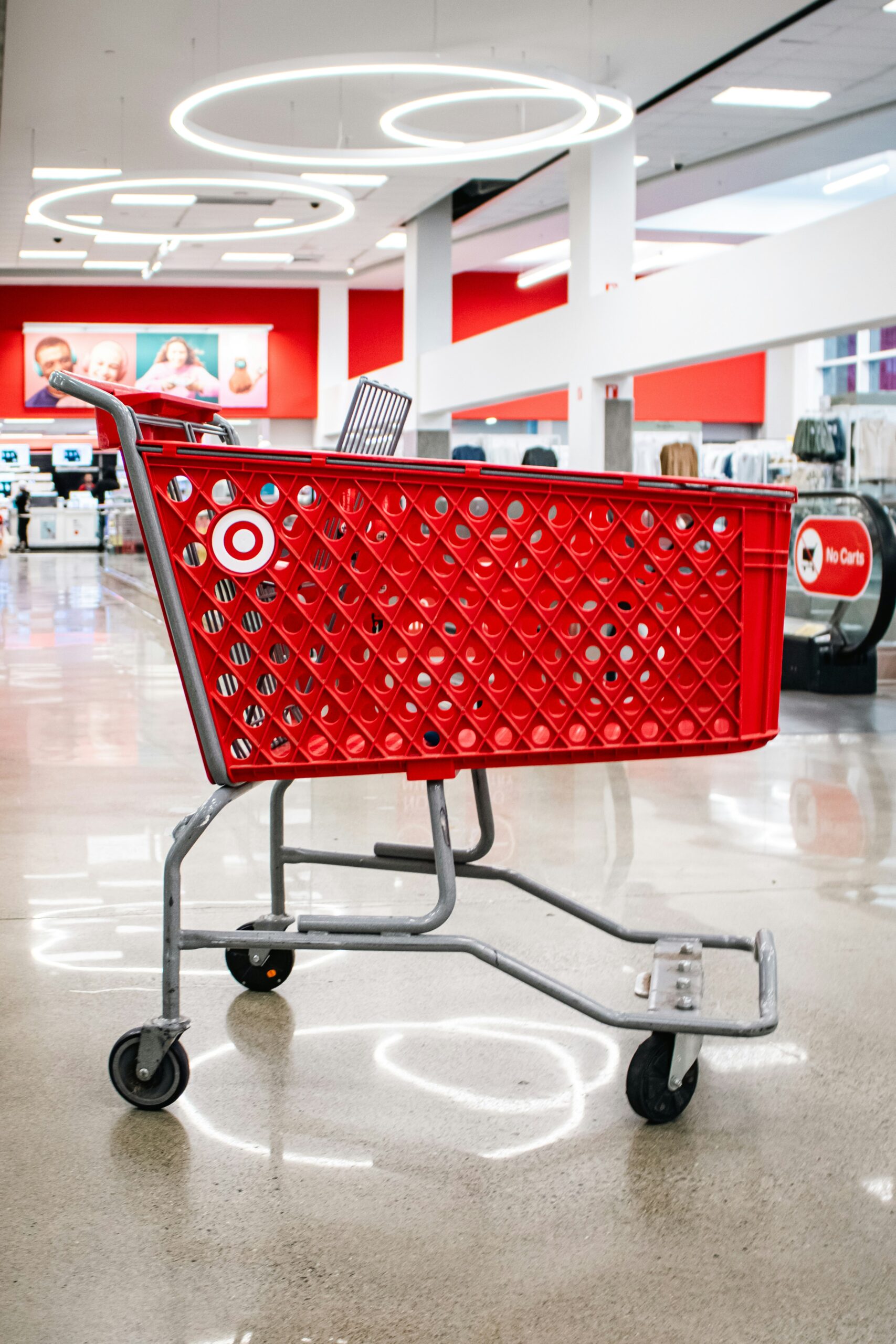
U.S. malls are making a surprising comeback as property values rise, consumer spending remains resilient and investors return to retail real estate.
Focus Keyphrase: malls commercial real estate
For years, the American shopping mall appeared to be one of the biggest casualties of the digital economy.
The rise of Amazon and online shopping, department-store closures, changing consumer habits and the COVID-19 pandemic created a powerful narrative: the traditional enclosed mall was becoming obsolete.
But commercial real estate is delivering an unexpected reversal.
U.S. malls are now outperforming every other major commercial-property category.
According to data cited by The Wall Street Journal from real-estate analytics firm Green Street, mall property values increased 13% over the past year, making malls the strongest-performing sector among 10 major commercial real-estate categories. The increase is more than twice the gain recorded across commercial real estate overall.
The transformation does not mean every shopping mall is suddenly healthy. Instead, it reveals something more important: the best malls have reinvented themselves.
📈 Why Are Malls Suddenly Performing So Well?
Several factors are contributing to the mall recovery.
First, consumer spending has remained relatively resilient. Americans are still spending money on experiences, restaurants, entertainment, luxury products and other categories that are difficult to replicate through online shopping.
Second, there has been relatively little new mall construction.
That scarcity matters.
When there is limited new retail space, landlords of high-quality shopping centers can have greater pricing power. Retailers competing for desirable locations may be willing to pay higher rents for properties with strong customer traffic and attractive demographics.
Third, retailers themselves have changed their strategies.
Rather than treating physical stores as competitors to e-commerce, many brands increasingly view stores as part of a broader customer experience.
That has created an opportunity for mall operators.
🛍️ The New Mall Is More Than a Shopping Center
The traditional mall model depended heavily on department stores and conventional retail chains.
That model has become increasingly vulnerable.
The newer model is much more diversified.
Successful malls are adding:
- Luxury retailers
- Restaurants
- Entertainment venues
- Fitness concepts
- Beauty and wellness businesses
- Experiential attractions
- Social spaces
- Popular food destinations
The objective is simple: give consumers a reason to physically visit.
A customer can order a basic product online in seconds. But eating at a popular restaurant, meeting friends, watching a movie, visiting an entertainment attraction or shopping for luxury goods remains an inherently physical experience.
That distinction may be helping malls regain relevance.
🏢 Investors Are Rethinking Retail Real Estate
The mall revival is also happening against a difficult backdrop for other parts of commercial real estate.
Office properties remain under pressure from hybrid and remote work. Multifamily properties have experienced different challenges, including supply increases in some markets.
That makes high-quality retail properties increasingly attractive by comparison.
Investors aren't necessarily betting that every mall will succeed.
Instead, capital is increasingly flowing toward high-quality assets with strong locations, strong tenants and strong consumer demand.
This is an important distinction.
The mall comeback is not necessarily a return to the 1980s or 1990s shopping model. It is a restructuring of retail real estate around fewer, stronger destinations.
🏙️ Simon Property Group Benefits From the Trend
One of the clearest signs of renewed investor confidence is the performance of major mall owners.
Simon Property Group, the largest U.S. mall owner, has seen its shares reach record levels, reflecting stronger investor expectations for the sector.
The story is particularly notable because mall operators were once viewed as some of the biggest losers from the rise of e-commerce.
Today, investors are increasingly asking a different question:
What if the strongest physical retail properties are not obsolete—but scarce?
That is a very different investment thesis.
🔄 From Retail Apocalypse to Retail Repricing
The mall story illustrates a broader lesson about commercial real estate.
Markets sometimes move from one extreme to another.
For years, investors worried about a so-called "retail apocalypse." Department stores closed locations, retailers entered bankruptcy and mall owners struggled with vacancies.
But the destruction of weaker retail space also reduced competition.
As weaker properties disappeared, the strongest shopping centers gained greater importance.
The result can be described as a flight to quality.
Retailers want fewer stores in better locations.
Consumers increasingly want better experiences.
Investors want properties with reliable tenants and limited competing supply.
Those three trends can reinforce each other.
🇨🇦 Canada's Shopping-Centre Market Shows a Similar Pattern
The mall recovery is not exclusively an American story.
Canadian retail real estate has also shown strong fundamentals.
CBRE reported in September that Canadian retail properties performed well during the first half of 2026, with particularly strong conditions in suburban markets. Vacancy remained tight in important retail formats, while demand increased for service-oriented businesses such as medical, fitness, personal services and quick-service restaurants.
Toronto's leading shopping centres have also demonstrated strong sales performance.
Oxford Properties reported that Yorkdale Shopping Centre, Square One and Scarborough Town Centre all recorded significant sales growth, with Yorkdale reaching record sales productivity in 2025.
This suggests that the underlying trend is broader than a simple U.S. mall revival.
Well-located shopping centres are becoming increasingly valuable retail infrastructure.
👥 Younger Consumers Aren't Abandoning Malls
Perhaps one of the most surprising aspects of the mall comeback is the role of younger consumers.
Gen Z shoppers have increasingly returned to shopping centres—not necessarily because they reject online shopping, but because malls provide something online platforms cannot fully reproduce: a physical social experience.
Shopping can become an activity rather than simply a transaction.
Young consumers can browse stores, meet friends, eat, take photos and create social-media content.
That gives malls another potential advantage in the age of TikTok and Instagram.
The irony is striking.
Social media helped accelerate the shift toward digital commerce, but it can also help drive people back into physical retail spaces.
⚠️ Not Every Mall Is Going to Survive
The mall revival should not be interpreted as the end of retail's problems.
There remains a significant divide between premium shopping centres and weaker properties.
A prime mall in a wealthy metropolitan area with strong transportation access, luxury retailers, restaurants and entertainment can have a very different economic outlook from an aging regional mall with vacant department stores.
The contrast can be dramatic.
San Francisco Centre, for example, remains a major warning sign. The former shopping destination has struggled with extremely high vacancy despite broader signs of economic recovery in San Francisco.
That suggests the future of malls will remain highly selective.
Some properties may continue operating as traditional retail centres.
Others could be redeveloped into mixed-use projects containing housing, offices, hotels, entertainment and other uses.
In some cases, the underlying land may ultimately be more valuable than the existing mall.
💡 The Real Estate Lesson: Location Still Matters
The mall comeback reinforces one of the oldest principles in real estate:
Location matters.
Online shopping may have changed retail, but it has not eliminated the value of physical locations.
A high-quality mall can provide retailers with:
- Millions of potential customer visits
- Strong surrounding demographics
- Brand visibility
- Premium storefront locations
- Restaurants and entertainment
- Public transportation connections
- A destination-shopping experience
The internet changed how people shop.
It did not eliminate the physical world.
🌎 What the Mall Comeback Means for the Global Economy
The resurgence of malls also offers a broader economic signal.
Retail properties are closely connected to consumer confidence, employment, household income and spending patterns.
When retailers expand and landlords increase rents, it can indicate that businesses expect consumers to keep spending.
At the same time, the trend highlights the growing importance of experiences.
Consumers increasingly spend money not simply on products but on places, entertainment, food, travel and social experiences.
That shift could influence urban development far beyond traditional malls.
Shopping centres may increasingly resemble entertainment districts, mixed-use communities and tourism destinations.
🔮 The Future of the Mall
The next generation of malls is unlikely to look exactly like the malls of the past.
The weakest properties may disappear.
Some will be converted into mixed-use developments.
Others will become entertainment destinations.
The strongest properties, meanwhile, could become increasingly valuable precisely because there are fewer comparable locations available.
That creates an unusual reversal.
The decline of the traditional mall may ultimately make the best malls more valuable.
After years of being written off as outdated real estate, shopping centres are once again attracting investors, retailers and consumers.
The American mall is not necessarily making a comeback by returning to its past.
It is making a comeback by becoming something different.
🏬 The Bottom Line
The mall's revival is one of the most unexpected stories in commercial real estate in 2026.
Property values are rising, consumer spending remains resilient and retailers are increasingly concentrating their physical presence in high-quality locations.
But the recovery is unlikely to benefit every mall equally.
The future belongs to shopping centres that can offer what the internet cannot easily reproduce: experience, entertainment, social interaction, luxury, dining and a compelling physical destination.
For investors and real-estate developers, that could make the mall one of the most interesting commercial-property stories of the next decade.
For consumers, it may mean something even simpler:
The mall isn't dead. It is being reinvented.
🔎 Frequently Asked Questions
Are malls making a comeback in 2026?
Yes. U.S. mall property values have recently outperformed other major commercial-real-estate categories, with Green Street data showing a 13% increase over the past year.
Why are malls performing better?
Resilient consumer spending, limited new mall construction, stronger occupancy and the addition of luxury retail, restaurants and entertainment are supporting leading properties.
Are all shopping malls recovering?
No. The market is highly polarized. Prime malls are performing much better than weaker properties with vacancies, outdated layouts or unfavorable locations.
Why are retailers returning to physical stores?
Physical stores provide brand visibility, customer experiences and opportunities to combine shopping with dining and entertainment.
What is the future of shopping malls?
The strongest malls are likely to become increasingly experiential, combining retail with restaurants, entertainment, services and potentially mixed-use development.
Sources & Further Reading
- The Wall Street Journal — Malls Were Left for Dead. Now They Are the Top Performer in Commercial Real Estate
- CBRE Canada — Canadian Retail Properties Perform Well in the First Half of 2026
- Oxford Properties — GTA Shopping Centres Achieve Record-Breaking Sales in 2025
Disclaimer: This article is for informational purposes only and does not constitute financial, investment or real-estate investment advice.



0 Comments