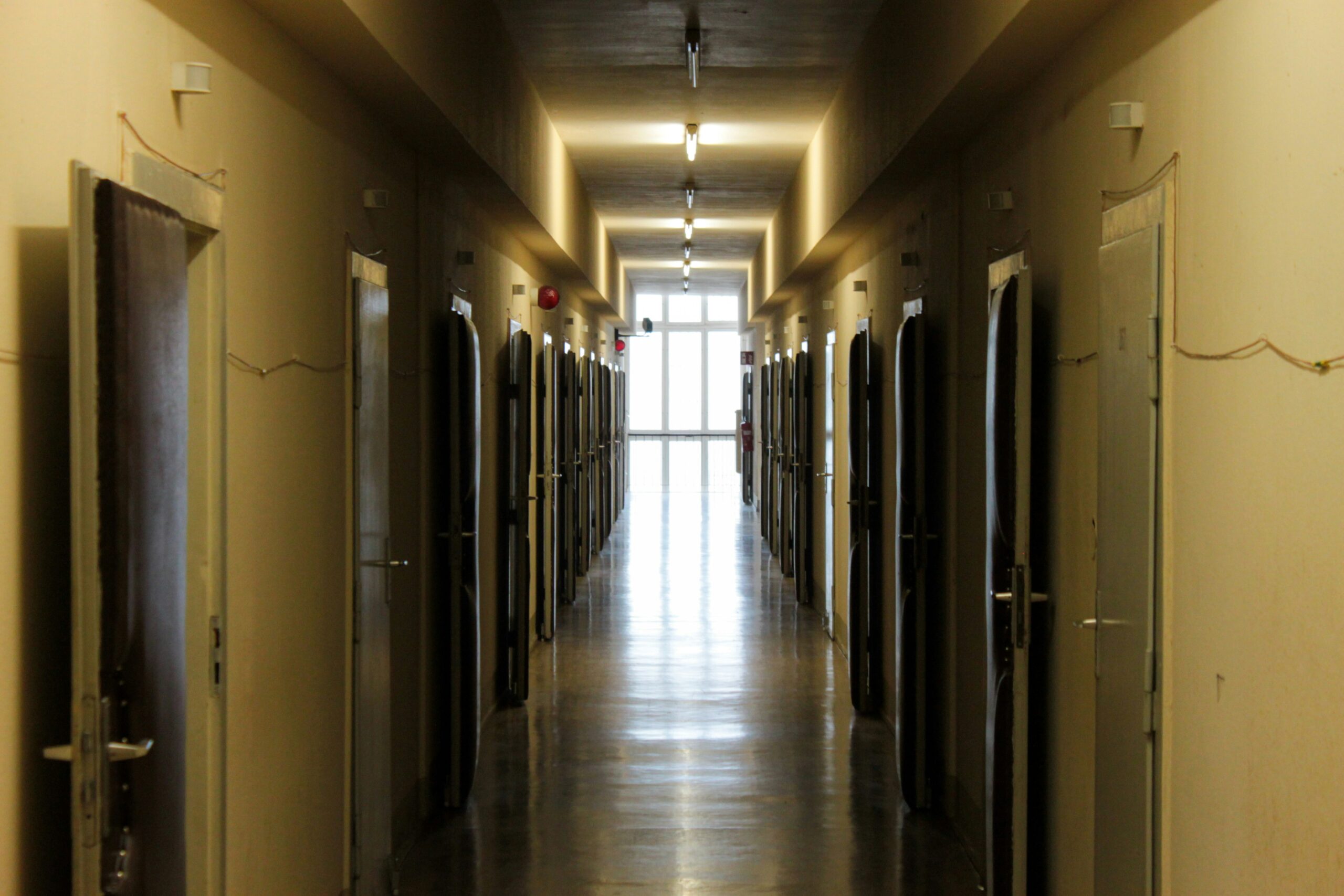
Private security spending is rising despite falling U.S. crime rates. Allied Universal is at the center of a growing security industry driven by fear, risk and high-profile attacks.
Private Security Spending Surges as Crime Fears Reshape Corporate America
Private security spending is becoming a major business trend in the United States, even as official crime statistics point to a very different reality.
Violent crime has declined substantially over the longer term, yet businesses, institutions and other organizations are spending heavily on guards, surveillance and other security services. The result is a rapidly expanding private security industry in which companies are increasingly paying for protection against risks that may be difficult to quantify but are increasingly difficult to ignore.
At the center of this transformation is Allied Universal, one of the world’s largest private security companies.
According to CNBC reporting, nearly 1.3 million Americans worked as security guards in May 2025, representing a 16% increase from 2016. The broader global private security market also generated more than $50 billion in revenue in 2025, highlighting the scale of the industry. Allied Universal alone reports approximately $23 billion in revenue and a workforce of around 800,000 people.
The numbers illustrate a powerful contradiction: crime does not necessarily have to increase for spending on security to increase.
Instead, perceptions of risk, high-profile attacks, political tensions, property crime concerns and the desire to protect employees and customers are creating a new market for private security.
Private Security Is Becoming a Major Business
For decades, security guards were primarily associated with shopping malls, banks, office buildings, hospitals, factories and large events.
That role has expanded.
Private security companies now operate across airports, transportation systems, universities, residential communities, technology campuses, government facilities, retail locations and major sporting or cultural events.
Companies are also increasingly combining traditional guards with technology such as video surveillance, access-control systems, alarms, remote monitoring and artificial intelligence.
The transformation is turning private security from a relatively straightforward labor business into a broader risk-management industry.
Market research indicates that global demand for private security services is expected to continue growing, with heightened concerns about personal safety, property protection and evolving security threats supporting additional investment.
That creates an enormous commercial opportunity for companies such as Allied Universal.
Allied Universal Sits at the Center of the Security Boom
Allied Universal has become one of the most important players in the global security industry.
The company has expanded dramatically through acquisitions and now operates on a scale that puts it in a unique position to benefit from rising corporate and institutional security budgets.
Its business is no longer simply about putting guards at doors.
The modern private security model increasingly involves a combination of personnel, technology, surveillance, risk assessment and emergency response.
That evolution matters because customers are not necessarily buying security guards alone. They are buying a broader promise: reduce risk, respond quickly and create a safer environment.
Allied Universal’s own materials emphasize the changing role of the modern security officer and the increasing integration of technology into security operations.
The company’s size also demonstrates how much private security has grown beyond a niche service.
With hundreds of thousands of employees and billions of dollars in revenue, Allied Universal is effectively part of the infrastructure supporting corporate and institutional security across multiple countries.
Why Are Companies Spending More if Crime Is Falling?
This is perhaps the most important question surrounding the private security boom.
The answer is that crime statistics and perceptions of risk are not the same thing.
A national crime rate can decline while businesses continue to worry about individual incidents.
A highly publicized shooting, robbery, attack on a transportation system or violent confrontation can change the way executives assess risk even if the broader statistical trend is improving.
The psychological impact of individual events can be enormous.
Businesses are also responsible for protecting employees, customers and physical assets. For corporate executives, the cost of additional security may be viewed as an insurance expense rather than a prediction that crime will rise.
In other words, companies may be paying for security because they cannot afford to be unprepared.
That distinction is critical to understanding the current market.
Fear Has Become an Economic Force
The growth of private security demonstrates how fear can influence economic behavior.
People do not necessarily need to believe that their probability of becoming a victim has increased dramatically. They only need to believe that the consequences of being unprepared are potentially enormous.
This is especially true for large companies.
A major security failure can produce lawsuits, reputational damage, employee concerns, operational disruptions and financial losses.
For many executives, hiring security personnel is therefore relatively inexpensive compared with the potential cost of a serious incident.
The result is a form of corporate risk management in which companies spend money to reduce uncertainty.
This helps explain why private security can grow even during periods when broader crime statistics improve.
The Rise of the Private Security Guard
The expanding industry is also changing the American labor market.
CNBC reported that nearly 1.3 million Americans were working as security guards in May 2025, up 16% from 2016.
That makes security work an important part of the U.S. service economy.
But the growth also raises questions about wages, training, working conditions and responsibilities.
Security officers increasingly operate in environments where they may encounter violent or unpredictable situations. In some jurisdictions and contracts, guards may also be expected to perform functions that once would have been associated more closely with traditional law enforcement.
That creates an important policy debate:
How much responsibility should private security companies have for public safety?
California Shows the Debate Over Private Security
California provides an example of the growing tension surrounding the industry.
Lawmakers have considered legislation involving security guard training, labor conditions and use-of-force requirements. Industry representatives have warned that additional requirements could substantially increase operating costs.
California has an estimated 330,000 private security personnel, according to reporting from CalMatters. Businesses and local governments have increasingly used private security to address concerns including retail crime and property protection.
The debate demonstrates that private security is no longer simply a commercial matter.
It has become a labor issue, a public-safety issue and a political issue.
Companies want affordable security.
Workers want better compensation and training.
Governments want safer communities.
And consumers increasingly expect businesses to protect them when they enter stores, transportation systems, hospitals, campuses and other public-facing facilities.
Private Security and Public Police Are Becoming Interconnected
Another major development is the growing relationship between private security and traditional law enforcement.
Private guards cannot simply replace police departments. Their authority, training and responsibilities are different.
But private security can supplement public agencies by providing personnel for locations that require continuous monitoring.
Transit systems are one example.
In Portland, TriMet announced plans in 2026 to reduce the number of private security officers contracted through Allied Universal as more transit police became available, illustrating how governments can adjust the balance between private security and public law enforcement depending on budgets and staffing.
New York’s Metropolitan Transportation Authority has also faced scrutiny over its use of private security contracts, demonstrating that government spending on private guards can become politically controversial.
The central question is not necessarily whether private security is good or bad.
It is how private and public security should work together.
Technology Could Change the Industry Again
The next stage of the private security boom may be less dependent on simply hiring more people.
Artificial intelligence, cameras, sensors, access-control systems and remote monitoring are increasingly being incorporated into security operations.
That could allow a smaller number of security officers to monitor much larger areas.
Instead of a guard physically standing at every entrance, companies can increasingly combine human personnel with technology that identifies suspicious activity, monitors restricted areas and alerts operators to potential threats.
The economic implications are significant.
Private security companies could potentially generate more revenue while improving productivity through technology.
But automation also creates concerns about employment.
If surveillance technology becomes substantially cheaper and more effective, companies may eventually decide that they need fewer guards for certain tasks.
That tension between labor and technology is likely to become one of the industry’s biggest challenges.
The Hidden Cost of Security Spending
The rapid growth of private security also raises another question: who ultimately pays?
Businesses rarely absorb all additional operating costs indefinitely.
Higher security expenses can eventually influence rents, transportation prices, retail prices, event ticket prices or service fees.
A shopping center that spends more on guards, cameras and monitoring may eventually incorporate those costs into rents paid by retailers.
Retailers may then incorporate their operating expenses into product prices.
The same principle applies across airports, office buildings, residential developments and major events.
Security may be necessary, but it is not free.
The Security Industry’s Paradox
The most striking feature of today’s security economy is its paradox.
Crime can fall while security spending rises.
That is not necessarily contradictory.
Crime statistics measure incidents.
Security spending measures perceived risk, potential consequences and willingness to pay for protection.
Those are different economic variables.
A business does not need to believe that a serious attack is likely. It only needs to believe that the consequences of being unprepared are unacceptable.
This creates a powerful market.
And as long as businesses, governments and consumers remain concerned about safety, private security companies will have an incentive to expand.
What Comes Next for Allied Universal and Private Security?
The long-term outlook for private security appears increasingly tied to three forces: risk perception, technology and labor costs.
Allied Universal is positioned at the intersection of all three.
Its enormous workforce gives it scale, while the broader industry is moving toward integrated security systems that combine personnel with technology.
At the same time, labor shortages, wage pressures and regulatory requirements could increase costs.
The industry’s future may therefore depend on finding the right balance between human security officers and increasingly sophisticated technology.
For customers, the appeal is obvious: more protection and potentially faster responses.
For workers, however, the transformation could produce both opportunities and threats.
There will likely be continued demand for highly trained security professionals, while routine monitoring functions become increasingly automated.
Private Security Is Becoming Part of America’s Economic Infrastructure
The rise of private security is about more than crime.
It reflects a broader transformation in how American businesses think about risk.
Corporations increasingly operate in an environment where reputational damage can spread instantly, employees expect safer workplaces, customers demand protection and a single high-profile incident can generate enormous financial consequences.
That makes security spending increasingly difficult for businesses to treat as optional.
Allied Universal’s growth is therefore a useful window into a much larger economic trend.
The United States may be experiencing lower crime in many categories, but businesses are still willing to spend billions to make sure they are prepared for the incidents that do occur.
The result is an expanding private security economy built around a simple proposition:
Companies may not be able to eliminate risk, but they are increasingly willing to pay to manage it.
And that could make private security one of the most important — and controversial — growth industries in America’s evolving public-safety economy.
Source: https://www.cnbc.com/2026/09/04/private-security-spending-crime-allied-universal.html




0 Comments