
FAA Flight Halt: What Travelers Need to Know
A temporary FAA ground stop can ripple across U.S. airports. Here’s what the reported halt means for departures, delays, and your travel plans.

U.S. air travel disruption
Why the FAA Stopped Flights Temporarily
The Federal Aviation Administration temporarily halted departures across the United States after an air-traffic-control system issue disrupted the information pilots need before takeoff. The affected system distributes notices about hazards, runway conditions, and other operational changes. Holding departures gave officials time to assess the problem and restore reliable information before flights resumed.
A ground stop generally keeps affected flights from taking off; it does not automatically require aircraft already in the air to land. Even after the FAA lifts a stop, delays can continue as airlines reposition planes and crews and airports work through backed-up departures. Travelers should check their airline’s app and airport updates, confirm their flight’s status before leaving, and ask the carrier about rebooking if a connection is at risk.
The all-clear ends the stop, not necessarily the delays.
From FAA Order to Resumed Departures
The FAA coordinates the restriction with air traffic control; airlines and airports then adjust schedules and operations until departures are cleared.
01
The FAA Issues the Stop
FAA traffic managers identify a safety or operational concern, set the affected area and timing, and tell controllers which departures must wait.
02
Airlines and Airports Hold Flights
Controllers keep affected aircraft on the ground while airlines update crews and passengers, revise connections, and coordinate gate and runway use with airports.
03
Flights Resume in Sequence
Once the FAA lifts the restriction, controllers release departures at a manageable pace; airlines continue adjusting schedules as the backlog clears.
When flights stop nationwide
What a flight halt means for your travel plans
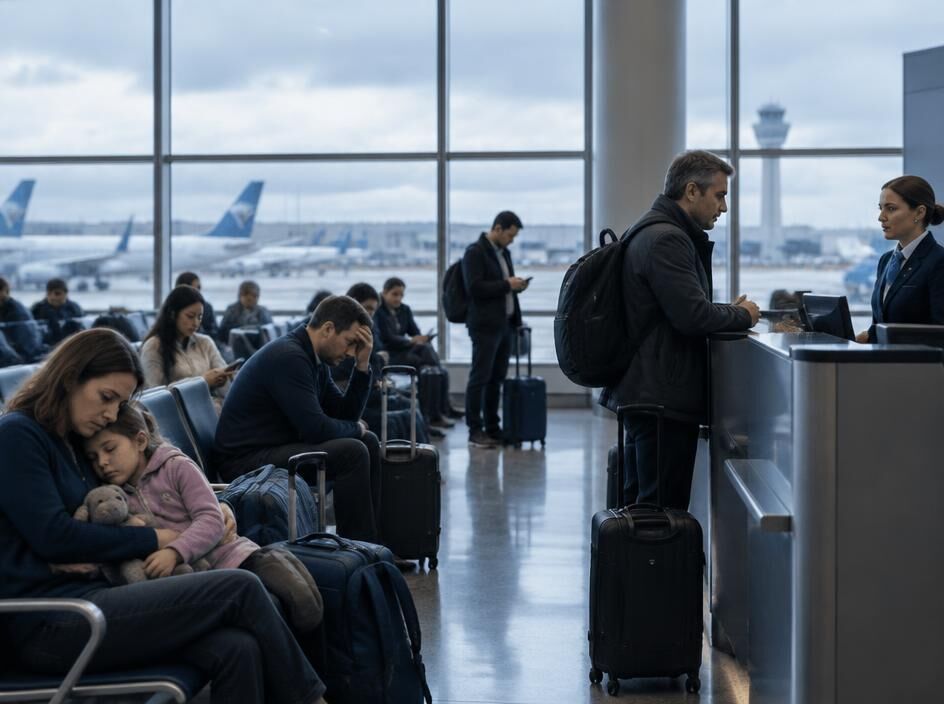
A nationwide FAA ground stop can prevent affected flights from taking off while officials assess the issue, but it does not necessarily mean every plane already in the air must land. For passengers, even a brief halt can create hours of disruption: aircraft and crews arrive late, departure queues build, and tight connections become difficult to make. Some flights may eventually be canceled if schedules cannot recover. Check your flight’s status and connecting itinerary directly with your airline rather than assuming a resumed departure means your trip is back on track. If a connection is at risk, look for alternative flights early, confirm whether checked bags will follow your new routing, and keep receipts for necessary expenses. Rebooking options and reimbursement depend on the airline, the cause of the disruption, and the rules that apply to your ticket.
What to do during a flight disruption
- Check FAA advisories for the scope of the ground stop
- Refresh your airline’s app for flight-specific status
- Verify departure times before leaving for the airport
- Sign up for airline text and email alerts
- Review your connecting flight and arrival plans
- Confirm updates through official sources, not rumors
- Contact the airline through its app, website, or phone line
- Ask about the next available flight to your destination
- Explore nearby airports if your plans are flexible
- Check whether a change-fee waiver applies
- Request confirmation of any revised itinerary
- Ask how rerouting will affect checked baggage
- Save screenshots of delays and cancellation notices
- Keep receipts for meals, hotels, and local transport
- Review airline policies before paying for alternatives
- Notify hotels or tour operators about late arrivals
- Check travel insurance and card benefits for coverage
- Allow extra time for security and crowded service desks
Flight ground stop questions, answered
Ground stops can change quickly. These answers explain common travel implications while pointing you toward the sources best placed to confirm your specific options.
What is an FAA ground stop?
An FAA ground stop is a temporary instruction that prevents specified flights from departing. Its reach can vary by airport, region, or affected flights; it does not automatically mean every flight already airborne is grounded.
Will my flight be canceled after a ground stop ends?
Not necessarily. Some flights depart once restrictions lift, while others face longer delays or cancellation because aircraft, crews, or airport capacity are out of position. Your airline’s flight-status page is the best source for your itinerary.
What should I do if I miss a connecting flight?
Check the airline’s app for an automatic rebooking, then contact the carrier if no workable option appears. Ask about available seats, alternate routes, and checked-bag handling before accepting a new itinerary.
Am I entitled to a refund if my flight is canceled?
For flights covered by U.S. Department of Transportation rules, a canceled flight generally qualifies for a refund if you choose not to travel or accept a replacement flight. The applicable rules and ticket details matter, so review the DOT guidance and your airline’s notice.
Will the airline pay for meals or a hotel?
Assistance varies by carrier and by the reason for the disruption. An FAA-related event may be outside an airline’s control. Ask the airline what it will provide, check its customer-service commitments, and keep receipts for any expenses you incur.
Where can I find reliable ground stop updates?
Use FAA advisories for information about air-traffic restrictions and your airline’s official app, website, or notifications for your flight’s status. The U.S. Department of Transportation provides passenger-rights guidance; treat unverified social posts with caution.
“When the FAA pauses flights, the priority is to verify that the system can operate safely before aircraft return to the skies. Travelers may face delays, but caution comes first.”
Make Sense of the Headlines Beyond the Delay
Follow Albert Report for clear, thoughtful coverage of travel disruptions and the major world affairs shaping what happens next.




0 Comments