
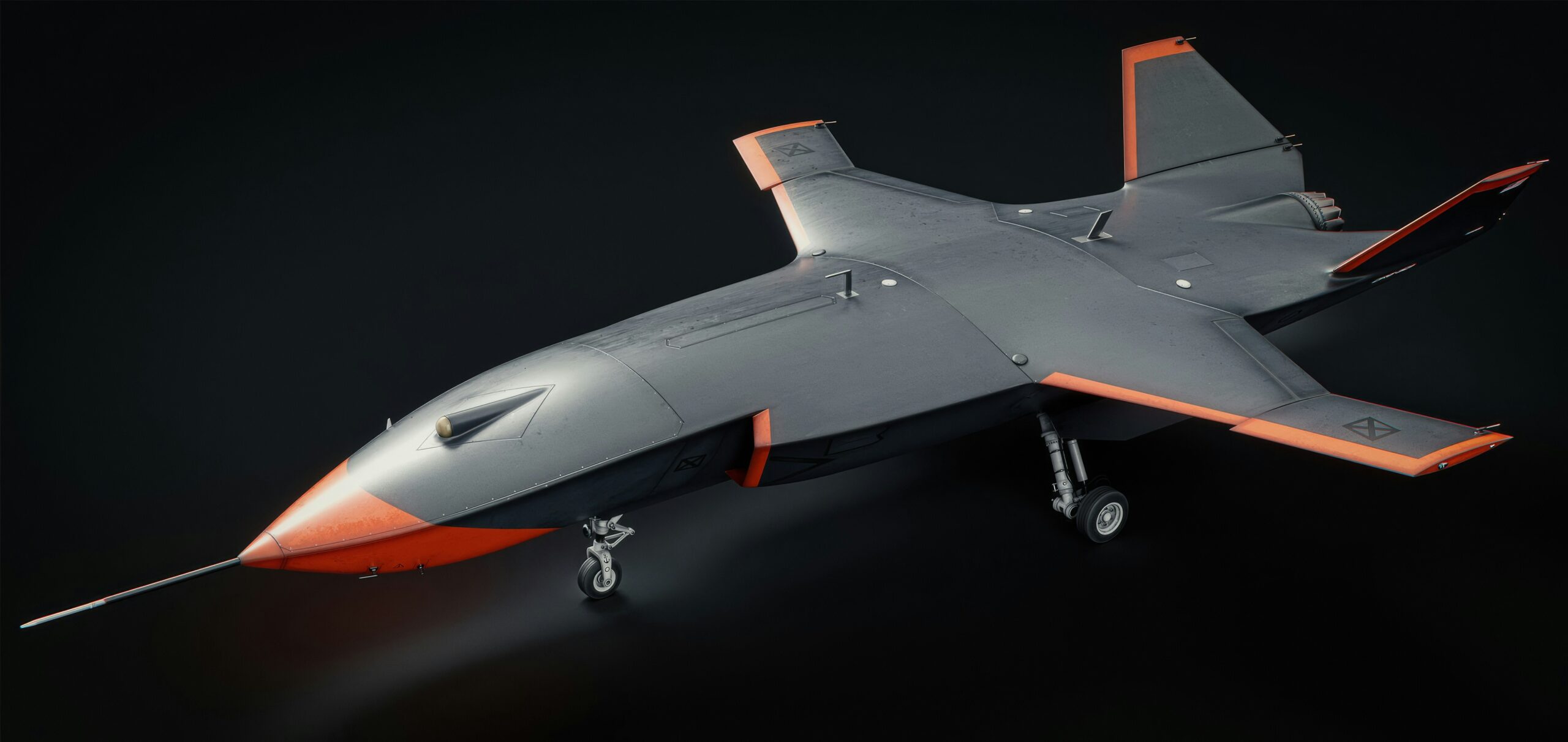
Ukraine’s counteroffensive around Lyman in the Donbas is using drones and ground robots to challenge Russia’s military strategy and Putin’s territorial ambitions.
Ukraine’s New Counteroffensive Changes the Battlefield
Ukraine is demonstrating how technology can reshape the battlefield as its forces continue a counteroffensive around Lyman in the Donetsk region, challenging Russia’s efforts to consolidate control over the Donbas.
The operation, known as Operation Vivaldi, has involved extensive use of drones and unmanned ground vehicles. Ukrainian forces have reportedly used robotic systems to operate behind Russian defensive positions, allowing Kyiv to attack Russian forces while reducing the risks to Ukrainian soldiers.
The developments represent one of the clearest examples yet of how Ukraine is integrating artificial intelligence, drones and robotic vehicles into conventional warfare.
The fighting around Lyman is particularly important because the area has strategic value for military logistics and operations across the northern Donetsk region.
According to reporting on the Ukrainian operation, Kyiv has recovered substantial territory during the counteroffensive. Ukrainian officials have described the operation as a significant success, although military analysts caution that it should not be interpreted as an immediate turning point in the wider war.
Lyman Becomes a Test of Modern Warfare
Lyman has repeatedly emerged as an important battlefield location during Russia’s war against Ukraine.
The city sits in a strategically important part of Donetsk and has historically served as a transportation and logistics hub. Control of the surrounding area can influence Russian and Ukrainian operations deeper into the Donbas.
Ukraine's latest campaign is different from many previous counteroffensives because unmanned systems are playing a much larger role.
Large drones can provide surveillance and strike capabilities, while ground robotic vehicles can move ammunition, evacuate wounded personnel or attack positions without requiring soldiers to expose themselves directly to enemy fire.
The Ukrainian military has increasingly attempted to combine these technologies into a coordinated battlefield system.
The result is a model of warfare in which soldiers, drones and robotic vehicles can operate together rather than relying exclusively on conventional infantry and armored formations.
That could become increasingly important as both Russia and Ukraine face continuing manpower and equipment pressures.
Ukraine’s Ground Robots Could Challenge Russia’s Defensive Strategy
One of the most notable elements of Operation Vivaldi is the deployment of unmanned ground vehicles, or UGVs.
Instead of sending soldiers into heavily defended positions, Ukraine can potentially send remotely controlled vehicles carrying weapons or other equipment.
This approach does not eliminate the risks of war. Russian forces can still detect and destroy drones and robotic systems. However, replacing some human missions with machines can potentially reduce Ukrainian casualties while increasing the number of systems that can operate close to enemy positions.
Security analysts quoted in reporting about the offensive have emphasized that the operation should not be considered a decisive breakthrough. Nevertheless, its importance could extend beyond the territory immediately recovered.
It demonstrates that Ukraine remains capable of developing new military tactics despite years of war.
For Moscow, that presents a serious challenge.
Putin’s Donbas Ambitions Face Another Test
Russian President Vladimir Putin has repeatedly placed the Donbas at the center of Moscow’s war objectives.
The Donetsk and Luhansk regions have been critical to Russia's military strategy since the beginning of the full-scale invasion. Moscow has sought to strengthen its control over the region while presenting territorial gains as evidence of progress in the war.
Ukraine's ability to regain territory in the Lyman area therefore has significance beyond the immediate battlefield.
It challenges the assumption that Russian forces can steadily expand their territorial control in eastern Ukraine.
The Ukrainian operation also illustrates a broader problem for Moscow: the battlefield is becoming increasingly dependent on technology.
Russia has invested heavily in drones and electronic warfare, while Ukraine has developed its own rapidly evolving ecosystem of unmanned systems.
The competition is no longer simply about tanks, artillery and infantry.
It is increasingly about who can identify targets faster, disrupt enemy communications, deploy drones more effectively and use robotic systems at scale.
Zelenskyy Highlights the Role of Robotics
Ukrainian President Volodymyr Zelenskyy has highlighted the use of ground robotic systems as an important part of Ukraine's future military strategy.
During a visit connected to the operation, Zelenskyy praised Ukrainian forces and emphasized the potential of replacing soldiers with robotic systems whenever possible.
That approach reflects a fundamental reality of the war: preserving trained personnel has become strategically important.
A robotic vehicle can potentially be replaced more easily than an experienced soldier.
Ukraine therefore has strong incentives to expand the use of unmanned systems across the battlefield.
The Lyman operation could serve as a model for future Ukrainian military campaigns, particularly if Kyiv can combine drone reconnaissance, electronic warfare, precision strikes and ground robots into a single operational system.
Russia Responds With Intensifying Attacks
The battlefield developments around Donbas are occurring as Russia and Ukraine continue to escalate long-range attacks.
Zelenskyy has said Ukraine intends to increase attacks on Russian oil refineries in response to Russian strikes against Ukrainian infrastructure. Russia, in turn, has said it will intensify attacks on Ukraine.
The escalation is particularly significant as Ukraine prepares for another difficult winter.
Russian attacks on energy, transportation and other infrastructure could place additional pressure on Ukrainian civilians and the country's economy.
At the same time, Ukraine's strategy of attacking Russian energy infrastructure seeks to impose economic costs on Moscow and potentially reduce the resources available to sustain the war.
Both governments deny deliberately targeting civilians.
The widening exchange of strikes demonstrates that the conflict is increasingly being fought not only along the front lines but also against infrastructure and economic systems far from the battlefield.
Germany Strengthens Support for Ukraine
Ukraine's battlefield developments are also taking place as European governments continue increasing military assistance.
German Chancellor Friedrich Merz visited Kyiv on October 4 and announced an additional €1 billion in military assistance, alongside €350 million for repairs to Ukraine's energy infrastructure.
Germany also announced defense-industry agreements with Ukraine involving air-defense systems, radar technology and drone interceptors.
The announcements underscore the growing importance of air defense and unmanned technology in Ukraine's war strategy.
For European governments, supporting Ukraine is increasingly viewed not only as assistance to Kyiv but also as part of Europe's broader security strategy.
A Technology War as Much as a Territorial War
The fighting around Lyman illustrates how the Russia-Ukraine war continues to evolve.
At the beginning of the full-scale invasion, conventional military equipment dominated much of the battlefield. Today, drones, electronic warfare, artificial intelligence and robotic vehicles are becoming increasingly important.
Ukraine's success in deploying unmanned ground systems could influence military planning far beyond the Donbas.
Other countries are closely watching how relatively inexpensive drones and robotic systems can be used against conventional military forces.
The lessons from Ukraine could ultimately affect military procurement and battlefield doctrine around the world.
What Comes Next for Ukraine and Russia?
The immediate question is whether Ukraine can convert its gains around Lyman into a broader operational advantage.
Recovering territory is important, but maintaining control can be even more difficult.
Russia still possesses substantial military resources and continues to launch attacks across Ukraine. Moscow has also demonstrated its ability to adapt to Ukrainian tactics.
For Ukraine, the challenge will be turning technological innovation into sustained battlefield momentum.
For Putin, the challenge is preventing Ukraine from undermining Russia's territorial objectives in the Donbas.
The Lyman operation therefore matters not simply because of the territory involved but because it raises questions about the future direction of the war.
The Bigger Picture
Ukraine's counteroffensive around Lyman is another indication that the Russia-Ukraine war is entering an increasingly technological phase.
The use of drones and ground robots allows Ukraine to experiment with a battlefield model designed to reduce human exposure while increasing surveillance and strike capabilities.
It is too early to describe the operation as a decisive turning point. However, the campaign sends a powerful message: Ukraine remains capable of adapting and challenging Russian forces even after years of war.
For Putin, maintaining momentum in the Donbas remains a central strategic objective. For Zelenskyy, demonstrating that Ukraine can regain territory while developing new military technologies could strengthen Kyiv's position both on the battlefield and in future diplomatic negotiations.
The struggle over Lyman is therefore about more than one location.
It is also a glimpse into the future of warfare — where drones, robots and increasingly sophisticated technology could determine which side has the advantage.
Key SEO Keywords
Russia Ukraine war, Ukraine counteroffensive, Lyman Ukraine, Donbas war, Putin Ukraine, Zelenskyy Ukraine, Operation Vivaldi, Ukraine drones, Ukrainian ground robots, Russia Donbas, Ukraine military technology, Russia Ukraine latest news, Ukraine battlefield, Donetsk region
Suggested WordPress Tags
Russia-Ukraine War, Ukraine, Russia, Vladimir Putin, Volodymyr Zelenskyy, Donbas, Lyman, Donetsk, Drones, Military Technology, Geopolitics, European Security




0 Comments