
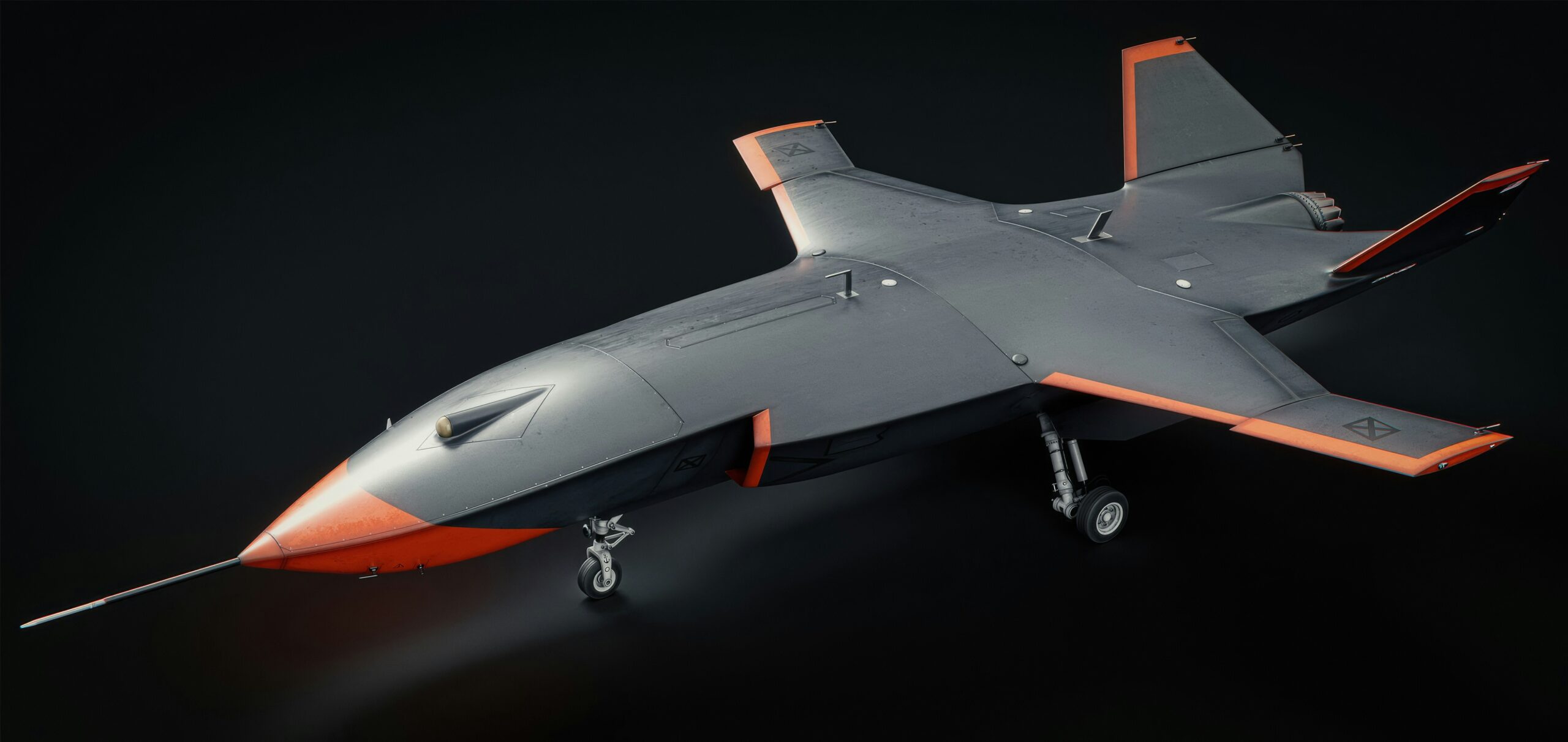
Ukrainian drone strikes are increasingly disrupting Russia’s oil industry, fuel supplies, agriculture, e-commerce and aviation, putting new pressure on Moscow’s war economy.
Focus Keyword: Ukrainian drone strikes Russia economy
Secondary Keywords:
- Russia economy 2026
- Ukraine drone attacks Russia
- Russian oil refineries
- Russia fuel shortage
- Russian economy under pressure
- Ukraine Russia war economy
- Russian oil industry
- Ukrainian attacks on Russian infrastructure
- Russia gasoline prices
- Russia war economy
Categories: World News, Russia-Ukraine War, Economy, Energy, Geopolitics
Tags: Ukraine, Russia, Ukrainian drones, Russia economy, Vladimir Putin, oil refineries, gasoline, energy crisis, Russia-Ukraine war, geopolitics
Ukrainian Drone Strikes Are Pounding Russia’s Economy as the War Reaches Deeper Into Russia
Ukraine’s long-range drone campaign is increasingly creating an economic problem for Russia, transforming the consequences of the war from a largely military confrontation into a disruption affecting fuel supplies, agriculture, logistics, aviation and consumer businesses.
The latest evidence suggests that Moscow is facing a growing challenge: protecting critical economic infrastructure across an enormous territory while maintaining the industrial capacity required to sustain its war effort.
The most visible pressure is emerging in Russia’s energy sector. Repeated attacks on oil refineries and other petroleum infrastructure have disrupted fuel production and contributed to shortages in parts of the country. Gasoline prices have risen sharply, while Russian authorities have taken increasingly unusual measures to keep domestic supplies flowing.
But oil is only part of the story.
The broader Ukrainian strategy appears designed to create economic friction across multiple sectors simultaneously. Drone attacks have disrupted logistics facilities, Black Sea export infrastructure and airports, adding costs and uncertainty to an economy already operating under Western sanctions and heavy wartime spending.
Russia’s Oil Industry Is Becoming a Major Vulnerability
Russia remains one of the world's largest energy producers, making its petroleum infrastructure central to both the domestic economy and the Kremlin's ability to finance its military campaign.
That makes refineries particularly important.
Ukraine has increasingly targeted Russian refining capacity, with attacks disrupting operations at multiple facilities. According to recent reporting, Ukrainian drones have struck Russian oil refineries dozens of times during 2026, contributing to a significant decline in refining output.
The consequences are different from simply attacking crude-oil production.
Russia may continue producing crude even when a refinery is damaged, but crude oil must be processed into gasoline, diesel and other refined products before it can satisfy many domestic transportation needs.
That creates a potential bottleneck.
Russia can have oil underground and still experience a fuel shortage.
This distinction is increasingly important for understanding the economic consequences of Ukraine's drone campaign.
Gasoline Prices Are Rising
Fuel prices have become one of the clearest signs that the attacks are moving from the battlefield into everyday Russian economic life.
The WSJ reported that Russian gasoline prices have risen about 19% during 2026. Some regions have introduced restrictions on fuel purchases, while Moscow has turned to additional imports and other measures designed to stabilize supplies.
Russia has even relaxed some fuel-quality requirements and looked abroad for additional supplies.
That represents a striking reversal for a country that has traditionally been one of the world's major petroleum exporters.
Instead of simply exporting energy, Russia is increasingly having to rearrange energy flows to ensure that its own consumers and businesses have enough refined fuel.
Ukraine Is Targeting More Than Refineries
The economic impact of the drone campaign goes beyond oil-processing facilities.
Ukrainian attacks have also affected oil terminals, storage facilities, ports and transportation infrastructure.
That matters because Russia's energy economy depends on an interconnected system.
Crude oil must move from production regions to refineries or export terminals. Refined products must then reach wholesalers, businesses and consumers. Ports must remain operational, and transportation networks must function reliably.
Damage at one point in the system can therefore create problems elsewhere.
The Black Sea has become particularly important.
Attacks around Russian ports and export infrastructure have introduced additional risks for shipping and agricultural trade. Commercial vessels have also faced a more dangerous operating environment as drone warfare expands around the Black Sea.
Russian Agriculture Is Feeling the Pressure
Agriculture represents another increasingly important economic vulnerability.
Russia is a major grain exporter, particularly of wheat. Its Black Sea ports are essential for getting agricultural products to international markets.
Disruptions at export terminals can therefore create a problem with two sides.
Russia can lose export revenue while farmers face difficulties moving their harvest.
Recent reporting has indicated that Russian wheat exports fell sharply in August as Black Sea disruptions intensified. The result could be increased pressure on agricultural producers, particularly if transportation problems persist.
This is significant because agriculture has been one of Russia's important sources of export earnings.
If farmers cannot reliably move grain to international customers, the effects can spread through the domestic economy.
Lower exports can mean weaker revenues for producers, while excess supplies trapped inside Russia can put downward pressure on domestic prices.
That creates an unusual wartime economic problem: infrastructure damage can simultaneously hurt exporters and farmers even when agricultural production itself remains strong.
E-Commerce and Logistics Are Also Being Hit
Another less obvious consequence is the disruption of Russia's rapidly expanding e-commerce sector.
Large logistics facilities and distribution centers have reportedly been damaged in drone attacks, affecting major online retailers and creating significant financial losses. The WSJ reported that more than 30 strikes had damaged logistics hubs associated with major Russian e-commerce platforms, with losses estimated in the billions of dollars.
This illustrates how modern drone warfare can affect an economy without destroying traditional industrial plants.
A distribution center does not need to be a military facility to have strategic economic importance.
A warehouse can contain enormous quantities of consumer goods. A logistics hub can connect thousands of businesses with millions of customers.
When such facilities are damaged, the consequences include:
- lost inventory;
- delayed deliveries;
- higher insurance costs;
- increased transportation expenses;
- temporary business closures;
- supply-chain disruptions; and
- reduced consumer confidence.
The cumulative effect can become considerably larger than the physical cost of the initial strike.
Russia’s Banking System Could Also Feel the Effects
Financial institutions are not immune to the consequences.
The damage to major businesses can eventually affect banks that lend to them.
The WSJ highlighted concerns surrounding VTB, one of Russia's largest state-controlled banks, which has financial exposure to companies affected by the disruption.
This demonstrates an important economic principle.
Infrastructure attacks can create second- and third-order financial consequences.
A damaged warehouse creates losses for a retailer.
Those losses can affect its suppliers.
Suppliers may delay payments.
Banks financing the companies can then face higher credit risks.
Investors can react by pushing down stock prices.
The original drone strike therefore creates a chain reaction extending far beyond the physical location that was attacked.
Aviation Is Becoming More Difficult
Russia's aviation system is another sector experiencing growing disruption.
Drone activity has repeatedly forced airports to close temporarily or restrict operations.
According to the latest WSJ reporting, Russian airports experienced nearly 1,000 closures during August because of drone activity.
Even temporary closures can become expensive.
Airlines must reroute flights, delay passengers, reposition aircraft and absorb additional operating costs.
Airports must also maintain heightened security.
For passengers, repeated disruptions can gradually undermine confidence in air travel.
The problem becomes especially serious when drone activity affects major metropolitan areas.
Ukraine has also warned commercial airlines about the risks associated with Russian airspace as drone warfare intensifies.
The Economic Cost Could Be Much Larger Than the Physical Damage
One of the most important aspects of this campaign is that the economic damage is not necessarily proportional to the physical destruction.
A refinery may be repaired.
A warehouse may be rebuilt.
An airport can reopen.
But the economic disruption created in the meantime can accumulate.
Businesses lose revenue.
Workers cannot operate normally.
Consumers pay higher prices.
Insurance premiums rise.
Transportation becomes more complicated.
Companies build expensive backup systems.
Government spending increases.
And investors demand higher returns for taking additional risks.
According to the WSJ's assessment, the cumulative losses associated with the Ukrainian drone campaign could amount to roughly 1% of Russia's GDP, or approximately $25 billion.
That would be a meaningful economic burden even for a country as large as Russia.
Putin Faces a Difficult Economic Balancing Act
The Kremlin has attempted to portray Russia's economy as resilient despite sanctions and wartime pressure.
But resilience does not mean that disruption has no cost.
Russia can compensate for individual attacks.
It can import gasoline.
It can reroute exports.
It can repair refineries.
It can deploy additional air defenses.
It can subsidize affected companies.
The question is whether Moscow can continue doing all of those things simultaneously as the number of attacks increases.
Russian President Vladimir Putin has acknowledged that Moscow underestimated the threat to its refineries. He said Russian authorities had assumed that such facilities would not be targeted during the conflict.
That admission is significant.
It suggests that Russia's economic infrastructure was not originally designed to withstand sustained attacks across multiple regions.
Ukraine Is Trying to Change the Economics of the War
The strategic logic behind the drone campaign is broader than destroying individual targets.
Ukraine cannot match Russia's industrial base dollar for dollar.
It therefore has an incentive to find relatively inexpensive ways of imposing disproportionately large costs on Russia.
Long-range drones provide one potential mechanism.
A comparatively inexpensive unmanned aircraft can force Russia to spend considerably more money on:
- air-defense systems;
- fighter aircraft;
- electronic warfare;
- infrastructure protection;
- emergency repairs;
- fuel imports;
- airport security;
- logistics rerouting; and
- replacement equipment.
This creates an economic equation that favors the attacker if the defender must repeatedly spend far more to protect every potential target.
The strategy is particularly powerful because Russia has thousands of economically important sites spread across a vast territory.
Protecting everything is extraordinarily difficult.
The Bigger Problem for Moscow: Normal Life Is Becoming More Expensive
The economic impact of the war is increasingly visible to ordinary Russians.
Fuel shortages are perhaps the clearest example.
A refinery explosion or damaged oil terminal may seem distant from daily life. But when gasoline becomes more expensive or difficult to obtain, the consequences are immediate.
Higher fuel costs affect transportation.
Transportation costs affect food.
Food costs affect household budgets.
Businesses then pass higher expenses to consumers.
This is how a military campaign against infrastructure becomes an inflationary problem.
Russia has already faced significant economic distortions from years of sanctions, military spending and the reorientation of trade toward China, India and other countries.
Ukrainian drone attacks add another layer of instability.
Russia Has Few Easy Solutions
Moscow's most obvious response is stronger air defense.
But air-defense systems are expensive and cannot protect every facility equally.
Russia therefore faces a difficult prioritization problem.
Should it protect major cities?
Oil refineries?
Ports?
Airports?
Military facilities?
Logistics centers?
Power infrastructure?
Agricultural terminals?
Every system deployed to one location is potentially unavailable somewhere else.
Ukraine's strategy exploits exactly that dilemma.
Rather than needing to destroy Russia's entire economy, Kyiv can seek to create enough simultaneous vulnerabilities that Moscow struggles to protect all of them.
What Happens Next?
The trajectory of the Russia-Ukraine war increasingly suggests that economic infrastructure will remain a major battlefield.
Ukraine has demonstrated the ability to reach targets deep inside Russia, while Russia continues to possess substantial military and industrial resources.
Recent strikes against Russian oil infrastructure show that the campaign is continuing into September. Ukrainian drones reportedly targeted the Ryazan oil refinery and other locations on September 6, adding to the pressure on Russia's petroleum infrastructure.
The critical question is whether these attacks eventually produce a strategic economic tipping point.
There is still no guarantee that they will.
Russia remains a large energy producer with substantial financial, industrial and natural-resource reserves. Earlier analysis also found that Ukrainian attacks on oil infrastructure did not necessarily translate into a proportional collapse in Russian oil revenues.
But the current campaign appears broader than previous efforts.
It is no longer simply about disrupting oil production.
It is about creating a web of economic disruptions across energy, transportation, agriculture, logistics, aviation and finance.
The Bottom Line
Ukraine's drone campaign is changing the economic geography of the Russia-Ukraine war.
For years, Russia was able to wage war against Ukraine while shielding much of its own civilian economy from direct physical disruption.
That separation is becoming harder to maintain.
Oil refineries are being attacked. Fuel supplies are tightening. Black Sea exports face greater risks. Logistics centers are vulnerable. Airports are repeatedly disrupted. Businesses and banks are absorbing additional financial pressure.
The result is not necessarily an immediate economic collapse.
Instead, Ukraine is imposing something potentially more difficult for Moscow to solve: persistent, expensive and unpredictable disruption.
Every damaged refinery, closed airport, disrupted port and destroyed logistics center forces Russia to spend additional resources simply restoring normal economic activity.
That is the central economic challenge created by Ukraine's drone strategy.
The war is increasingly being fought not only over territory, but over Russia's ability to keep its economy functioning normally while financing a prolonged military campaign.
And if the attacks continue expanding in scale and frequency, the pressure on Moscow's war economy could become one of the most consequential economic dimensions of the conflict.




0 Comments