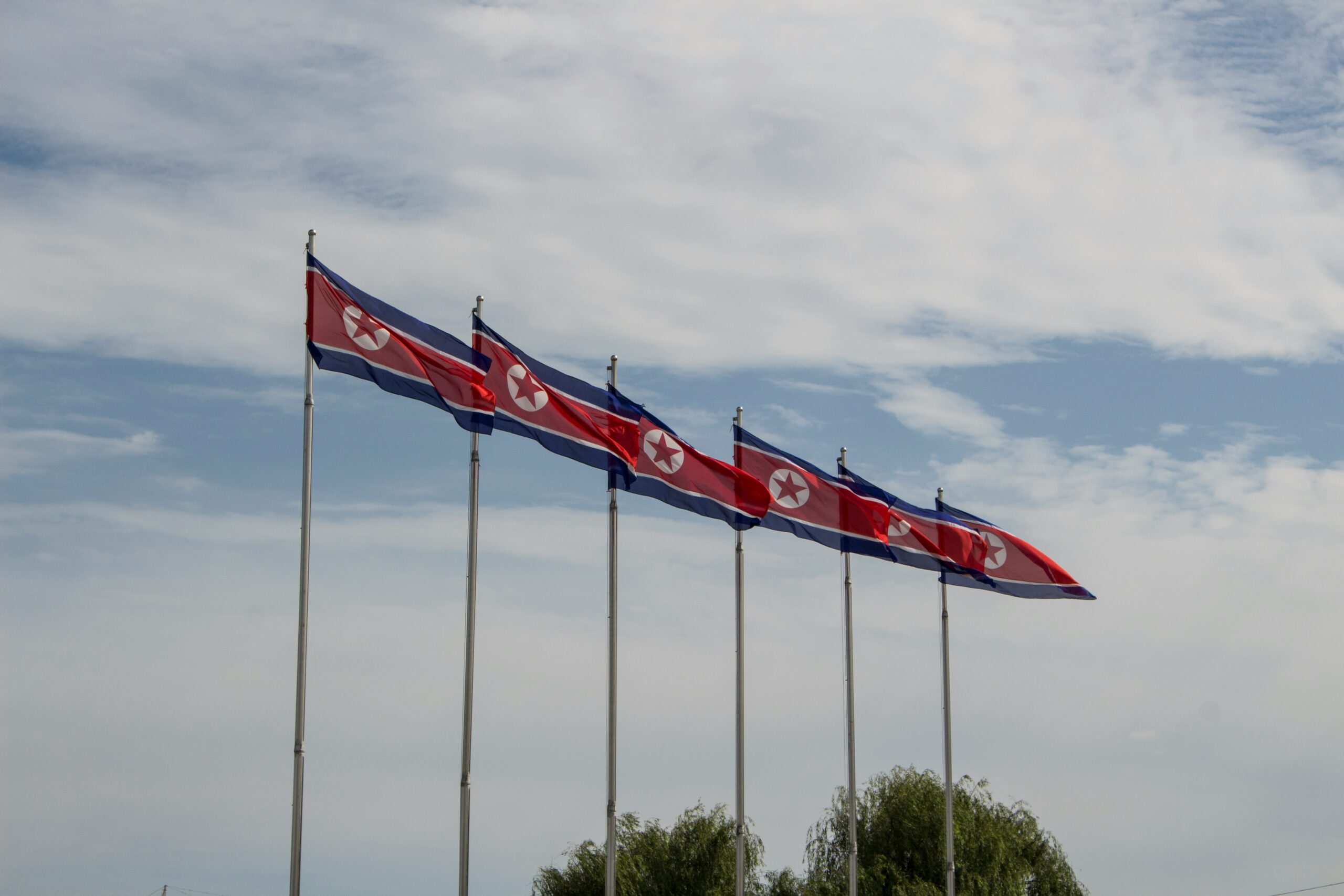
North Korea is rapidly expanding its naval power with nuclear-capable destroyers and submarines. Discover what this military transformation means for Asia, the United States, and global security.
The Rise of North Korea’s Nuclear-Armed Navy
North Korea has long relied on nuclear missiles and ballistic weapons as the backbone of its military strategy. Today, however, Pyongyang is pursuing a new objective that could significantly alter the balance of power in East Asia: building a nuclear-armed navy.
Recent developments indicate that leader Kim Jong Un is accelerating efforts to modernize the Korean People’s Army Navy (KPAN), transforming it from a largely coastal defense force into one capable of projecting military power farther into the Pacific. New destroyers, submarine programs, and sea-based nuclear weapons suggest North Korea intends to establish a credible maritime nuclear deterrent despite international sanctions and economic hardship.
A Strategic Shift Beyond Land-Based Missiles
For decades, North Korea invested heavily in:
- Intercontinental Ballistic Missiles (ICBMs)
- Short-range ballistic missiles
- Nuclear warheads
- Mobile missile launchers
These systems remain central to Pyongyang’s defense doctrine.
Now the country’s military modernization is expanding into naval warfare.
Sea-based nuclear weapons provide several strategic advantages:
- Greater survivability during conflict
- Ability to launch from multiple directions
- Harder detection by adversaries
- Stronger second-strike capability
- Increased deterrence against the United States and its allies
Military analysts believe North Korea views its navy as the missing component of a complete nuclear triad consisting of land, sea, and air capabilities.
The Choe Hyon Destroyer Signals a New Era
One of the most significant milestones in North Korea’s naval modernization has been the commissioning of the Choe Hyon, a 5,000-ton guided missile destroyer.
According to North Korean state media, the vessel is equipped with:
- Anti-ship missiles
- Air-defense systems
- Cruise missiles
- Ballistic missiles reportedly capable of carrying nuclear payloads
Kim Jong Un described the destroyer as evidence that North Korea is successfully transforming its navy into a strategic nuclear force.
The ship also demonstrates improvements in domestic shipbuilding capabilities, with construction completed in roughly two and a half years.
Nuclear-Powered Submarines Are the Next Goal
Perhaps the most ambitious element of North Korea’s naval strategy is the pursuit of a nuclear-powered submarine.
Unlike conventional diesel-electric submarines, nuclear-powered vessels can:
- Remain underwater for months
- Travel much longer distances
- Operate more quietly over extended periods
- Carry larger missile inventories
State media released images in late 2025 of what it claimed was the country’s first nuclear-powered ballistic missile submarine under construction, though independent experts caution that operational capability has not yet been demonstrated.
Ballistic Missile Submarines Remain a Challenge
North Korea already possesses one modified ballistic missile submarine, the Hero Kim Kun Ok.
Although heavily promoted domestically, satellite imagery indicates the submarine has experienced significant delays and has not yet become fully operational. Analysts believe technical challenges continue to hinder the program.
Even so, continued investment suggests Pyongyang remains committed to establishing a reliable sea-based nuclear force.
Why a Nuclear Navy Matters
Sea-based nuclear forces are often viewed as the most survivable leg of a country’s nuclear arsenal.
If land-based missile sites are destroyed during an attack, submarines at sea may still be capable of launching retaliatory strikes.
For North Korea, this provides:
- Enhanced deterrence
- Greater strategic flexibility
- Increased uncertainty for adversaries
- Improved bargaining power in future negotiations
This evolving posture complicates defense planning for South Korea, Japan, and the United States.
Russia and Possible Technology Transfers
Several analysts have raised questions about whether Russia has assisted North Korea’s naval modernization.
While there is no definitive public evidence confirming extensive technology transfers, reports suggest Moscow may have provided expertise or support as military ties between the two countries have strengthened. South Korean officials have also voiced concerns about potential Russian assistance.
If such cooperation continues, North Korea’s naval capabilities could advance more rapidly than previously expected.
South Korea Is Responding
North Korea’s naval expansion has prompted an accelerated response from Seoul.
South Korea recently announced plans to pursue its own domestically built nuclear-powered attack submarine program, aiming to strengthen anti-submarine warfare and counter North Korea’s emerging capabilities.
The move reflects growing concern that future regional competition will increasingly extend beneath the sea.
Regional Implications
North Korea’s naval modernization affects more than the Korean Peninsula.
Countries closely monitoring these developments include:
- South Korea
- Japan
- United States
- China
- Russia
Potential consequences include:
- Increased naval patrols
- Higher defense spending
- Expanded anti-submarine operations
- Greater military exercises
- Heightened tensions in the Sea of Japan and the Yellow Sea
A more capable North Korean navy also complicates maritime surveillance and missile defense planning throughout the Indo-Pacific.
Challenges Facing North Korea
Despite recent progress, significant obstacles remain.
Economic Constraints
International sanctions continue to limit access to advanced technology, specialized components, and financing.
Technical Complexity
Building a reliable nuclear-powered submarine requires sophisticated:
- Nuclear reactor engineering
- Quiet propulsion systems
- Advanced metallurgy
- Long-range sonar
- Missile integration
These are technologies that only a handful of countries have mastered.
Operational Experience
Operating modern submarines requires decades of training, maintenance expertise, and logistical support.
Most analysts believe North Korea still faces substantial hurdles before fielding an effective blue-water nuclear fleet.
A Shift Toward Maritime Deterrence
The modernization of North Korea’s navy reflects a broader strategic evolution.
Instead of relying solely on:
- Land-based missile forces
- Underground launch facilities
- Mobile launchers
Pyongyang is diversifying its nuclear deterrent by investing in sea-based capabilities.
This approach mirrors strategies adopted by established nuclear powers that maintain multiple methods of delivering nuclear weapons.
Global Security Concerns
A stronger North Korean navy introduces new challenges for international security.
Potential risks include:
- More difficult missile tracking
- Expanded patrol areas
- Increased risk of naval incidents
- Greater uncertainty during crises
- Reduced warning time for neighboring countries
These developments may encourage further military modernization across East Asia, potentially fueling a broader regional arms competition.
Outlook
North Korea’s pursuit of a nuclear-armed navy marks one of the most significant military developments on the Korean Peninsula in years. Although questions remain about the operational readiness of its newest ships and submarines, the direction of travel is clear: Kim Jong Un is seeking to transform the country’s navy into a strategic force capable of supporting its nuclear deterrent.
For policymakers, defense planners, and regional governments, the emergence of a more capable North Korean fleet will demand closer monitoring, stronger maritime surveillance, and continued diplomatic efforts to manage escalating security risks. While the pace of progress is uncertain, North Korea’s maritime ambitions are likely to remain a defining feature of the Indo-Pacific security landscape in the years ahead.
SEO Keywords
- North Korea nuclear-armed navy
- Kim Jong Un navy
- North Korea nuclear submarine
- Choe Hyon destroyer
- North Korea military modernization
- Korean People’s Army Navy
- North Korea ballistic missile submarine
- Asia security
- Indo-Pacific naval power
- North Korea defense strategy
Categories: World News, Military, Defense, Asia-Pacific, Geopolitics
Tags: North Korea, Kim Jong Un, Nuclear Weapons, Navy, Submarines, Ballistic Missiles, South Korea, Asia, Indo-Pacific, Military News
Source:
- The Diplomat (Primary Source) – The Rise of North Korea’s Nuclear-Armed Navy
https://thediplomat.com/2026/07/the-rise-of-north-koreas-nuclear-armed-navy/ - Associated Press – Kim Jong Un oversees nuclear-capable missile tests from new destroyer
https://apnews.com/article/814e7f309e3cad56403ac4dbad6fde98 - Reuters – North Korea decides on measures to expand nuclear forces
https://www.reuters.com/business/aerospace-defense/north-korea-decides-measures-expand-nuclear-forces-kcna-reports-2026-07-09/ - Financial Times – Rival Koreas race to build nuclear-powered submarines
https://www.ft.com/content/4e00ded7-109a-45fe-963c-f55a1caec08f - Foundation for Defense of Democracies (FDD) – The Rise of North Korea’s Nuclear-Armed Navy
https://www.fdd.org/analysis/2026/07/24/the-rise-of-north-koreas-nuclear-armed-navy/


0 Comments