
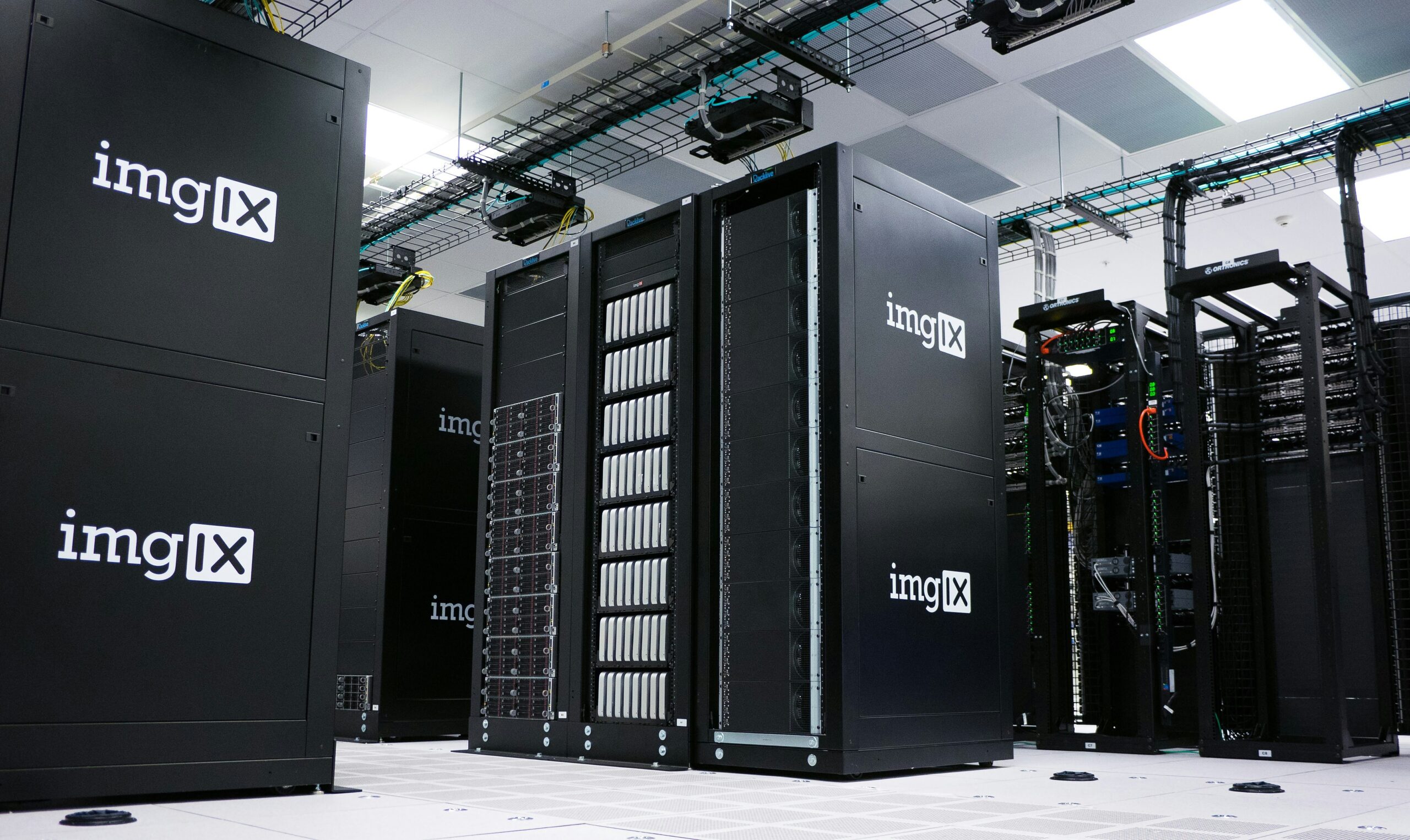
China’s aggressive AI chip development is challenging Nvidia’s dominance amid rising U.S.-China tech tensions. Explore the semiconductor arms race, export controls, Huawei’s rise, and the future of global AI infrastructure in 2026.
🧠 China’s AI Chip Revolution vs Nvidia: The Semiconductor War Redefining Global Power
🌍 Introduction: The New Cold War Is About Chips, Not Just Politics
The global balance of technological power is undergoing one of the most significant transformations in modern history. At the center of this shift is the battle for dominance in artificial intelligence hardware—specifically AI chips.
For years, Nvidia has stood as the undisputed leader in high-performance computing, powering everything from generative AI systems to advanced scientific simulations. However, China’s rapidly expanding semiconductor ecosystem is now reshaping that dominance.
What was once a globalized supply chain is increasingly splitting into competing technological blocs. One led by the United States and Nvidia’s GPU ecosystem, and the other driven by China’s ambition for semiconductor independence.
This is not just a corporate competition—it is a geopolitical and economic restructuring of the digital age.
⚙️ The Central Role of AI Chips in the Modern Economy
Artificial intelligence models require enormous computational power. Every breakthrough in generative AI, robotics, and machine learning depends on specialized processors known as GPUs (graphics processing units) and AI accelerators.
These chips are responsible for:
- Training large language models
- Running real-time inference systems
- Powering autonomous vehicles
- Enabling cloud-based AI services
- Supporting scientific and defense applications
As AI systems become more complex, demand for advanced chips increases exponentially. This has elevated companies like Nvidia into strategic global importance.
In essence, AI chips have become the “oil” of the digital economy.
🔷 Nvidia’s Dominance in the AI Hardware Ecosystem
Nvidia’s rise to global dominance was not accidental. Over decades, it built a tightly integrated ecosystem combining hardware and software.
Its most powerful advantage is not just chip design—but its software platform, which allows developers worldwide to efficiently train AI models.
Today, Nvidia GPUs power:
- Major cloud providers
- Enterprise AI systems
- Research institutions
- Consumer AI applications
- National AI infrastructure projects
The company’s most advanced chips, including its Hopper and Blackwell architectures, are widely considered industry-leading in performance and efficiency.
This dominance has made Nvidia a central pillar of the global AI revolution.
⚠️ U.S.–China Tensions Reshape Semiconductor Trade
As AI becomes strategically critical, governments are intervening more directly in chip distribution.
The United States has implemented export restrictions on advanced semiconductor technologies to limit China’s access to cutting-edge AI chips.
These restrictions aim to:
- Maintain U.S. technological leadership
- Prevent military applications of advanced AI systems
- Control sensitive computing infrastructure
- Protect national security interests
However, these policies also have unintended consequences.
They have accelerated China’s determination to build a fully independent semiconductor ecosystem.
🇨🇳 China’s Strategic Response: Building a Domestic AI Chip Industry
China’s government has made semiconductor independence a national priority. Billions of dollars are being invested into domestic chip design, fabrication, and AI infrastructure.
This strategy includes:
- Development of AI accelerators
- Expansion of domestic chip foundries
- Investment in high-performance computing clusters
- Support for semiconductor startups
- Integration of AI chips into cloud platforms
Rather than relying on foreign technology, China is attempting to build a self-sufficient AI ecosystem.
This is one of the most ambitious industrial policies in modern history.
🧩 Huawei and the Rise of China’s AI Chip Ecosystem
One of the most important players in China’s semiconductor push is Huawei.
The company has developed its own AI chip family designed to compete with Nvidia in domestic markets. While these chips do not yet match Nvidia’s highest-end performance, they are improving rapidly in integrated systems.
Huawei’s strategy focuses on:
- Scaling compute clusters rather than single-chip dominance
- Building integrated AI systems
- Optimizing domestic software frameworks
- Reducing reliance on Western supply chains
Other Chinese tech giants are also contributing to this ecosystem by developing internal chips and adapting software to non-Nvidia architectures.
This marks a structural shift in China’s AI strategy—from dependence to substitution.
📉 The Fragmentation of the Global Semiconductor Market
The semiconductor industry is increasingly splitting into two parallel ecosystems:
🇺🇸 Western Stack
- Nvidia GPUs
- U.S. cloud providers
- CUDA software ecosystem
- Advanced chip fabrication in Taiwan and South Korea
🇨🇳 China Stack
- Domestic AI chips (Huawei and others)
- State-supported cloud infrastructure
- Alternative software frameworks
- Localized semiconductor supply chains
This fragmentation creates inefficiencies but also accelerates innovation within each bloc.
The long-term outcome may be two partially incompatible AI ecosystems.
📊 Economic Impact on Nvidia and Global Markets
Despite geopolitical challenges, Nvidia continues to experience massive demand growth.
Key drivers include:
- Exploding global AI adoption
- Expansion of hyperscale data centers
- Enterprise AI integration
- Government-backed AI infrastructure projects
However, China represents both a massive opportunity and a major risk.
On one hand, China is one of the largest potential AI markets in the world. On the other, export restrictions and political friction limit Nvidia’s ability to fully participate.
This duality creates uncertainty in long-term revenue forecasting.
🧠 The Strategic Importance of Software Ecosystems
While hardware is essential, software ecosystems often determine long-term dominance.
Nvidia’s CUDA platform has become a global standard for AI development. Millions of developers are trained within this ecosystem, creating strong technological lock-in.
China’s challenge is not just building chips—it is building an alternative software stack that can compete at scale.
This is significantly more difficult than hardware manufacturing.
🔬 The Innovation Gap: Can China Catch Nvidia?
China has made rapid progress in semiconductor development, but several structural challenges remain:
- Limited access to cutting-edge manufacturing equipment
- Dependency on advanced memory technologies
- Gaps in high-end chip design expertise
- Software ecosystem maturity differences
- Scaling limitations in production capacity
Despite these constraints, China’s long-term investment strategy suggests continued acceleration.
Experts widely agree that China can build “good enough” chips—but closing the performance gap at the highest end remains difficult.
🏗️ The Rise of AI Infrastructure Nationalism
AI development is no longer purely corporate—it is increasingly national.
Countries are investing in:
- Sovereign AI systems
- Domestic compute infrastructure
- National AI cloud platforms
- Strategic semiconductor reserves
This shift is driven by concerns over:
- Economic independence
- National security
- Data sovereignty
- Technological resilience
AI chips are now considered critical infrastructure, similar to energy or telecommunications.
🔮 The Future of the AI Chip Race
The next decade will likely be defined by several key trends:
1. Continued U.S. Export Controls
Washington is expected to maintain or tighten restrictions on advanced chip exports.
2. China’s Acceleration in Domestic Chips
China will continue investing heavily in semiconductor independence.
3. Rising Global AI Demand
AI adoption will expand across nearly every industry.
4. Alternative Architectures
New chip designs may challenge GPU dominance in specific workloads.
5. Supply Chain Regionalization
Global semiconductor manufacturing will become increasingly region-specific.
🌐 Geopolitical Implications: Beyond Technology
This competition extends far beyond economics or corporate rivalry.
AI chips influence:
- Military capabilities
- Cybersecurity systems
- Economic productivity
- Scientific research leadership
- Global power structures
As a result, semiconductor policy is now deeply integrated into diplomacy and international negotiations.
🧾 Conclusion: The Semiconductor Decade Has Begun
The global AI chip race between Nvidia and China represents more than a technological competition—it is a redefinition of global industrial power.
Nvidia currently leads with unmatched performance and ecosystem dominance. However, China’s determined push toward semiconductor independence is reshaping global supply chains and accelerating innovation on both sides.
The result is a fragmented but rapidly evolving AI landscape where geopolitical strategy and technological progress are now inseparable.
The next decade will determine whether global AI remains unified—or splits into competing technological worlds.




0 Comments