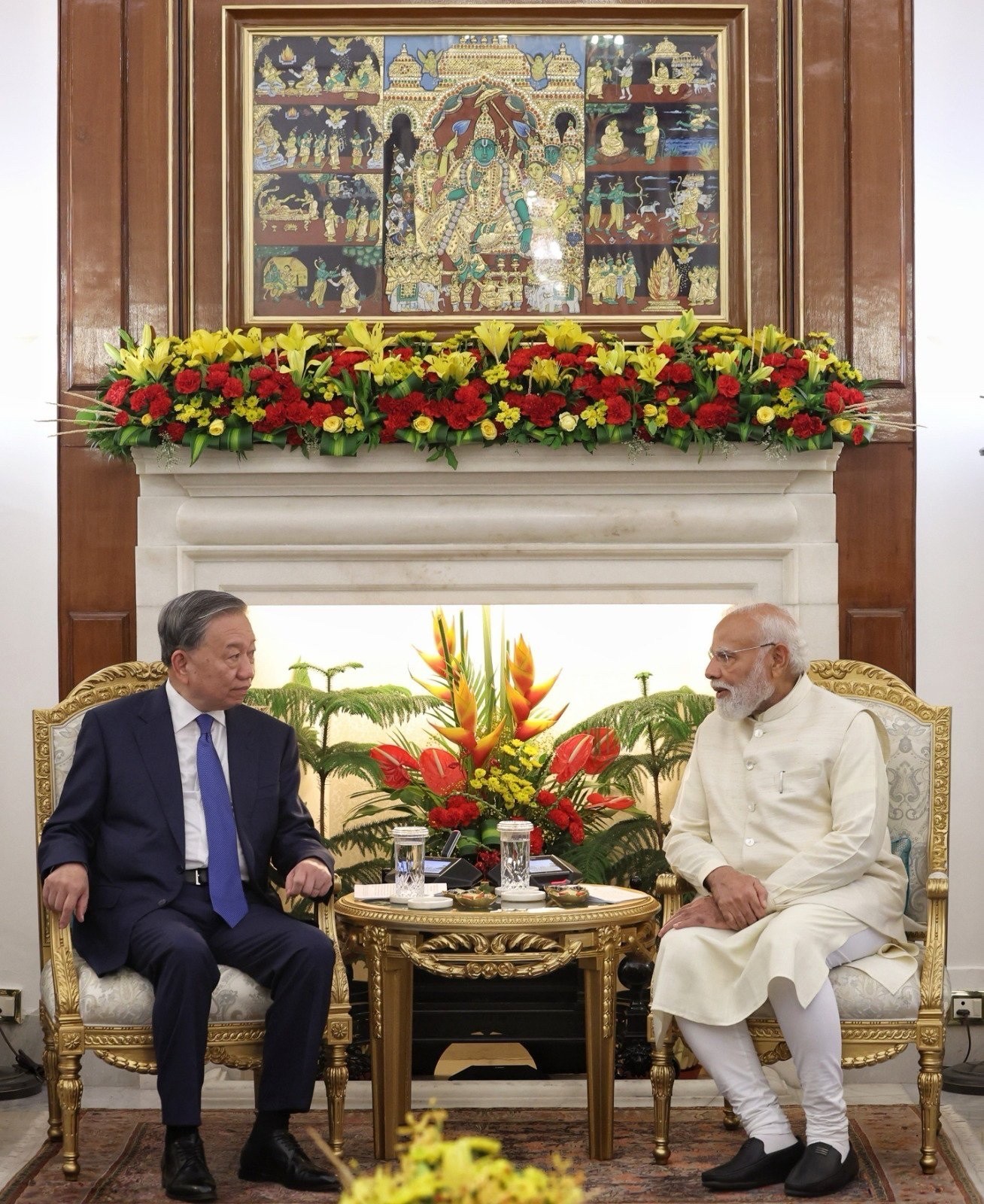
The State visit to India by Vietnam’s General Secretary of the Communist Party and President To Lam marks a historic milestone in bilateral relations as the two countries officially elevated their ties to an Enhanced Comprehensive Strategic Partnership (ECSP).
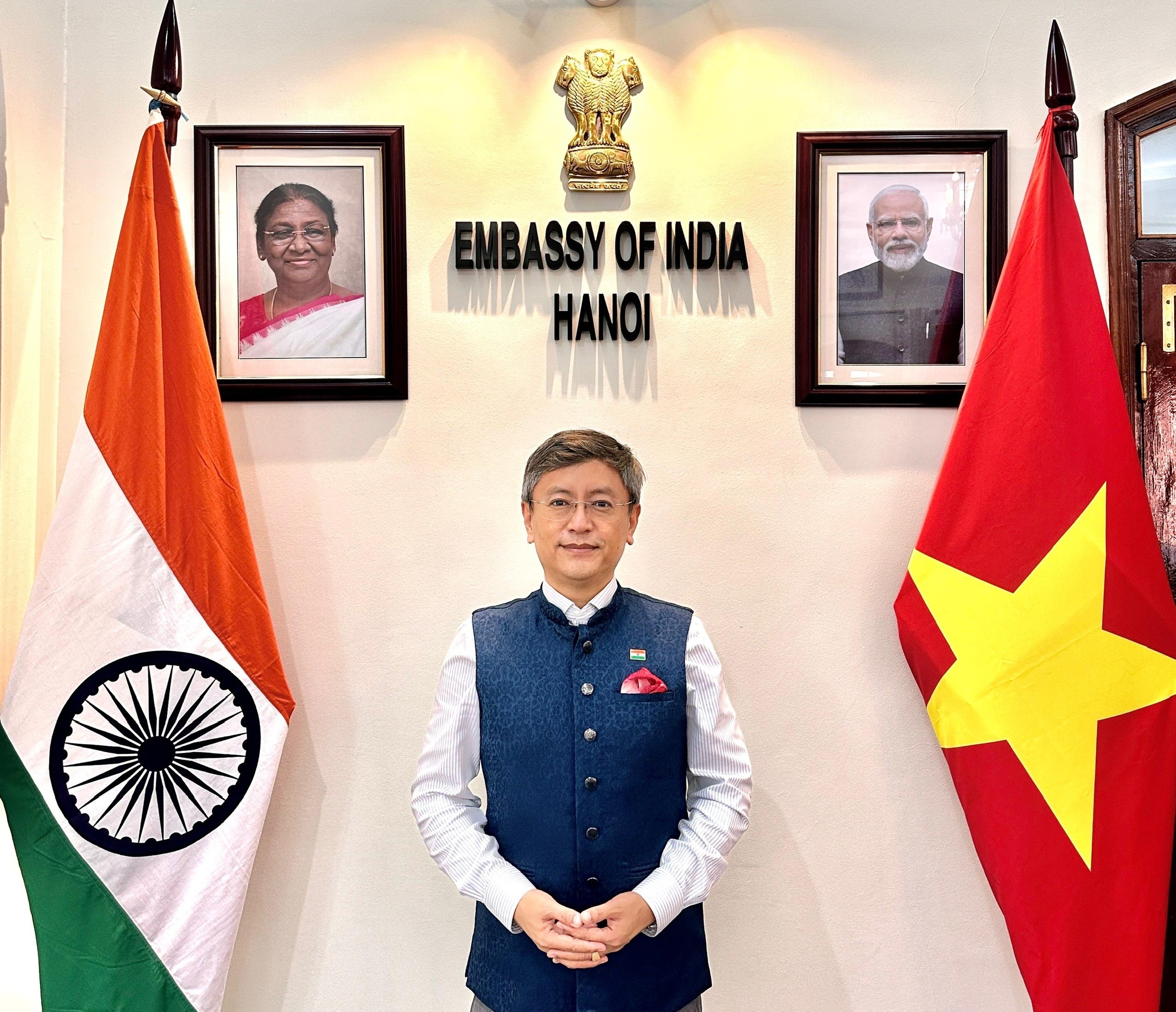
Ambassador Extraordinary and Plenipotentiary of India to Vietnam, H.E. Mr. Tshering W. Sherpa, shared with Vietnam Economic Times / VnEconomy insights into the significance of the visit, the growing strategic convergence between the two nations, and the opportunities emerging in technology, trade, energy transition and people-to-people connectivity.
The
elevation of bilateral ties to an Enhanced Comprehensive Strategic Partnership
is being viewed as a major milestone in India-Vietnam relations. How do you
assess the significance of this State visit by General Secretary and President
To Lam?
The State visit of General Secretary
and President H.E. To Lam to India is indeed a significant milestone in
India–Vietnam relations. This year is particularly meaningful as it marks the
10th anniversary of the Comprehensive Strategic Partnership established in
2016. The decision by the leaders of our two countries to elevate the
relationship to an Enhanced Comprehensive Strategic Partnership reflects the
depth of mutual trust, strategic convergence and shared aspirations between
India and Vietnam.
Although diplomatic relations were
formally established in 1972, the friendship between our two countries is
rooted in millennia-old civilizational linkages manifested through our shared
Buddhist and Cham heritage. As nations with histories of struggle for
independence from colonial rule, India and Vietnam have long inspired and
supported each other.
Over the last eight decades, our
relationship has evolved on the basis of mutual respect, solidarity and
sensitivity to each other’s concerns and development aspirations.
Over
the past decade, what do you consider the most important achievements in
bilateral cooperation?
Since 2016, our bilateral
relationship has expanded and deepened significantly across almost all sectors.
Political engagements, development partnership, defence and security
cooperation, trade and commerce, and people-to-people exchanges have all
witnessed impressive progress.
One notable achievement is the
strong growth in bilateral trade. Trade between our two countries has more than
doubled, increasing from around $8 billion in 2015-2016 to approximately $16 billion in 2024-2025.
These developments reflect the
growing synergy between our economies. However, bilateral trade still accounts
for less than two percent of our respective global trade volumes. This
indicates that the potential remains enormous, particularly considering that
India and Vietnam are among the fastest-growing economies in the world.
Therefore, the new target set by our
leaders to achieve $25 billion in bilateral trade by 2030 is both realistic
and forward-looking.
The
upgraded partnership places strong emphasis on innovation and technology
cooperation. Which areas do you believe will become key pillars in the next
phase of bilateral relations?
Our leaders have clearly envisioned
the next phase of India–Vietnam relations as future-oriented and
forward-looking. Technology will play a central role in this transformation.
While continuing to strengthen
traditional pillars of cooperation, both sides will focus increasingly on
innovation, critical and emerging technologies, renewable energy, healthcare,
digital public infrastructure, fintech, artificial intelligence, 6G,
pharmaceuticals, space technology, nuclear technology and critical minerals.
Technology today is not simply a
sector; it has become a key driver of growth, development and value chains
globally. India and Vietnam are both rapidly growing economies with youthful
and aspirational societies. There are many complementarities between our
technology ambitions and development visions.
We already have dialogue mechanisms
in information technology, science and technology, and innovation cooperation.
These frameworks now need to be further energized and aligned with current
global trends and practical requirements.
The India-Vietnam Innovation Forum
organized during the visit demonstrates our shared commitment to building
partnerships in these new domains.
Digital
connectivity and fintech cooperation were also highlighted during the visit.
How important are these areas?
These are extremely important areas
for the future of bilateral cooperation. One example is cooperation in digital
payment systems, including QR-code-based cross-border payment connectivity.
Such systems can significantly facilitate tourism, trade and commercial
exchanges between our two countries.
India has developed extensive
expertise in digital public infrastructure and fintech, while Vietnam is also
making rapid progress in digital transformation. This creates substantial
opportunities for cooperation and knowledge sharing.
Energy
transition and sustainability are becoming increasingly important globally. How
can our two countries cooperate in these areas?
As both our countries move toward
net-zero emissions goals, there is considerable scope for sharing experiences
and successful policy models in renewable energy development and energy
security.
Vietnam’s recent accession to the
International Solar Alliance is an important step in this direction. Supply chain
resilience and energy security are also priority areas for collaboration.
Both countries recognize that
sustainable growth and clean energy transition are essential components of
long-term economic development.
Despite
the strong focus on technology and economics, cultural ties continue to play a
central role in bilateral relations. How do you view this dimension?
Cultural and spiritual ties remain
the enduring foundation of India–Vietnam relations. Buddhism continues to serve
as a celestial bridge warmly connecting the peoples of our two countries.
The exposition of the Holy Relics of
Lord Buddha in Vietnam in 2025 was a testimony to this everlasting bond.
At the same time, we are also
leveraging technology to preserve and restore our shared cultural heritage. The
restoration works carried out by the Archaeological Survey of India at the My
Son Sanctuary UNESCO World Heritage Site are a very good example.
Projects such as the restoration of
Nhan Tower, the establishment of a Site Interpretation Centre at My Son, and
the digitization of Cham manuscripts reflect our common commitment to heritage
conservation.
People-to-people
connectivity has expanded significantly in recent years. What role does this
play in strengthening bilateral relations?
People-to-people connectivity is one
of the strongest pillars of our partnership. In recent years, both governments
have worked closely to improve connectivity and facilitate exchanges.
Today, more than 90 direct flights
operate weekly between India and Vietnam. This has greatly boosted tourism,
trade and business exchanges. Tourism has been one of the largest
beneficiaries, with the number of travelers between the two countries reaching
nearly 900,000.
We are also exploring the
possibility of establishing direct shipping connections to further strengthen
trade and logistics cooperation.
On the academic side, Indian Studies
Chairs under the Indian Council for Cultural Relations (ICCR) will be
established at Da Nang University and the University of Social Sciences and
Humanities. We also look forward to stronger cooperation between Nalanda
University and the Ho Chi Minh National Academy of Politics.
In 2027, both countries will
celebrate India Cultural Week in Vietnam and Vietnam Cultural Week in India to
commemorate the 55th anniversary of diplomatic relations.
The
State visit took place amid growing geopolitical uncertainty globally. How do you view our two countries’ strategic cooperation in this broader context?
The world today is undergoing
profound transitions marked by geopolitical uncertainty, shifting power
balances and economic fragmentation. In this context, the State visit of
General Secretary and President H.E. To Lam to India assumes special
significance.
India and Vietnam share common
interests in promoting peace, stability and prosperity in the region. Vietnam
remains a key pillar of India’s “Act East” Policy, while Vietnam’s
participation in the Indo-Pacific Oceans Initiative reflects increasing
strategic convergence between our two countries.
We also share a strong commitment to
ASEAN unity, ASEAN centrality and an international order based on international
law. Strengthening the voice and role of the Global South in global governance
is another important area of convergence between India and Vietnam.
Finally,
what message would you like to convey regarding the future of India-Vietnam
relations?
The elevation of our bilateral
relationship to an Enhanced Comprehensive Strategic Partnership demonstrates
the determination of both sides to translate enormous goodwill into tangible
outcomes.
India’s long-term development
vision, “Viksit Bharat @2047”, and Vietnam’s Vision 2045 possess strong
complementarities. Apart from being rapidly growing economies, our societies
are youthful, dynamic and aspirational.
This is only the beginning of a new
chapter in India-Vietnam relations. The sky is not the limit for India and
Vietnam.
Thank you, Vietnam Economic Times / VnEconomy, for this
opportunity to share our perspectives on the growing India-Vietnam partnership.
Vneconomy-Trọng Hoàng



0 Comments