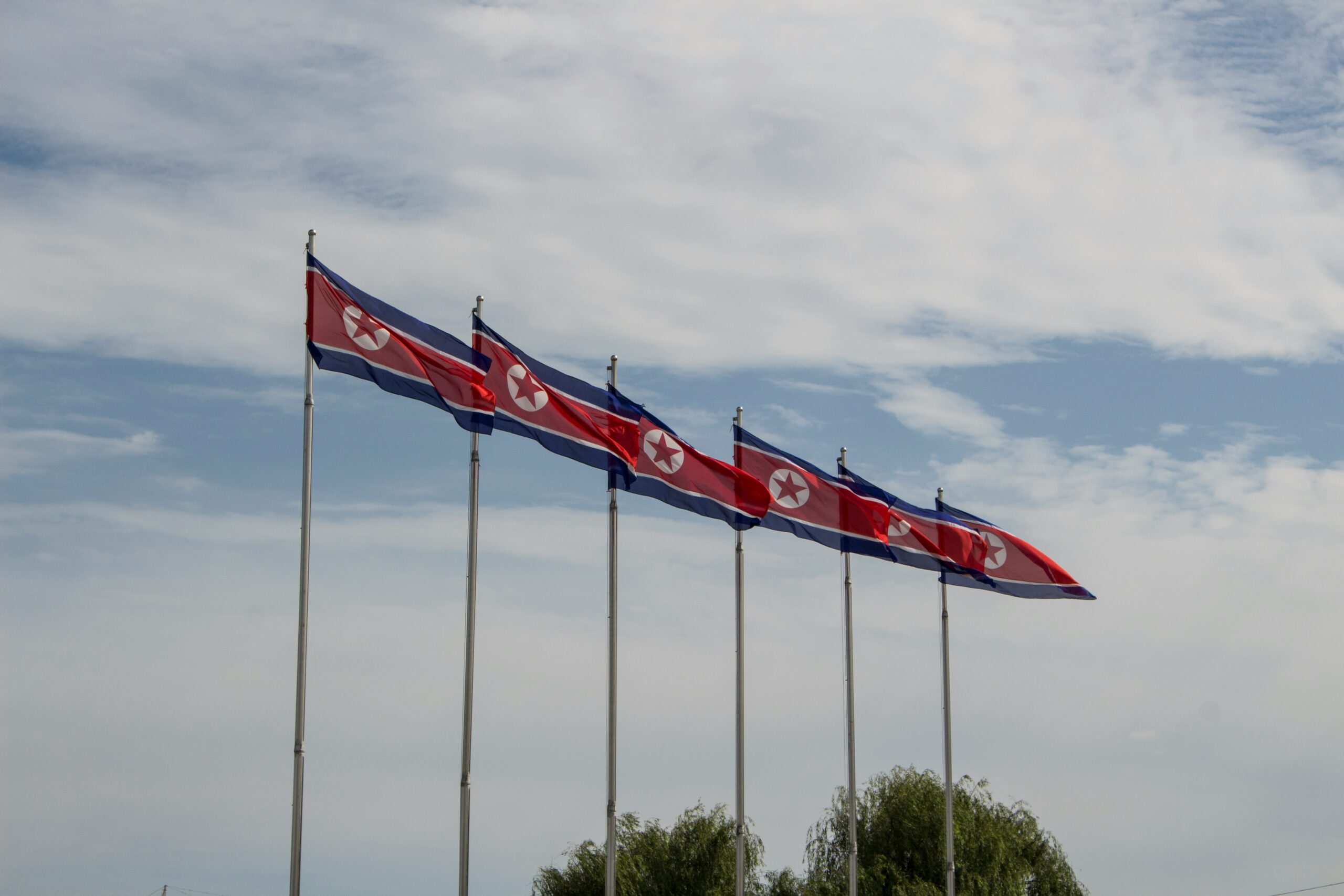
🇰🇵 North Korea Tests Drone and Missile Swarm Attacks, Raising New Air-Defense Concerns
North Korea is testing a new type of combined military attack that brings together drones, missiles, rockets and artillery, signaling a growing focus on coordinated “swarm” warfare and the lessons emerging from conflicts in Ukraine and the Middle East.
The exercises represent another step in Pyongyang’s effort to modernize its conventional military capabilities while maintaining its extensive ballistic missile and nuclear programs.
According to a new report by The Wall Street Journal, North Korea has begun practicing attacks that combine unmanned systems with conventional weapons against a single target. The approach is designed to place greater pressure on sophisticated air-defense networks by forcing them to deal with different types of threats arriving simultaneously.
🚨 North Korea Combines Drones, Missiles and Artillery
North Korea conducted an exercise this month involving attack drones, missiles, rockets and long-range artillery. The drill was notable because several different weapons systems were incorporated into what Pyongyang described as a coordinated strike.
South Korean reporting also documented a September 12 exercise involving attack drones, tactical cruise missiles, short-range ballistic missiles and large multiple-launch rocket systems. South Korea’s military detected multiple ballistic missile launches from the Wonsan area during the exercise period.
The combination is significant because these weapons can operate at different speeds, altitudes and trajectories.
Rather than relying on a single missile strike, a swarm-style attack can send numerous weapons toward a target at roughly the same time. This potentially complicates the job of air-defense operators attempting to identify, track and intercept every incoming threat.
The Institute for the Study of War said North Korea’s September exercise appeared to integrate four different categories of weapons and could represent an effort to improve the country’s ability to penetrate South Korea’s integrated air and missile defense network.
🤖 Why Drone Swarms Are Becoming More Important
The growing use of drones has changed modern warfare.
In Ukraine and the Middle East, relatively inexpensive unmanned aircraft have been used alongside missiles and other weapons. The objective is not necessarily for every drone to destroy a target. Instead, large numbers of relatively low-cost systems can force defenders to use radar, electronic warfare equipment and expensive interceptors.
That creates an important economic and logistical problem for air-defense systems.
A defender may have to spend a costly interceptor against a comparatively inexpensive drone or missile. If an attacker can produce weapons faster than the defender can replace interceptors, sustained attacks can eventually put pressure on defensive stockpiles.
The Wall Street Journal reported that North Korea is studying tactics that have demonstrated their usefulness in recent conflicts, including the combination of drones and missiles to complicate air-defense operations.
🇰🇷 South Korea Faces a More Complex Threat Environment
For South Korea, the development is particularly important because North Korea already possesses a large inventory of ballistic missiles, artillery and rocket systems.
The Korean Peninsula is also geographically compact, meaning that South Korean military infrastructure could face multiple types of threats within a short period during a major conflict.
North Korea’s September exercise therefore appears to have focused not simply on launching individual weapons, but on coordinating different military systems.
South Korean and U.S. forces already operate sophisticated air-defense capabilities, but the increasing diversity of North Korean weapons could make battlefield interception more complicated.
The issue is not necessarily whether a particular missile or drone can defeat an air-defense system individually. Instead, the challenge is whether a defensive network can manage a large number of simultaneous targets while maintaining sufficient interceptor supplies.
🇷🇺 Russia Could Be an Important Source of Military Lessons
North Korea’s evolving drone capabilities are also being watched in the context of its increasingly close military relationship with Russia.
North Korea has supplied missiles to Russia for use in the war in Ukraine, while North Korean personnel have reportedly become involved with Russian drone-production facilities. The relationship potentially gives Pyongyang additional exposure to battlefield developments involving unmanned weapons.
The Ukraine war has demonstrated how rapidly drone warfare can evolve.
Russia and Ukraine have both used increasingly sophisticated combinations of drones, cruise missiles and ballistic missiles. North Korean military planners can observe how these weapons are used against air-defense networks and infrastructure.
That does not mean North Korea can immediately reproduce the same capabilities. Coordinating large numbers of weapons requires communications, targeting information, command-and-control systems and reliable production capacity.
Nevertheless, the direction of North Korea’s exercises suggests that unmanned systems are becoming a more important part of its military modernization strategy.
🚀 North Korea Continues Developing Missile Technology
The drone exercises come as North Korea continues testing and promoting new missile systems.
On September 20, North Korea launched two missiles that it described as hypersonic weapons. North Korean state media has also reported tests involving an upgraded 240mm multiple-rocket-launcher system featuring unmanned precision guidance.
North Korea’s claims about hypersonic weapons should be treated carefully because independent assessments of the country’s weapons capabilities can differ from Pyongyang’s official descriptions.
Still, the continued testing demonstrates the importance North Korea places on expanding the variety of weapons available to its military.
🛡️ The Bigger Issue: Air Defense Versus Low-Cost Weapons
The emerging North Korean strategy highlights a broader problem confronting militaries around the world.
Modern air-defense systems are extremely capable, but they can also be expensive to operate.
An attacker using relatively inexpensive drones alongside ballistic missiles and rockets can attempt to create an unfavorable cost equation for the defender.
This is one reason drone warfare has become such an important military-technology issue.
The question increasingly is not simply whether a country has advanced air defenses. It is whether those defenses have enough sensors, interceptors, electronic-warfare capabilities and ammunition to withstand repeated attacks involving large numbers of weapons.
Military analysts cited by the Wall Street Journal say future conflicts could increasingly depend on whether attackers can manufacture missiles and drones faster than defenders can replenish their interceptor inventories.
🌏 What North Korea’s Drone Strategy Means for Asia
North Korea’s development of coordinated drone and missile attacks could have implications beyond the Korean Peninsula.
The United States, South Korea and Japan are increasingly focused on integrated air and missile defense as regional military cooperation expands.
North Korea’s latest exercises show that Pyongyang is also studying how different weapons can be integrated into a broader strike package.
For South Korea, the challenge is particularly significant because its defense planners must consider conventional artillery, ballistic missiles, cruise missiles, drones and potentially nuclear weapons as part of the broader North Korean threat environment.
For the wider Asia-Pacific region, the development also reinforces the importance of counter-drone technology, missile-defense capacity and the ability to rapidly replenish defensive weapons.
📌 North Korea’s Military Modernization Is Entering a New Phase
North Korea’s latest exercises do not necessarily demonstrate that Pyongyang has solved the technical challenges involved in conducting sophisticated swarm attacks.
However, they provide evidence that the country’s military is increasingly interested in combining different weapons rather than relying on individual missile launches.
The evolution is part of a broader transformation in modern warfare, where inexpensive drones can operate alongside powerful missiles and artillery.
North Korea’s ability to learn from conflicts abroad, expand its drone capabilities and integrate unmanned systems with its existing missile arsenal will remain an important issue for South Korea, the United States and other countries monitoring security developments in East Asia.
As drone warfare continues to evolve in Ukraine and the Middle East, North Korea appears determined to adapt those lessons to its own military strategy.
🔎 SEO Keywords
North Korea drones, North Korea drone swarm, North Korea missiles, North Korea military, North Korea military modernization, North Korea air defense, North Korea missile test, drone warfare, drone swarm attacks, missile and drone attacks, South Korea air defense, North Korea Russia military cooperation, Korean Peninsula security, hypersonic missiles, military technology, Asia security
📚 Sources
- The Wall Street Journal — North Korea Is Testing Swarm Attacks Mixing Drones and Missiles. Read the Wall Street Journal report
- Yonhap News Agency — North Korea’s September coordinated firepower exercise. Read Yonhap’s report
- Institute for the Study of War — Korean Peninsula Update, September 16, 2026. Read the ISW analysis
- Associated Press — North Korea’s latest missile test and hypersonic-weapons claims. Read the AP report




0 Comments