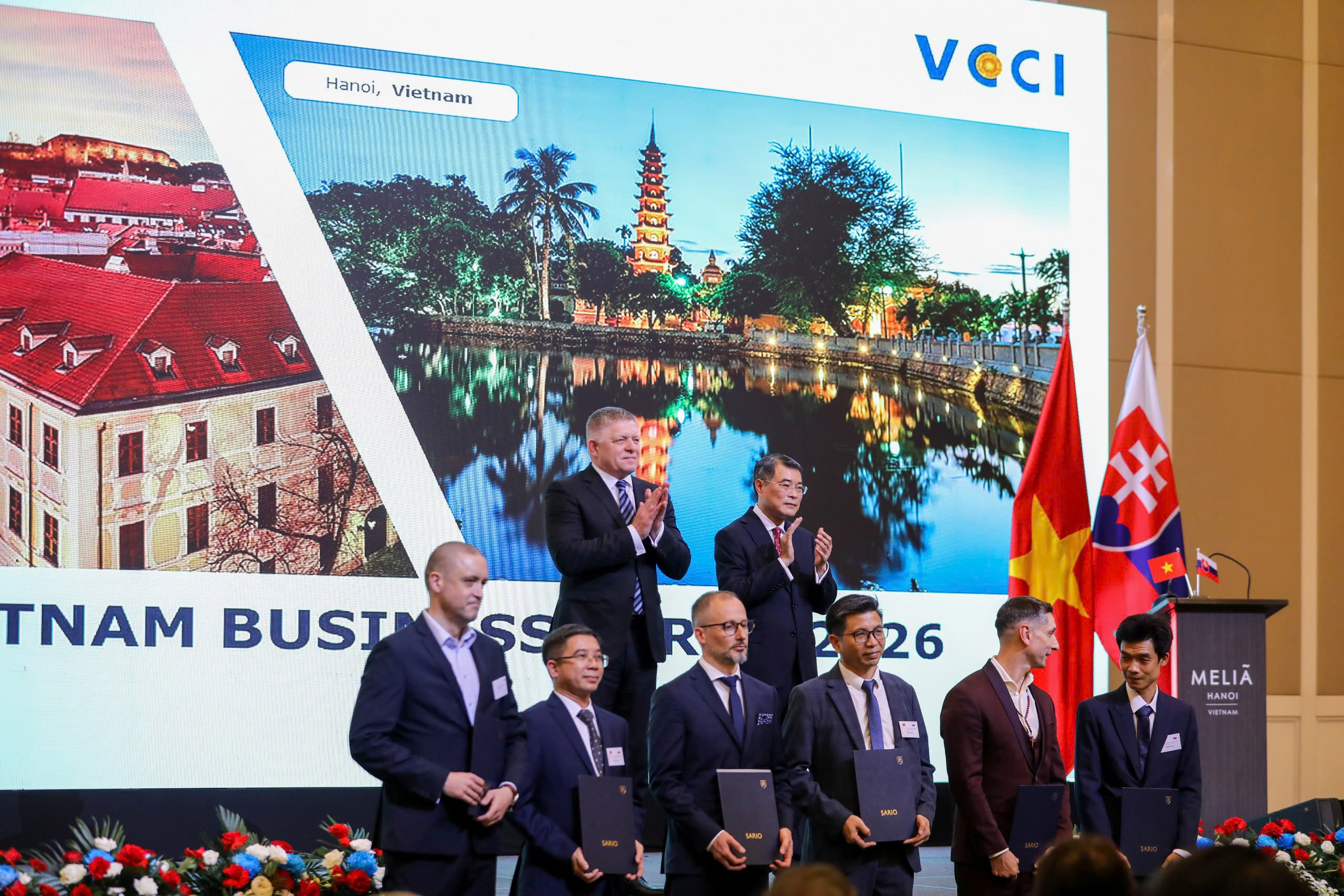
The new partnership between Belevis Construction S.R.O. (Slovakia) and Dai Dung Corporation (Vietnam) in developing a green industrial park project in Slovakia is expected to create opportunities for Vietnamese enterprises to expand their presence and deepen their penetration into the EU market.
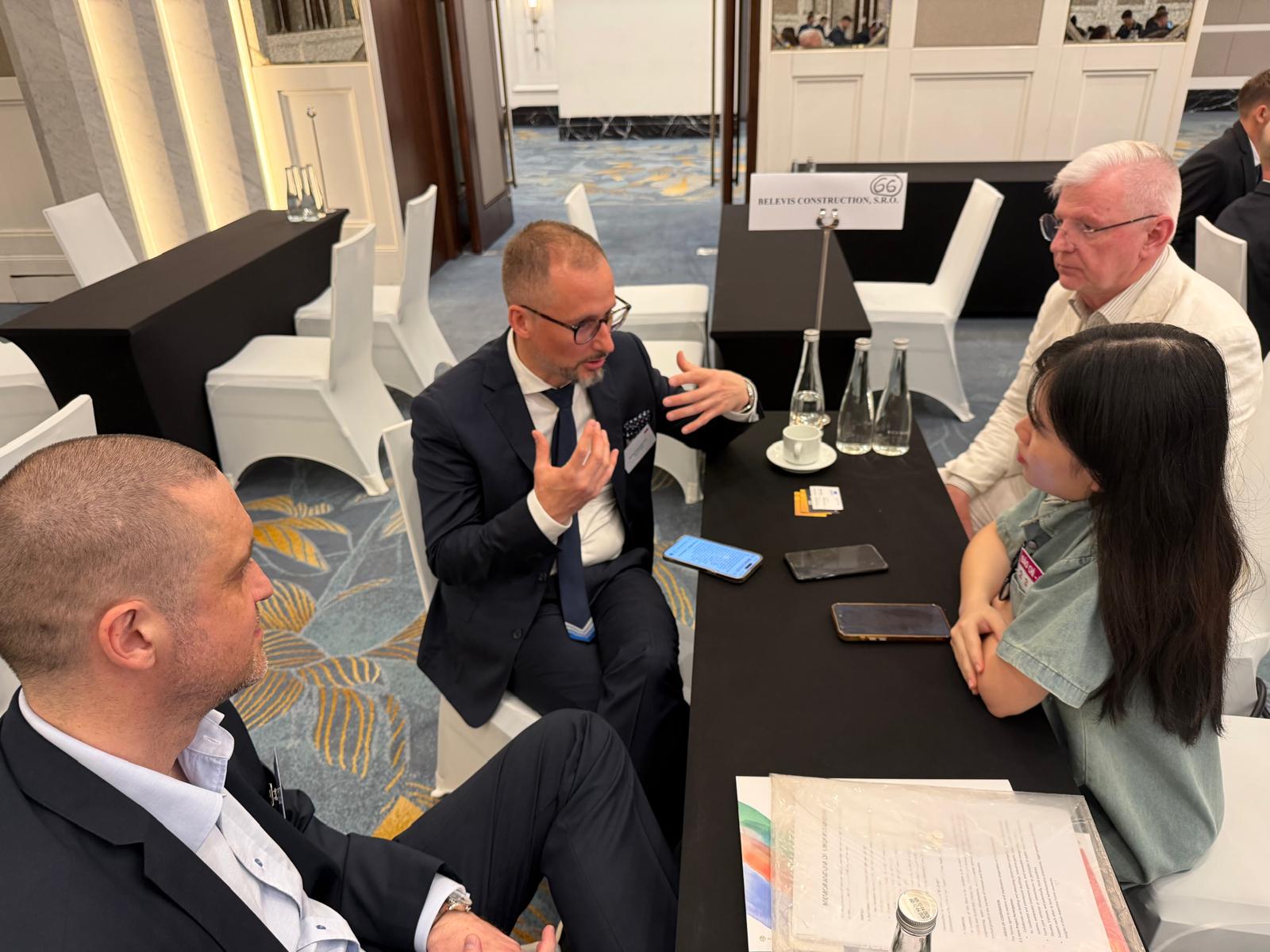
Mr. Martin Repik, Chairman
General Director of Belevis Construction S.R.O., along with his team, Mr.
Tomas Jabornik (Trade Director of Belevis Construction S.R.O.), Mr. Tibor Bucek
(Senior International Advisor of Belevis Construction S.R.O.) shared insights with Vietnam Economic Times/ VnEconomy on
the cooperation with Dai Dung Corporation (Vietnam) in developing a large-scale
industrial ecosystem in Europe, as well as on strengthening economic and
industrial cooperation between Vietnam and Slovakia.
From the perspective of
a Slovak company, how do you view the Vietnamese investment environment for
Slovak enterprises, especially for your company?
One of the main points is that we see Vietnam has a strong
industrial momentum as a very fast-developing country. There is great potential
to be here when you are creating something new and something bigger. Vietnam is
also quite a large country, with more than 100 million people, making it a huge
market in Southeast Asia.
From a historical point of view, Vietnam and Slovakia have
connections in the fields of education, culture, and work projects. As Slovakia
was part of Czechoslovakia, many Vietnamese people studied there. So we share a
common history in terms of people, education, and work.
Another important point is that Vietnam and the European Union
have signed a free trade agreement, which has been valid for several years. All
of these factors make Vietnam a very promising place to start and expand
business.
Belevis Construction
S.R.O has recently signed an MoU with Dai Dung Corporation on developing a large-scale
industrial ecosystem in Europe and strengthening economic–industrial
cooperation between Vietnam and Slovakia. Can you share the key reasons why you
chose Dai Dung Corporation for this partnership?
Dai Dung Corporation is a very well-known company in Vietnam,
quite a large company, and highly skilled in the field of construction,
especially in steel structures. So even the name of Dai Dung already carries
strong credibility. This is the first reason.
Dai Dung Corporation is also a family-owned and family-run
company, which creates a very good working environment. They are moving forward
very fast and are strongly aligned with green aspects of entrepreneurship,
which is also in line with European regulations and standards.
When a company wants to scale a business and move it
forward, it needs to focus on green aspects. You can not only focus on earning
money and paying people; you also have to look at the future. And the future is
closely linked with green development and green deals. In the European Union,
we are strongly focused on these green aspects. So Dai Dung is on a good path
for the future, and this is a very strong foundation for further cooperation.
Another important point is that Dai Dung Corporation is willing to
invest and cooperate in the European Union with partner companies. When we look
for partners, we also need to see a strong interest from the other side. Dai Dung
has shown a high level of interest in doing business with European countries
and EU companies, which makes them a very suitable partner.
Can you share more
details about the industrial park project in cooperation with Dai Dung
Corporation in Slovakia?
Regarding the green aspect of the cooperation, this is a crucial
and essential part of the project we are discussing with Dai Dung Corporation.
Due to the location – right in what we can call the heart of Slovakia, near the
High Tatras national park, the nature of the business and any development in
this area must closely align with green principles.
This means it cannot be heavy industry, chemical industry, or
anything similar. It needs to focus on zero-emission or net-zero projects, such
as RD, technology development, logistics, or light manufacturing. This was
a key point in our discussions.
The industrial park is a greenfield project,
already prepared with the necessary permits and approvals, and strongly
supported by the local municipality and government. We are very pleased that we
could discuss this initial project as the first step in our cooperation, and we
hope it will lead to successful implementation.
Do you think there are
challenges for Vietnam in developing green industrial parks? What should the
country do to address them?
It is not really a problem, but rather a condition that must be
fulfilled. Without meeting green standards, such projects simply cannot move
forward. After the meeting with Dai Dung Corporation, we are confident that the Dai Dung Corporation is
well prepared for this, given their experience and project portfolio. Dai Dung Corporation has international experience and a clear focus on creating
added value for communities, which makes the Corporation a very suitable partner.
On our
side, we are confident that we can support Dai Dung in Slovakia in terms of
permits, development, and construction. So overall, it looks like a strong
match between the two sides.
I would also like to highlight that this project could become a
starting point for other Vietnamese companies to enter Europe through Slovakia.
Dai Dung can act as a pioneer, encouraging more Vietnamese businesses to
follow.
This industrial park could become a gateway to Europe – not only for
one company, but for many Vietnamese companies looking to bring products,
services, and technologies to the European market. Entering through Slovakia
offers access to a very strategic and economically efficient entry point.
Not only Vietnamese
companies but also Vietnam as country could not find better gateway to EU then
start point just here. Our Trade Development Director, Mr. Tomas Jabornik
got clear feedbacks from our partners and representatives in Vietnam, that they
valued this project as “must have” access for Vietnam to EU.
Dai Dung Corporation chose Slovakia because of its central position within the
European Union. It is located in the heart of Europe and uses the euro, which
is a significant advantage when serving the entire EU market. This makes
operations more convenient and efficient.
In addition, Slovakia has strong connectivity, including railways,
highways, and proximity to international airports. It can also serve as a
future gateway to Ukraine once the situation stabilizes, creating further
opportunities.
Overall, the industrial park is not only a single project, but a
platform that can facilitate many other Vietnamese companies entering the
European market. That is why we see it as a very promising cooperation, and we
are eager to move forward with the next steps.
Besides this partnership
with Dai Dung Corporation, can you share more about your company and your plans
to expand and develop in Vietnam in the coming years?
Well, when we talk about Dai Dung Corporation, there are two kinds
of cooperation.
One is cooperation in the European Union with Dai Dung through
a joint venture. The second aspect is our investment and cooperation with Dai
Dung in Vietnam. So we are developing both directions: Dai Dung in Europe and
Belevis in Vietnam. Both sides can bring new development and real estate
opportunities. In the near future, we will see which market offers better
results, stronger green aspects, and better development potential, and then
decide which projects to prioritize and in which country.
Vietnam has a strong history in industrial business and
large-scale industrial projects. The country has been developing very fast over
the past 10 to 20 years. Vietnamese companies have strong know-how in managing
large-scale projects.
From the perspective of European Union companies, our countries
are relatively smaller. The European Union has around 300 million inhabitants,
while Vietnam alone accounts for nearly one-third of that population. This
means Vietnamese companies are very experienced in handling large-scale
projects, which is a big opportunity.
On our side, we can bring European technical expertise and
green-focused solutions to these projects. This creates a strong foundation for
a successful joint venture and long-term cooperation.
In your opinion, what
should Vietnam do to better facilitate your company, as well as Slovak
companies in general, when investing in Vietnam in the near future?
We see that forums like this are very important opportunities to
bring Slovak companies to Vietnam. So we should have more business forums and
more connections between Vietnamese and Slovak companies. The distance between
Vietnam and the European Union is quite large, so it is important to bring
companies closer together.
Vietnam should have more discussions and more frequent
interactions. From our experience, Vietnamese companies are very willing to do
business with Slovak partners. What we need is to reduce the distance by
communicating more often.
The country can also organize more business talks in Slovakia, as
well as in Vietnamese cities, maybe every month or every six months. Because,
in business, one direct meeting is often more valuable than hearing about a
company many times without meeting in person.
vneconomy-Phuong Nhi



0 Comments