
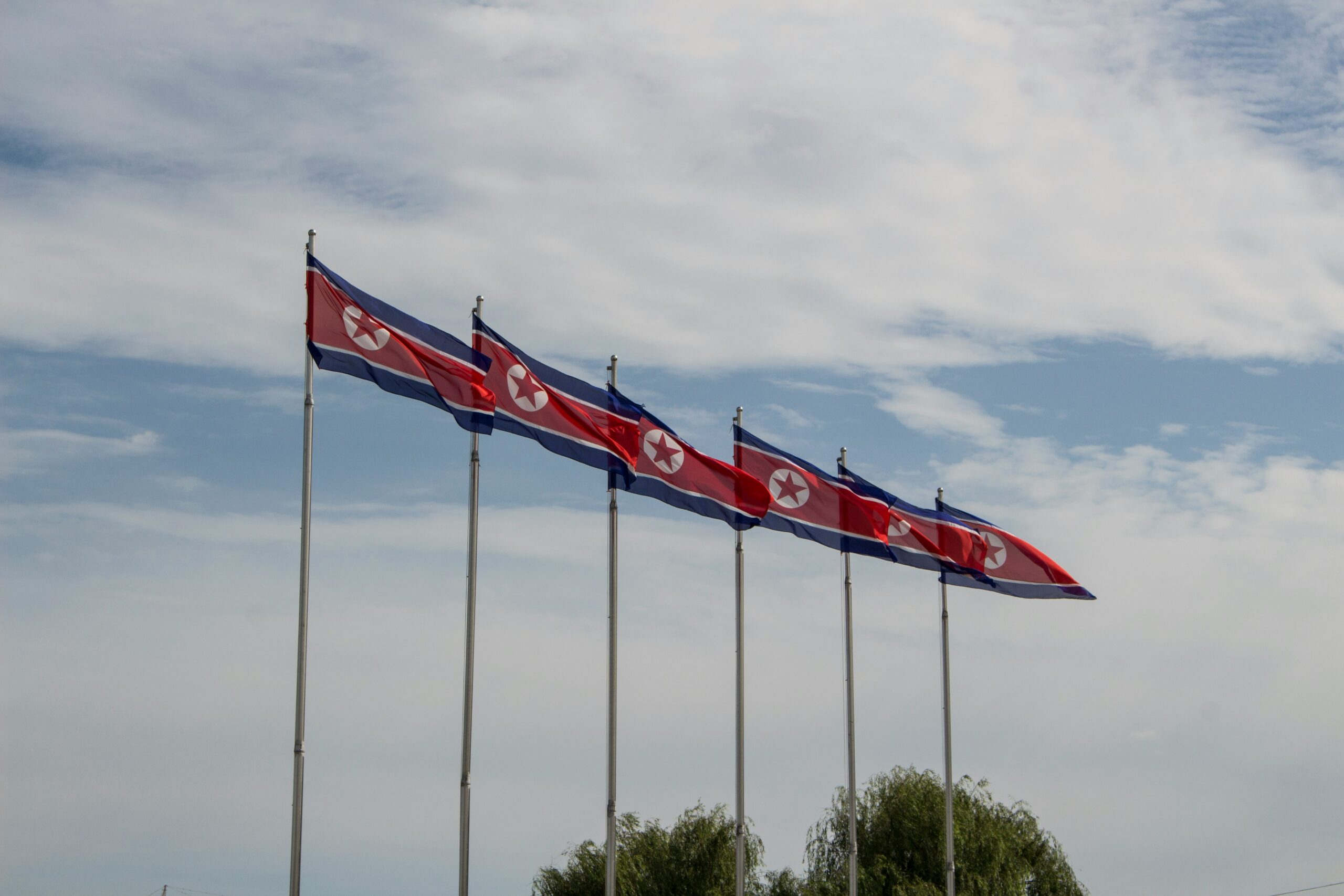
A deep, analytical exploration of North Korea’s enduring political stability under Kim Jong Un. This article examines ideology, surveillance, economic adaptation, and geopolitical strategy shaping one of the world’s most resilient regimes.
🧠 The Hidden Architecture of North Korea’s Enduring Power
🌍 Introduction: The Paradox of Survival in the Modern Era
North Korea remains one of the most perplexing political systems in the modern world. In an era defined by globalization, digital transparency, and economic interdependence, it continues to function as a highly centralized, opaque, and tightly controlled state.
Despite decades of sanctions, diplomatic isolation, technological disadvantage, and internal hardship, the regime under Kim Jong Un has not only survived—it has adapted.
What makes this survival particularly remarkable is that it defies many conventional assumptions in political science. Historically, states under severe economic pressure and international isolation tend to fracture or reform. North Korea has done neither.
Instead, it has developed a self-reinforcing system of political durability that integrates ideology, surveillance, elite loyalty, external partnerships, and adaptive economic survival mechanisms.
This article explores the structural foundations behind that endurance.
🏛️ 1. The Core Structure: A Political System Built for Continuity
At the heart of North Korea’s resilience is its unique political architecture: a hereditary authoritarian system anchored in the Kim dynasty.
Unlike most modern governments, which rely on institutional succession or electoral legitimacy, North Korea operates through dynastic continuity. Power is not transferred—it is inherited.
This structure produces several strategic advantages:
- Eliminates internal leadership competition
- Reinforces centralized authority
- Reduces factional instability
- Creates long-term policy consistency
The state is not merely governed—it is personified. The leader is not separate from the system; the leader is the system.
This fusion of identity and governance ensures that regime stability is synonymous with national stability in official ideology.
🧠 2. Ideology as Infrastructure, Not Just Belief
One of the most misunderstood aspects of North Korea is the role of ideology. It is often dismissed as propaganda, but in reality, it functions as institutional infrastructure.
The governing ideology—rooted in self-reliance and loyalty to leadership—creates a closed interpretive framework for understanding reality.
Within this framework:
- Economic hardship is attributed to external hostility
- Military development is framed as defensive necessity
- Leadership authority is considered historically justified
- National struggle is seen as permanent
This system reduces cognitive dissonance during crises. Instead of triggering opposition, hardship reinforces the narrative of external siege.
In effect, ideology transforms instability into justification for further consolidation of power.
🛰️ 3. Information Control: The Management of Reality
Modern political systems are increasingly shaped by information flows. North Korea represents the extreme opposite: information restriction as governance strategy.
The state maintains strict control over:
📵 Foreign media access
📡 Internet connectivity
📺 Television and radio broadcasting
📚 Educational content
📱 Digital communication systems
This creates what analysts describe as an information vacuum, where external comparison becomes nearly impossible for most citizens.
Without alternative narratives:
- Public dissatisfaction lacks coordination mechanisms
- Political alternatives remain conceptually invisible
- External benchmarking of living standards is limited
Even small breaches in this system—such as smuggled media—are treated as serious threats because they introduce competing realities.
⚔️ 4. Surveillance and Internal Security: Stability Through Visibility
North Korea’s internal security apparatus is extensive and multi-layered.
It includes overlapping systems of:
- State security agencies
- Local neighborhood monitoring units
- Workplace reporting structures
- Military oversight mechanisms
Rather than relying solely on force, the system operates through pervasive visibility.
Citizens exist within a network where behavior is continuously observable, reported, and evaluated.
The effectiveness of this system lies in its psychological impact:
- Individuals self-censor to avoid risk
- Communities regulate internal behavior collectively
- Political dissent becomes socially costly
Importantly, enforcement does not need to be constant. The possibility of observation is sufficient to shape behavior.
🧬 5. Elite Loyalty: The Inner Stability Layer
No authoritarian system survives without elite cohesion. In North Korea, the ruling class is carefully managed through a combination of:
💼 Privilege allocation
🏠 Controlled living standards
🎖️ Military and bureaucratic advancement systems
🔒 Dependency on state protection
Elite survival is directly tied to regime stability. This alignment ensures that internal power struggles are minimized, as elites have more to lose from instability than from compliance.
Periodic purges also serve a strategic function: they reinforce discipline and prevent the emergence of independent power centers.
The result is a highly controlled elite ecosystem where loyalty is both rewarded and enforced.
🌐 6. External Lifelines: The Geopolitical Balancing Act
Despite its isolation, North Korea is not economically or politically self-contained. Its survival depends in part on external relationships.
Key external factors include:
- Trade with regional partners
- Energy and food assistance channels
- Diplomatic shielding in international forums
- Informal economic networks
These relationships do not eliminate sanctions pressure, but they soften its impact, allowing the regime to maintain baseline functionality.
In geopolitical terms, North Korea operates as a strategic buffer state, where larger powers tolerate its existence due to broader regional calculations.
💰 7. Economic Adaptation: Survival in a Sanctioned Environment
International sanctions have forced North Korea to develop adaptive economic strategies.
These include:
🔄 Informal trade systems
Goods and resources are often exchanged through indirect or unofficial channels.
💻 Cyber-enabled revenue generation
Cyber operations have become a reported source of foreign currency acquisition.
🌏 Labor export arrangements
Workers abroad generate income that is partially repatriated.
🧾 Internal rationing systems
Resource distribution remains centrally controlled to prevent localized scarcity from becoming political instability.
Rather than collapsing the economy, sanctions have contributed to the development of a parallel survival economy—less transparent, but resilient.
🧩 8. Why Collapse Predictions Have Repeatedly Failed
For decades, analysts have predicted the imminent collapse of North Korea. These predictions have not materialized due to several structural realities:
- Strong institutionalized control systems
- High elite cohesion
- Adaptive economic mechanisms
- Ideological resilience
- External balancing support
The critical miscalculation is often the assumption that economic distress automatically leads to political collapse. In North Korea’s case, the system is designed to decouple economic performance from regime legitimacy.
This means that hardship does not necessarily translate into political instability.
🪖 9. Military Centrality: Power Through Deterrence
The military plays a central role in North Korea’s governance structure, not only as a defense mechanism but as a political pillar.
Key functions include:
- Deterring external intervention
- Reinforcing internal legitimacy
- Structuring elite advancement
- Supporting national ideological narratives
Military capability, particularly missile development, serves as both a strategic deterrent and a domestic political symbol of strength.
This dual function strengthens both external bargaining power and internal cohesion.
🧠 10. Psychological Governance: Engineering Perception
Beyond institutions and economics, North Korea’s stability relies heavily on psychological governance.
This includes:
🎯 Controlled aspiration systems
⚖️ Managed perceptions of fairness
🧭 Framed narratives of survival
🔁 Repetitive ideological reinforcement
Over time, these mechanisms shape how individuals interpret both personal hardship and national conditions.
Rather than simply enforcing compliance, the system conditions perception itself, making alternative interpretations less likely to emerge.
🏗️ 11. System Resilience: Why the Structure Holds
North Korea’s enduring stability is best understood not as a single factor, but as a multi-layered system of reinforcement.
Each component supports the others:
- Ideology justifies control
- Surveillance enforces ideology
- Elite loyalty sustains leadership
- External support mitigates pressure
- Economic adaptation prevents collapse
This creates a feedback loop of stability where weakening one element does not immediately destabilize the whole system.
🔍 Conclusion: A Regime Designed to Endure
North Korea’s persistence is not accidental. It is the result of a carefully constructed political ecosystem designed to prioritize regime survival above all other goals.
While it faces significant internal and external pressures, the system is built to absorb shocks rather than respond to them with reform.
Understanding North Korea requires moving beyond simplistic collapse narratives and recognizing the complexity of its internal architecture.
It is not a static system—it is an adaptive one, continuously evolving to preserve its core objective: continuity of rule.
📌 SOURCE (External Reference)
https://www.wsj.com/world/asia/the-surprising-source-of-north-koreas-enduring-power-17c3ed21




0 Comments