
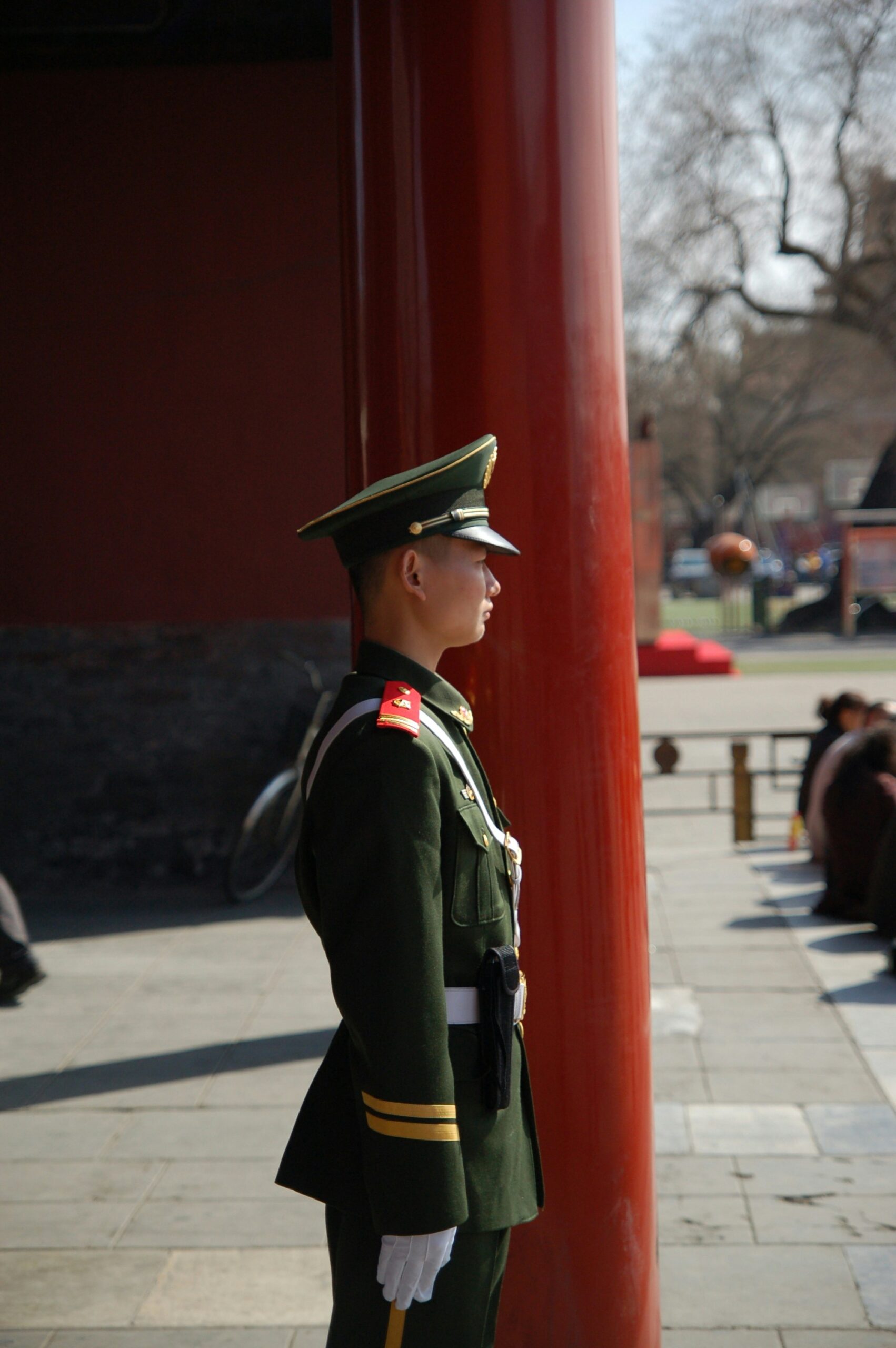
China is accelerating the development of AI-powered weapons, drone swarms, and robotic ground units inspired by animal behavior. This in-depth analysis explores the technology, strategy, risks, and global implications of China’s autonomous warfare push.
🧠 Introduction: The Rise of Nature-Inspired Artificial Intelligence in Warfare
China is entering a new phase of military innovation—one defined not by sheer manpower alone, but by artificial intelligence, autonomous decision-making, and machine learning modeled after nature itself. From algorithms inspired by hawks hunting prey to robotic “wolf” units designed to move and fight in coordinated packs, the country’s defense research ecosystem is quietly redefining how wars could be fought in the coming decades.
At the center of this transformation is a strategic belief gaining traction inside Chinese military and academic circles: future conflicts will be won by machines that can think, adapt, and cooperate faster than humans. Rather than relying exclusively on pre-programmed logic, Chinese researchers are training AI systems to learn from biological predators—animals that evolved over millions of years to survive in complex, hostile environments.
This shift reflects a broader global race toward autonomous weapons, but China’s approach stands out for its scale, speed, and philosophical direction. By blending artificial intelligence with swarm theory, robotics, and behavioral science, Beijing is aiming to build weapons systems capable of operating with minimal human oversight—an ambition that raises both strategic advantages and profound global concerns.
🦅 Why Hawks, Wolves, and Animal Behavior Matter to Military AI
Nature has always influenced military thinking, but artificial intelligence allows those lessons to be encoded directly into machines.
Predatory animals like hawks and wolves excel at:
-
Rapid threat identification
-
Cooperative attacks
-
Dynamic decision-making under uncertainty
-
Adapting tactics in real time
Chinese defense researchers believe these traits are precisely what modern autonomous weapons need in environments saturated with electronic warfare, cyber disruption, and incomplete information.
🧬 From Biology to Algorithms
Instead of hard-coding every decision, engineers use evolutionary algorithms and reinforcement learning to let AI systems “discover” optimal strategies. For example:
-
Hawk-inspired algorithms prioritize isolating weak targets
-
Wolf-pack logic emphasizes coordination and role-based behavior
-
Flocking models allow drones to maintain formation while avoiding collisions
In simulated combat environments, these systems continuously refine themselves, learning how to survive and win without explicit instructions for every scenario.
🚀 Drone Swarms: The Backbone of China’s Autonomous Warfare Vision
One of the most critical applications of these algorithms is drone swarm warfare.
Unlike traditional drones controlled individually by human operators, swarms consist of dozens—or potentially hundreds—of autonomous units that:
-
Share data instantly
-
Make collective decisions
-
Reconfigure themselves if some units are destroyed
⚙️ How Swarms Change the Battlefield
Drone swarms challenge conventional military defenses in several ways:
-
Overwhelming saturation: Air defenses designed for missiles struggle against mass drone attacks
-
Redundancy: Losing individual units does not collapse the mission
-
Speed: AI reacts faster than human command chains
China’s research emphasizes distributed intelligence, meaning no single drone acts as a central commander. This reduces vulnerability to jamming or decapitation strikes.
🐺 Robotic Wolves and Autonomous Ground Units
Beyond the air, China is investing heavily in autonomous ground systems, including quadrupedal robots often referred to as “robot wolves.”
These machines are designed to operate in environments where wheeled or tracked vehicles struggle:
-
Urban ruins
-
Mountain terrain
-
Forested or uneven landscapes
🦾 Capabilities of Robotic Ground Units
Robotic wolves can be adapted for:
-
Reconnaissance and surveillance
-
Transporting supplies or equipment
-
Supporting infantry formations
-
Potentially offensive roles in the future
Operating in coordinated groups, they can flank positions, relay battlefield intelligence, and continue functioning even if communication links are partially disrupted.
🧠 Artificial Intelligence Without Humans in the Loop?
One of the most controversial aspects of China’s AI weapons research is the degree of autonomy being explored.
Traditional military doctrine emphasizes human oversight in lethal decisions. However, China’s research increasingly focuses on human-out-of-the-loop systems, particularly in fast-moving scenarios where human reaction times are insufficient.
⚠️ Why Autonomy Is So Appealing
From a military standpoint, autonomous systems offer:
-
Faster response times
-
Reduced risk to human soldiers
-
Continuous operation without fatigue
But they also raise critical questions about:
-
Accountability
-
Escalation risks
-
Unintended engagements
🌐 Strategic Competition: Why China Is Moving So Fast
China’s push into AI-driven warfare is not happening in isolation. It reflects deep concerns about future conflict with technologically advanced rivals, particularly the United States.
🧩 Industrial and Data Advantages
China benefits from:
-
Massive manufacturing capacity
-
Extensive data collection ecosystems
-
Close integration between civilian tech firms and defense research
This allows rapid experimentation, prototyping, and scaling—key advantages in AI development.
📊 Patents, Research, and Institutional Support
Chinese universities and state-linked research institutions are filing large numbers of patents related to:
-
Swarm intelligence
-
Autonomous coordination
-
Decision-making under uncertainty
Unlike more fragmented research systems elsewhere, China’s defense innovation pipeline is tightly aligned with national strategic goals.
⚔️ Changing the Nature of Warfare
AI-powered weapons are not just new tools—they fundamentally alter how wars might be fought.
Future conflicts could involve:
-
Machine-on-machine engagements
-
Rapid escalation driven by algorithms
-
Reduced warning times for decision-makers
In such environments, the side with more adaptable and resilient AI systems may hold decisive advantages.
🧭 Ethical and Strategic Risks
Despite the technological momentum, serious risks remain.
❗ Key Concerns
-
Unpredictable behavior in complex real-world environments
-
Accidental escalation due to misinterpreted signals
-
Loss of human judgment in life-and-death decisions
These risks are compounded when multiple countries deploy autonomous weapons without shared rules or safeguards.
🌍 Global Implications and the Arms Race Effect
China’s advances are already influencing military planning worldwide. As AI weapons proliferate:
-
Other nations feel pressure to keep pace
-
Arms control frameworks struggle to adapt
-
Smaller states gain access to powerful asymmetric tools
The result may be a more volatile and automated global security environment.
🔮 What Comes Next?
China’s trajectory suggests deeper integration of AI into:
-
Command and control systems
-
Joint air-land-sea operations
-
Strategic deterrence planning
Whether this leads to greater stability or increased risk depends largely on how global norms evolve—and how much control humans retain over machines designed to fight.
🧠 Final Thoughts: A Turning Point in Military History
China’s use of animal-inspired AI algorithms and autonomous robotic systems marks a turning point in the history of warfare. By merging biology, artificial intelligence, and military strategy, Beijing is betting that the future battlefield will be decided not just by firepower, but by which machines can think, adapt, and cooperate most effectively.
The consequences of this shift will extend far beyond China—reshaping global security, military doctrine, and the ethical boundaries of armed conflict for decades to come.
🔗 Source
https://www.wsj.com/world/china/china-ai-weapons-hawks-wolves-2fcb58bb




0 Comments