
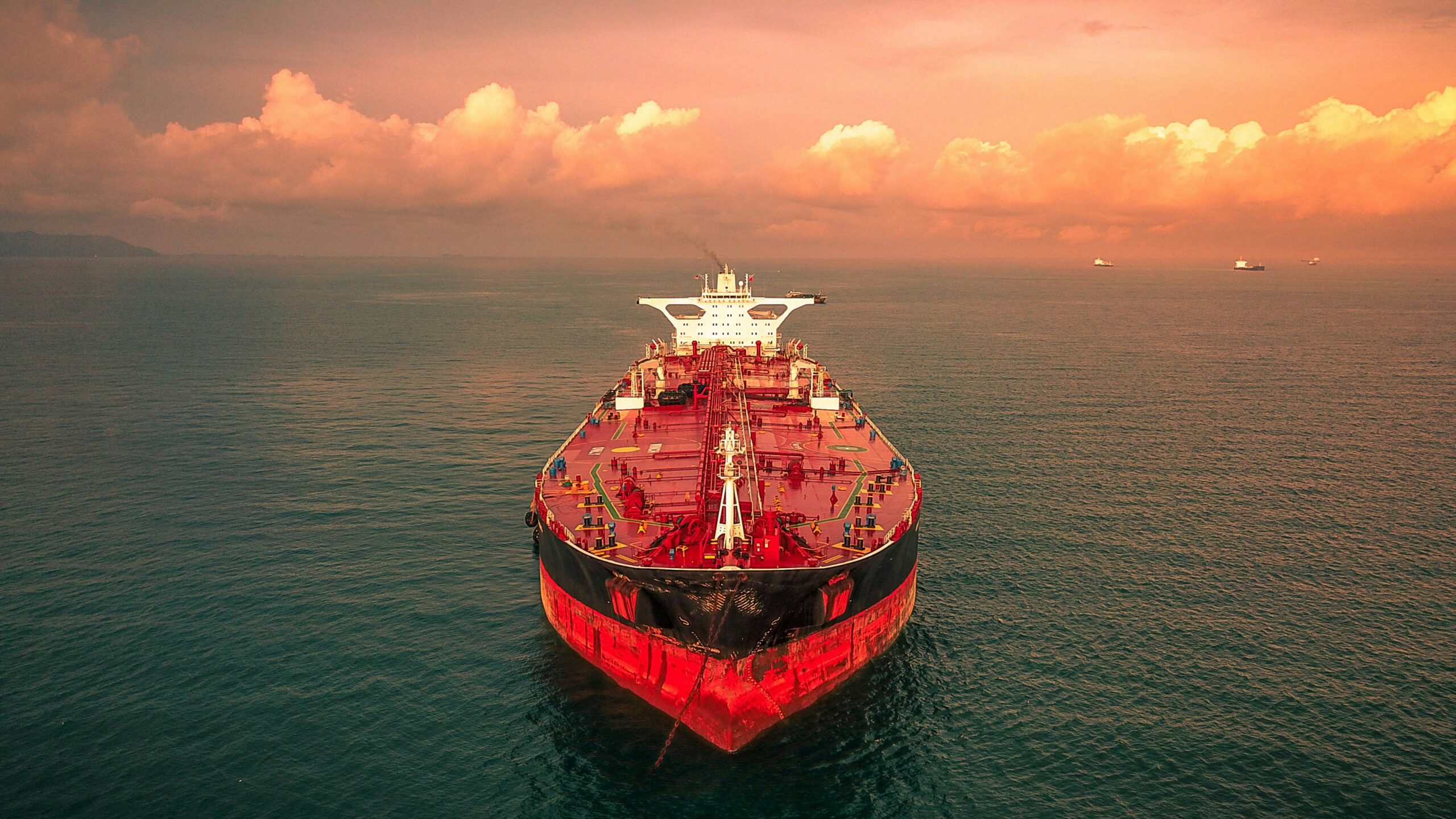
The United States is investigating suspected Iranian cyberattacks targeting up to 50 ships carrying oil, gas and chemicals, raising concerns about global shipping and energy security.
Focus Keyphrase: Iran cyberattacks on ships
Secondary Keywords: US Iran tensions, maritime cybersecurity, oil tanker cyberattacks, global energy security, international shipping threats, cyber warfare, Strait of Hormuz.
Introduction: Cyber Warfare Expands Into International Shipping
The United States is investigating whether Iran is behind a series of cyberattacks targeting commercial ships transporting oil, liquefied petroleum gas, chemicals and other potentially hazardous materials. The investigation raises concerns that the confrontation between Washington and Tehran could increasingly extend beyond conventional military operations into cyberspace and international maritime transportation.
According to a report by The Wall Street Journal , citing American officials and individuals familiar with the investigation, as many as 50 vessels may have been targeted. Some ships reportedly received threatening messages, bomb threats and warnings suggesting that their cargo or operations could be at risk.
Iran is considered a primary suspect, although American authorities are also examining the possibility of Russian involvement. Importantly, investigators have not established that Tehran was responsible for the incidents.
The developments highlight a growing vulnerability in the global economy: commercial shipping networks that transport essential energy supplies are increasingly exposed to digital security threats.
1. Up to 50 Commercial Vessels Reportedly Targeted
The scale of the reported incidents is particularly concerning for international maritime operators.
According to the WSJ investigation, approximately 50 vessels carrying oil, liquefied petroleum gas, chemicals and other potentially dangerous cargo may have experienced cyberattacks.
Some ships reportedly received messages warning that they could be blown up. Other communications included threats against vessels transporting American products.
These incidents appear to extend beyond a single geographical area. Ships operating near the United States, Europe and Asia have reportedly been affected, suggesting that the potential threat could have international implications.
For shipping companies, the challenge is not limited to protecting their computer networks. A cyber intrusion can create uncertainty about vessel communications, operational systems, cargo management and the reliability of information received by crews.
The reported attacks also demonstrate how digital vulnerabilities can become a concern for physical infrastructure operating thousands of kilometers away from traditional conflict zones.
The Wall Street Journal +2
2. Why Iran Has Become a Primary Suspect
American investigators are examining possible Iranian involvement as tensions between Washington and Tehran continue.
Iran has developed cyber capabilities that have attracted international attention, particularly in areas involving industrial infrastructure, government networks and critical services.
However, identifying a suspected attacker in cyberspace is complicated. Cybercriminals and state-linked groups can use compromised infrastructure, third-party networks and other techniques to conceal their identities.
The United States is also considering whether Russia could have played a role in the maritime incidents.
At this stage, the investigation should not be interpreted as proof of Iranian responsibility. A Trump administration official told the WSJ that investigators had not found evidence establishing an Iranian connection, while characterizing four attacks as minor.
This distinction is important for international security. Governments must determine who is responsible before deciding whether an incident represents criminal activity, state-sponsored interference or a broader geopolitical operation.
The Wall Street Journal +1
3. US Coast Guard Deploys Cybersecurity Teams
The investigation has already prompted American authorities to take additional precautions.
The US Coast Guard has dispatched specialized cybersecurity teams to at least four vessels approaching American ports in recent weeks.
Among the ships identified in reporting on the investigation are the VL Prosperity and Kohaku .
These operations demonstrate the importance of protecting commercial vessels before they enter major American ports and potentially expose wider transportation networks to cybersecurity risks.
The involvement of federal cybersecurity specialists also highlights the increasingly important relationship between maritime security, national security and the protection of critical infrastructure.
For the United States, commercial shipping is not simply an economic activity. It is an essential component of energy distribution, international trade and the broader supply chain.
A serious disruption involving tankers or other commercial vessels could create consequences extending well beyond the affected ships.
The Wall Street Journal +2
4. Vulnerable Maritime Technology Creates New Security Risks
One particularly important aspect of the investigation concerns the technology used aboard commercial vessels.
According to the WSJ report, attackers have exploited vulnerabilities involving Fortinet routers, which are commonly used in maritime technology environments.
Modern ships increasingly depend on interconnected digital systems to support communications, navigation-related services, cargo operations and administrative functions.
Although these technologies improve efficiency, they also create additional points of vulnerability.
A compromised network could potentially expose sensitive information, disrupt communications or create operational difficulties for shipping companies.
Cybersecurity specialists have repeatedly warned that industrial systems require different protection strategies from ordinary office computer networks.
Maritime operators therefore face several challenges:
-
Network security: Protecting onboard communications and connected equipment from unauthorized access.
-
Software vulnerabilities: Updating routers, operating systems and other digital infrastructure.
-
Crew preparedness: Training employees to recognize suspicious communications and potential cyber incidents.
-
Incident response: Establishing procedures for isolating compromised systems and maintaining safe operations.
-
Supply-chain protection: Ensuring that shipping partners, technology providers and port operators follow appropriate cybersecurity standards.
Nevertheless, cybersecurity incidents do not automatically mean that a vessel is in immediate physical danger. Experts cited in the WSJ reporting indicated that ships retain manual controls, making catastrophic collisions or explosions less likely as a direct consequence of these intrusions.
The more immediate risks could involve operational disruptions, delays, investigations and financial losses.
The Wall Street Journal +1
5. Global Energy Markets Could Face Additional Uncertainty
The potential economic consequences deserve particular attention.
Oil tankers and other commercial vessels are essential to international energy markets. They transport crude oil, refined petroleum products, liquefied petroleum gas and industrial chemicals between producing countries, trading centers and major consuming economies.
Any sustained disruption to maritime transportation could complicate international supply chains.
For energy companies, cybersecurity incidents can introduce additional costs through vessel inspections, insurance considerations, security procedures and delays.
The consequences could be particularly significant if shipping companies begin avoiding certain routes or introducing additional security measures.
For investors, the situation creates another geopolitical risk to monitor alongside oil production, regional military tensions and international trade disruptions.
However, it is important not to confuse a cybersecurity investigation with an actual interruption in global oil supplies. The reported attacks do not, by themselves, establish that international energy shipments have experienced a significant reduction.
The potential economic impact will depend on the number of confirmed incidents, their severity and whether shipping operators can maintain normal operations.
6. Strait of Hormuz Remains a Strategic Concern
The investigation is unfolding against the background of continuing tensions involving Iran and the United States.
The Strait of Hormuz remains one of the world's most important energy transportation corridors.
The narrow maritime passage connects the Persian Gulf with international shipping routes through the Gulf of Oman and the Arabian Sea.
Its strategic importance comes from the substantial volumes of petroleum and other energy products transported through the region.
A combination of conventional military threats, maritime security incidents and cyber operations could increase uncertainty for shipping companies and energy traders.
The emergence of reported cyberattacks against vessels operating near Europe and Asia also suggests that maritime cybersecurity should not be considered exclusively a Middle Eastern security issue.
International shipping companies, port authorities and governments increasingly need to consider digital threats as part of their overall maritime risk assessments.
7. A Wider Challenge for International Cybersecurity
The reported incidents illustrate how geopolitical competition is changing.
Traditional conflicts have largely focused on military capabilities, territorial control, intelligence operations and economic pressure. However, cyber operations provide another potential instrument for governments and state-linked groups seeking to influence their opponents.
Commercial infrastructure can become attractive because it particularly connects multiple countries and economic sectors.
Shipping companies depend on international communications networks, satellite services, software providers and port infrastructure. This interconnected environment can create vulnerabilities that extend beyond the jurisdiction of any single government.
The maritime sector is therefore facing an increasingly complex security environment.
Governments may need to strengthen cooperation between intelligence agencies, cybersecurity authorities, coast guards and private shipping operators.
International information sharing could also become more important, particularly when incidents affect vessels registered in one country, operated by companies in another and transporting cargo between multiple international markets.
The central challenge is establishing effective protection without creating unnecessary restrictions on international commerce.
8. What Shipping Companies and Governments Should Do Next
The investigation could accelerate investment in maritime cybersecurity.
Shipping companies may need to reassess whether their existing security arrangements are sufficient to protect increasingly connected vessels.
Several priorities deserve attention:
-
Strengthen cybersecurity infrastructure: Regularly identify and address vulnerabilities in onboard networks and connected equipment.
-
Improve government cooperation: Establish stronger information-sharing channels between maritime authorities and cybersecurity agencies.
-
Protect critical operational systems: Separate sensitive vessel-control systems from less secure administrative networks wherever technically appropriate.
-
Prepare for operational disruptions: Ensure crews can continue essential operations when digital systems become unavailable.
-
Increase international monitoring: Improve the detection and reporting of suspicious activity affecting commercial vessels.
These measures could help reduce the likelihood that cyber incidents develop into broader transportation and economic disruptions.
For governments, the challenge will be responding proportionately while avoiding premature accusations that could further escalate geopolitical tensions.
Conclusion: Maritime Cybersecurity Becomes a National Security Priority
The investigation into suspected Iranian cyberattacks against commercial vessels highlights an important development in international security.
The reported targeting of as many as 50 ships demonstrates how cyber threats could potentially affect industries that are essential to the global economy.
Although Iran remains a primary suspect in the American investigation, responsibility has not been established, and Russia is also being considered as a possible source.
For international shipping companies, energy producers, investors and governments, the broader lesson is that maritime security increasingly depends on digital protection.
As geopolitical tensions continue, cybersecurity could become just as important as conventional maritime defenses in protecting international trade and energy transportation.
The future stability of global shipping will depend not only on the security of sea routes but also on the resilience of the digital infrastructure supporting them.
Frequently Asked Questions (FAQ)
1. Is the United States investigating Iran over cyberattacks on ships?
Yes. American authorities are investigating possible Iranian involvement in cyberattacks targeting commercial vessels. However, Iranian responsibility has not been established.
2. How many ships were reportedly targeted?
According to the WSJ report, as many as 50 commercial vessels carrying oil, gas, chemicals and other potentially hazardous cargo may have been targeted.
3. Is Russia also suspected?
Yes. American authorities are reportedly considering Russia as another possible source of the cyberattacks.
4. What types of vessels were affected?
The reported incidents involved commercial vessels transporting oil, liquefied petroleum gas, chemicals and other cargo.
5. Did the cyberattacks threaten international oil supplies?
The incidents raise concerns about potential shipping disruptions, but they do not establish that global oil supplies have been significantly interrupted.
6. Why is maritime cybersecurity important?
Commercial vessels increasingly depend on connected digital infrastructure. Cyberattacks could disrupt communications, create operational difficulties and increase costs for shipping companies.
7. Why is the Strait of Hormuz important?
The Strait of Hormuz is a strategic international shipping passage connecting the Persian Gulf with global maritime trade routes. It is particularly important for international oil and gas transportation.
Editorial positioning: This article examines the intersection of geopolitical tensions, maritime cybersecurity, international trade and global energy security. Allegations remain under investigation and should not be interpreted as established Iranian responsibility.
Sources and Further Reading
Disclaimer: This article is for informational and educational purposes. Allegations concerning cyberattacks remain subject to investigation, and geopolitical developments may change.




0 Comments