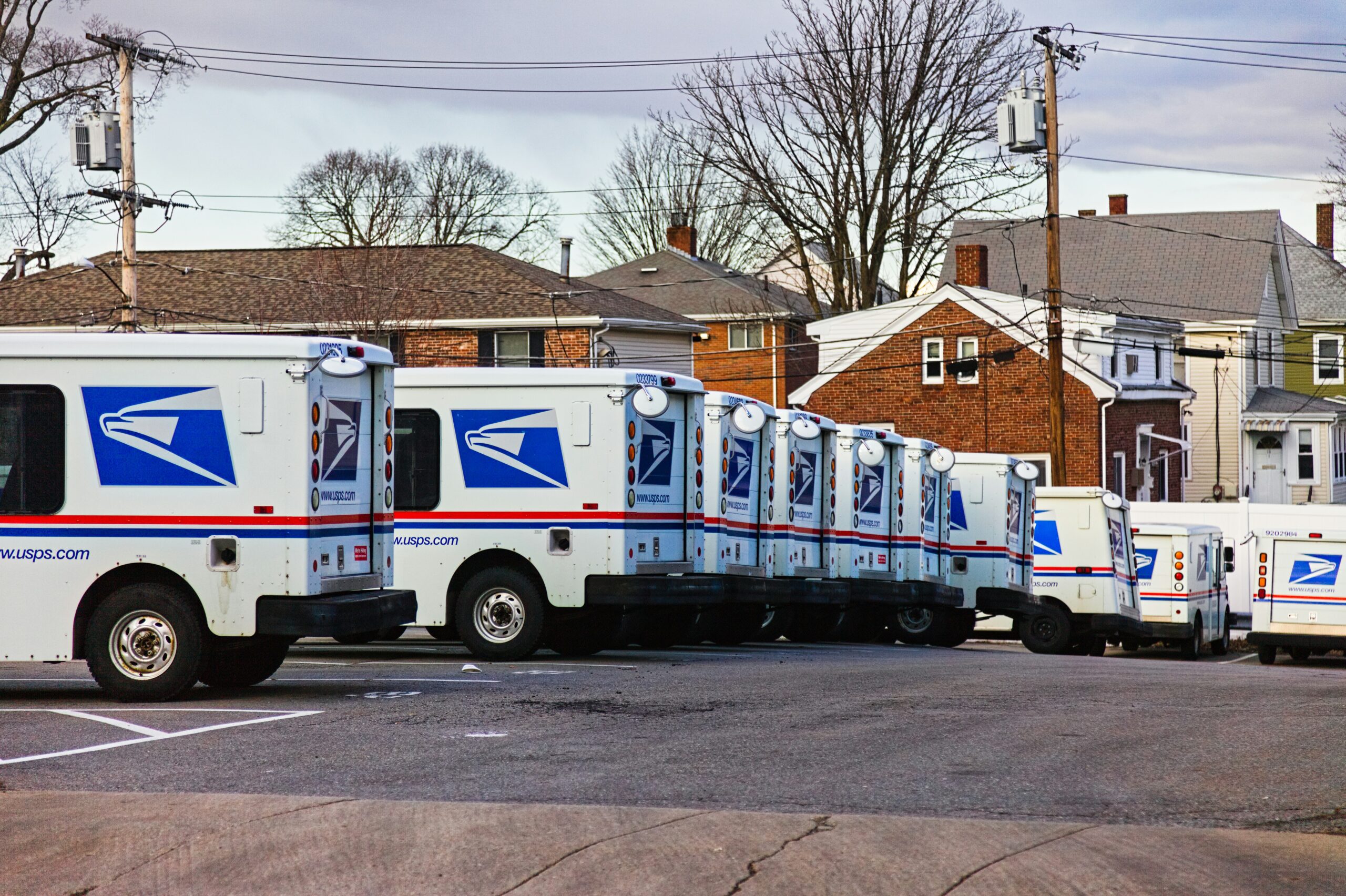
The U.S. Postal Service has become a major battleground in the 2026 midterm elections as Trump-backed mail voting rules face legal challenges over ballot access, election authority and implementation.
Focus Keyphrase: USPS mail voting rules 2026
The U.S. Postal Service has unexpectedly become one of the most important institutions in the political fight surrounding the 2026 U.S. midterm elections, as the Trump administration pushes new restrictions on mail-in voting and states challenge the federal government’s authority to impose them.
What might normally be an operational question for postal workers has become a much larger debate over election administration, voting access and the balance of power between Washington and the states.
According to The Wall Street Journal, new federal rules would give the Postal Service a much more significant role in determining how mail ballots are prepared and processed. The changes have generated lawsuits from more than two dozen states and raised questions about whether USPS has the technology and legal authority to take on such a politically sensitive responsibility.
Why the Postal Service Is Suddenly So Important
Mail-in voting depends heavily on the Postal Service.
Millions of Americans use absentee or mail ballots, meaning that election officials rely on USPS to deliver ballots to voters and return completed ballots to election offices.
The Trump administration’s proposed changes would go beyond simply transporting election mail.
Among the measures under dispute are requirements involving ballot envelope designs, voter information and a federal online portal intended to support the new system. The changes could effectively place USPS in the middle of the process for determining whether certain election mail can move through the postal system.
That is significant because elections in the United States are primarily administered by states and local governments.
The dispute therefore is not simply about postal operations. It is also about who has the authority to establish the rules under which Americans vote.
Trump Administration Pushes Tighter Mail-Voting Rules
President Donald Trump has repeatedly criticized mail-in voting, particularly since the 2020 presidential election.
The administration argues that stronger controls are necessary to protect election integrity.
Critics, however, say the new requirements could create confusion and make it more difficult for eligible voters to cast ballots successfully.
The legal dispute has become particularly urgent because the November midterm elections are approaching and some states have already begun sending ballots to voters.
A federal appeals court recently upheld an injunction blocking key elements of Trump’s mail-voting initiative, saying the administration’s approach was likely beyond presidential authority. The ruling came as the Supreme Court considers related litigation.
The result is an unusual situation in which election officials, postal administrators and federal courts are all operating under significant uncertainty.
The Technology Problem
One of the biggest concerns is whether the Postal Service can implement the new system quickly enough.
A whistleblower has raised concerns about the readiness of the USPS technology needed to support the federal requirements. The Postal Service has maintained that it is capable of implementing the system, but election officials and critics have questioned whether the infrastructure can reliably handle the demands before the midterms.
That concern is particularly important because election administration operates on strict deadlines.
A technology failure affecting an online voter or ballot database would not necessarily be comparable to an ordinary government website outage. If ballots were delayed, rejected or incorrectly processed, voters could potentially lose the opportunity to have their votes counted.
The USPS Office of Inspector General has announced an independent review of whistleblower claims that the proposed system could result in valid ballots being rejected.
Could Valid Ballots Be Rejected?
This is one of the most politically sensitive questions surrounding the new rules.
The proposed system could require states to submit voter information and use specific ballot-envelope standards. Critics fear that mistakes in databases, ballot designs or processing could result in legitimate ballots being treated as invalid.
That risk becomes even more complicated because election laws vary considerably from state to state.
A system designed around federal standards would have to interact with dozens of state election systems, different ballot procedures and different deadlines.
Election officials have therefore argued that implementation could be difficult even if the underlying goal is to improve election security.
Courts Are Now Central to the Election Fight
The courts have become a critical part of the dispute.
Federal judges have blocked aspects of the administration’s plans, while the Supreme Court has allowed certain elements of Trump’s executive order to proceed temporarily while litigation continues.
Importantly, the Supreme Court’s recent intervention did not represent a final ruling that every aspect of the administration’s policy is lawful. Instead, it allowed parts of the initiative to move forward while the broader legal battle continues.
That distinction matters.
The legal fight could continue well into the period when election officials are preparing ballots and voters are beginning to return them.
Why the 2026 Midterms Make This Especially Important
The stakes are enormous because the 2026 midterm elections will determine control of the U.S. House and Senate.
Even relatively small changes in voter participation can matter in closely contested congressional districts and Senate races.
Mail voting is particularly important for voters who cannot easily reach polling locations, including people with disabilities, military personnel, older Americans, people working long hours and voters living far from election centers.
Any change that makes mail voting more complicated could therefore have consequences beyond the technical administration of elections.
At the same time, supporters of stricter rules argue that elections require stronger verification mechanisms and that voters should have confidence that only eligible ballots are counted.
The central political question is therefore becoming increasingly difficult:
How can the United States strengthen election security without creating new barriers for legitimate voters?
USPS Workers Are Caught in the Middle
For ordinary postal employees, the political controversy creates another layer of uncertainty.
Mail carriers are traditionally viewed as neutral public servants delivering letters, packages and official documents.
Under the proposed system, however, the Postal Service could become more directly involved in determining whether certain election-related mail meets federal requirements.
That could place postal workers and supervisors in a politically charged position.
The controversy also risks damaging public confidence in the Postal Service if voters begin to see ordinary mail delivery through a partisan political lens.
The Bigger Battle: Federal Power vs. State Election Authority
At its core, the dispute is about more than USPS.
It represents a broader confrontation over federal authority over elections.
The U.S. election system has historically relied heavily on state and local administration. The Trump administration’s approach seeks a more prominent federal role in regulating aspects of mail voting.
Supporters say national standards could make elections more secure and consistent.
Opponents argue that the executive branch cannot simply override state election laws through executive action and administrative rules.
The courts will ultimately have to determine where the constitutional boundaries lie.
What Voters Should Watch Before the Midterms
For voters planning to use mail ballots in 2026, several developments will be important:
- 🗳️ Whether federal mail-ballot rules remain blocked or take effect
- 📬 How USPS implements any new requirements
- ⚖️ Upcoming federal court and Supreme Court decisions
- 🏛️ Responses from individual state election officials
- ⏰ State-specific ballot-return deadlines
- 📱 Potential changes to ballot tracking and verification
- 📮 Whether voters are advised to mail ballots earlier than usual
Because election rules differ by state, voters should pay close attention to instructions from their state and local election authorities.
The Political Stakes Are Bigger Than the Mailbox
The fight over mail voting illustrates how seemingly ordinary government infrastructure can become politically consequential.
The Postal Service is normally associated with packages, letters and everyday communications. In 2026, however, it has found itself at the center of a national debate about voting rights, election security and presidential power.
The coming weeks could determine whether the USPS becomes a more powerful participant in federal election administration—or whether courts force the administration to scale back its plans.
Either way, the controversy is unlikely to disappear before the midterms.
For voters, the practical lesson is simple: mail-ballot rules may change, court decisions could arrive quickly, and election deadlines will matter.
The 2026 midterms are therefore shaping up not only as a contest between political parties, but also as a major test of how America’s decentralized election system operates under pressure.
Key Takeaways
- 📬 USPS has become central to the 2026 mail-voting controversy.
- 🗳️ The Trump administration wants tighter federal controls over mail ballots.
- ⚖️ States and voting groups have challenged the rules in federal court.
- 💻 Questions remain about the technology needed to implement the proposed system.
- 🏛️ The dispute raises broader questions about federal versus state authority over elections.
- 🇺🇸 The final outcome could affect how millions of Americans vote in the 2026 midterms.
Financial/Political Disclaimer: This article is for informational purposes and does not constitute political, legal or financial advice. Election laws and court rulings can change rapidly. Readers should consult official federal, state and local election authorities for the latest voting information.



0 Comments