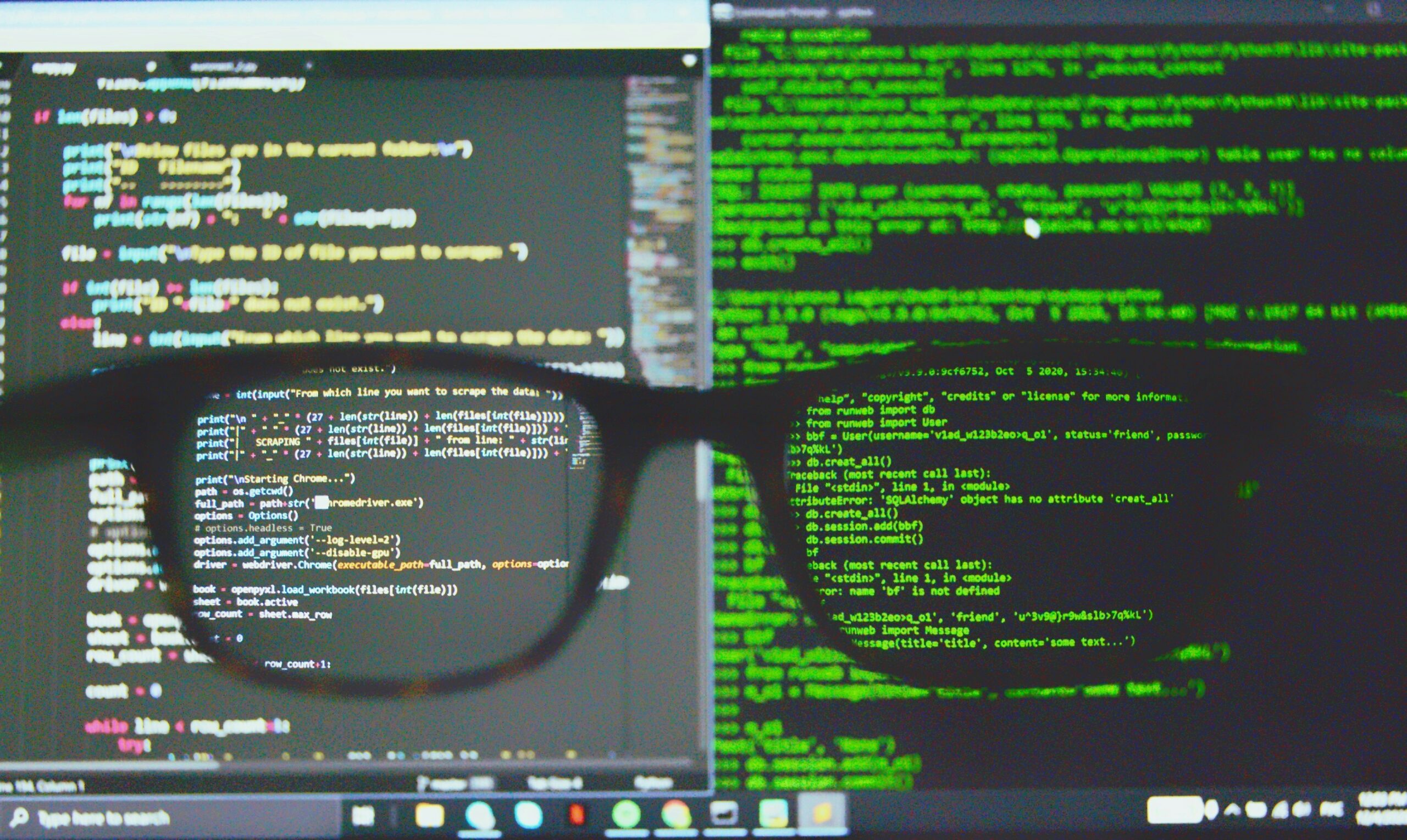
Anthropic accuses Chinese AI firms including Moonshot, DeepSeek and Alibaba of using Claude to extract AI capabilities, escalating U.S.-China technology tensions.
Focus Keyword:
Chinese AI labs
Secondary Keywords:
Moonshot AI, DeepSeek, Alibaba AI, Anthropic Claude, AI model distillation, Chinese artificial intelligence, U.S.-China AI race, AI technology theft, AI security
Chinese AI Labs Accused of Using Anthropic’s Claude to Copy U.S. AI Technology
By Albert Pham | AlbertPham.info
The global artificial intelligence race is entering a more contentious phase as Anthropic accuses several Chinese AI companies of using its Claude models to extract capabilities that could help them develop competing systems.
The companies named in recent allegations include Moonshot AI, DeepSeek and Alibaba, three of the most prominent names in China’s rapidly expanding artificial intelligence industry.
The dispute is about more than competition between individual AI companies. It highlights a growing battle over intellectual property, model training, cybersecurity, data privacy and the technological rivalry between the United States and China.
Anthropic says Chinese AI laboratories have used large-scale interactions with Claude to reproduce or improve capabilities in their own AI systems. The allegations come as Chinese AI companies continue to close the gap with U.S. developers in areas such as reasoning, coding, efficiency and open-weight models.
Anthropic Accuses Chinese AI Firms of Large-Scale Model Distillation
At the center of the controversy is AI model distillation.
Distillation itself is not inherently illegal or improper. It is a common machine-learning technique in which a smaller or less expensive model learns from the outputs of a more capable model.
The controversy arises when companies allegedly use enormous numbers of queries, multiple accounts, intermediaries or other methods to circumvent restrictions imposed by the developer of the original AI system.
Anthropic has accused Chinese AI companies of taking this process to an industrial scale.
According to reporting surrounding Anthropic’s latest disclosures, Alibaba-linked operators generated more than 151 million exchanges with Claude between May and July 2026, involving thousands of accounts. Anthropic characterized the activity as an attempt to extract Claude’s capabilities and improve Alibaba’s Qwen AI models.
That number illustrates why AI companies are increasingly treating model distillation as a major security issue.
If a competitor can repeatedly query an advanced model and use the answers to train its own system, it could potentially reduce the time, money and computing resources required to develop a competing AI model.
Moonshot and DeepSeek Face Particular Scrutiny
Moonshot AI and DeepSeek have attracted significant international attention because their AI models have demonstrated that Chinese companies can compete with leading American laboratories while operating under very different technological and economic constraints.
Moonshot is behind the Kimi family of AI models, while DeepSeek has become one of China’s best-known AI developers.
Anthropic alleges that Moonshot and DeepSeek used Claude in ways that went beyond ordinary experimentation.
One particularly serious allegation is that some live user conversations were routed through Claude and potentially used as training material. Anthropic says some of the information involved could have been sensitive.
That raises a separate issue from intellectual property.
If customer information is being transmitted between AI systems without users understanding where their data is going, the controversy becomes a question of privacy and consumer protection, not simply competition between technology companies.
For businesses adopting AI, this distinction is increasingly important.
Companies may use multiple AI platforms simultaneously, but they need to know whether information entered into one system can be transferred, analyzed or reused elsewhere.
Alibaba’s Qwen AI Is at the Center of the Dispute
Alibaba has invested heavily in artificial intelligence through its Qwen family of models.
The company’s strategy reflects China’s broader push to build globally competitive AI systems while reducing reliance on American technology.
Anthropic says Alibaba-linked operators carried out what it described as its largest illicit distillation campaign against Claude.
The company reported more than 151 million exchanges attributed to Alibaba between May and July, with activity reaching almost 3 million exchanges per day at its peak.
The allegations have potentially significant consequences for Alibaba because Qwen is increasingly important to China’s AI ecosystem.
Alibaba is not simply competing in the chatbot market. Its AI models are part of a broader cloud-computing and enterprise technology strategy.
If the allegations lead to additional U.S. restrictions, sanctions or other regulatory measures, the consequences could extend beyond Alibaba’s AI products and affect the broader relationship between American and Chinese technology companies.
Why DeepSeek Matters to the Global AI Race
DeepSeek has already demonstrated why the Chinese AI industry cannot be dismissed as a secondary competitor.
The company recently introduced DeepSeek-V4.1-Flash, a new version designed to deliver faster inference, higher throughput and greater scalability. The release comes as DeepSeek prepares for a potential Shanghai STAR Market listing.
DeepSeek’s rise has challenged assumptions about the amount of money and computing power required to build competitive AI models.
That matters because the United States has invested enormous amounts of capital in AI infrastructure, including data centers, advanced chips and electricity generation.
If Chinese developers can produce highly capable models at significantly lower costs, the economics of the global AI industry could change.
But allegations of large-scale model distillation introduce another question:
How much of the apparent efficiency comes from better engineering, and how much comes from learning from existing frontier models?
That question is likely to remain controversial.
U.S. Agencies Have Also Accused Chinese AI Firms
Anthropic’s allegations are not occurring in isolation.
Earlier this week, the FBI, NSA and CISA accused six Chinese AI companies—including DeepSeek, Moonshot AI and Alibaba—of using large-scale distillation campaigns to extract capabilities from leading American AI models.
The U.S. agencies said the companies allegedly targeted systems including Claude, GPT, Gemini and Grok and used millions of interactions to reproduce capabilities such as coding, mathematics and reasoning.
The U.S. government has described the alleged activity as a strategic threat rather than merely aggressive commercial competition.
Chinese officials, however, have rejected the accusations.
Beijing has characterized the U.S. claims as groundless and argued that technological development should not be monopolized by one country. China has also defended its ability to develop AI through domestic innovation and technological self-reliance.
The disagreement therefore reflects a much larger geopolitical conflict.
The U.S.-China AI Race Is Becoming a Security Issue
For years, the competition between American and Chinese technology companies was primarily viewed through the lens of markets.
That is changing.
AI is increasingly considered strategic infrastructure because advanced models can contribute to cybersecurity, intelligence, scientific research, manufacturing, finance, autonomous systems and military capabilities.
Washington has already restricted China’s access to some advanced semiconductor technologies.
Now, AI models themselves are becoming part of the technology-control debate.
If American officials believe Chinese companies can circumvent hardware restrictions by extracting capabilities from American AI models, the U.S. government could respond with additional restrictions on access to AI services.
That could make the digital divide between the two countries even wider.
Anthropic’s Claude Becomes a Target
The controversy also demonstrates how valuable frontier AI models have become.
Claude is not simply a consumer chatbot. Its capabilities in reasoning, programming and other professional applications make it a valuable technological asset.
The allegations suggest that a highly capable AI model can itself become a target for systematic extraction.
That creates a difficult problem for AI developers.
Companies want their models to be widely available because usage generates revenue, improves adoption and builds an ecosystem.
But the more accessible a powerful model becomes, the easier it may be for competitors to study its behavior.
This creates a fundamental tension:
AI companies want scale, but scale can also increase exposure.
Could This Change How AI Companies Offer Their Models?
The controversy could eventually affect how leading AI companies provide access to their systems.
Developers may increasingly introduce stronger monitoring for unusual API activity, restrictions on automated querying and improved methods for detecting coordinated account networks.
AI companies could also place greater limits on access from regions or organizations considered high risk.
However, aggressive restrictions have their own problems.
Legitimate businesses, researchers and developers around the world rely on AI models. Overly broad restrictions could prevent legitimate users from accessing useful technology while failing to stop determined actors.
The challenge will be distinguishing normal experimentation from systematic extraction.
China Is Building Its Own AI Ecosystem
Another important factor is that China is not solely dependent on American AI technology.
Chinese companies are developing their own models, chips, cloud infrastructure and AI applications.
DeepSeek, Moonshot, Alibaba, Tencent and other companies are competing aggressively to establish domestic and international positions.
Chinese AI models are also gaining attention because of their relatively low cost and increasingly strong performance.
Recent analysis has highlighted the growing international use of Chinese models, including strong adoption of open and lower-cost systems.
That means the long-term competition may not simply be about who can build the best model.
It could become a contest over price, distribution, open models, computing infrastructure, chips, cloud platforms and global adoption.
Investors Are Watching the Chinese AI Boom
The controversy also has implications for investors.
Chinese AI companies are attracting substantial capital as investors anticipate a new generation of publicly traded AI businesses.
DeepSeek has reportedly attracted enormous investor interest, while Moonshot is exploring potential listings in Hong Kong and Shanghai.
At the same time, investors must consider the risks.
Regulatory restrictions, geopolitical tensions, intellectual-property disputes and export controls could significantly affect valuations.
The AI industry is already characterized by extraordinary expectations. Any escalation between Washington and Beijing could increase volatility across technology stocks, semiconductor companies and AI startups.
The Bigger Question: Who Controls the Next AI Generation?
The dispute between Anthropic and Chinese AI companies points toward a much larger question.
The first phase of the AI revolution was dominated by companies building increasingly powerful models.
The next phase could be defined by who controls access to the technology.
The United States currently has several of the world’s most influential AI companies, including Anthropic, OpenAI, Google and other major technology groups.
China, meanwhile, has developed an increasingly competitive ecosystem involving DeepSeek, Alibaba, Moonshot and other laboratories.
The competition is no longer simply about creating a better chatbot.
It is about who can develop frontier models, who can manufacture the chips required to run them, who controls the data and computing infrastructure, and which country’s AI ecosystem becomes dominant internationally.
What Happens Next?
Anthropic’s allegations are likely to increase pressure on governments and technology companies to establish clearer rules around AI model distillation.
The immediate question is whether the allegations lead to additional U.S. restrictions against Chinese AI companies.
A second question is whether American AI companies tighten access to their most advanced models.
A third—and potentially more important—question is whether Chinese developers can continue improving their models rapidly without relying heavily on American frontier systems.
The answer could shape the next stage of the global AI race.
For investors, businesses and policymakers, the lesson is increasingly clear: AI competition is becoming inseparable from technology policy and geopolitics.
FAQ: Chinese AI Labs and Anthropic
What is AI model distillation?
AI model distillation is a technique in which a smaller or less expensive AI system learns from the outputs of a larger or more capable model. It can be a legitimate machine-learning technique, but its use can become controversial when companies allegedly bypass restrictions or use it to reproduce proprietary capabilities at large scale.
Which Chinese AI companies have been accused?
Recent U.S. allegations have named companies including DeepSeek, Moonshot AI, Alibaba, MiniMax, StepFun and Z.AI. Anthropic has separately reported activity involving several China-based laboratories, including Alibaba, Moonshot and DeepSeek.
What is Moonshot AI?
Moonshot AI is a Chinese artificial intelligence company behind the Kimi family of AI models. The company has become one of China’s most prominent AI startups and is reportedly exploring potential public listings.
Why is DeepSeek important?
DeepSeek has emerged as one of China’s most prominent AI developers, demonstrating that Chinese companies can compete in advanced AI while focusing heavily on efficiency and lower-cost model development.
Has China accepted the U.S. allegations?
No. Chinese officials have rejected the accusations and characterized U.S. claims about systematic AI model extraction as unfounded.
Could this affect the global AI industry?
Yes. Increased restrictions on AI models, cloud services, advanced chips and technology transfers could deepen the separation between the American and Chinese AI ecosystems and potentially reshape global AI development.
AlbertPham.info Analysis
The most important development here is not simply whether one Chinese AI company copied another company’s model.
The bigger issue is that frontier AI has become a strategic asset.
If advanced AI models can be systematically queried and reproduced, the economic advantage of spending billions of dollars to build those models could be weakened.
That could fundamentally change the AI business model.
At the same time, aggressive U.S. restrictions could accelerate China’s push toward technological self-sufficiency.
In other words, attempts to protect American AI could unintentionally strengthen the incentive for China to build an entirely independent AI ecosystem.
The coming years may therefore produce two parallel AI worlds: one centered on American frontier models and another increasingly driven by Chinese systems.
The competition between them could become one of the defining technology and geopolitical stories of the decade.
Financial risk disclaimer: This article is for informational and news-analysis purposes only and does not constitute investment, financial or trading advice. Investors should conduct their own research and consider their individual risk tolerance before making investment decisions.
Sources
- Reuters — Anthropic disrupts Russian and Chinese AI campaigns
- Reuters — Moonshot explores potential Hong Kong and Shanghai IPOs
- Reuters — DeepSeek launches V4.1-Flash
- AP News — China rejects U.S. allegations over AI model distillation
- https://www.cnbc.com/2026/09/11/chinese-ai-labs-moonshot-deepseek-alibaba-anthropic.html




0 Comments