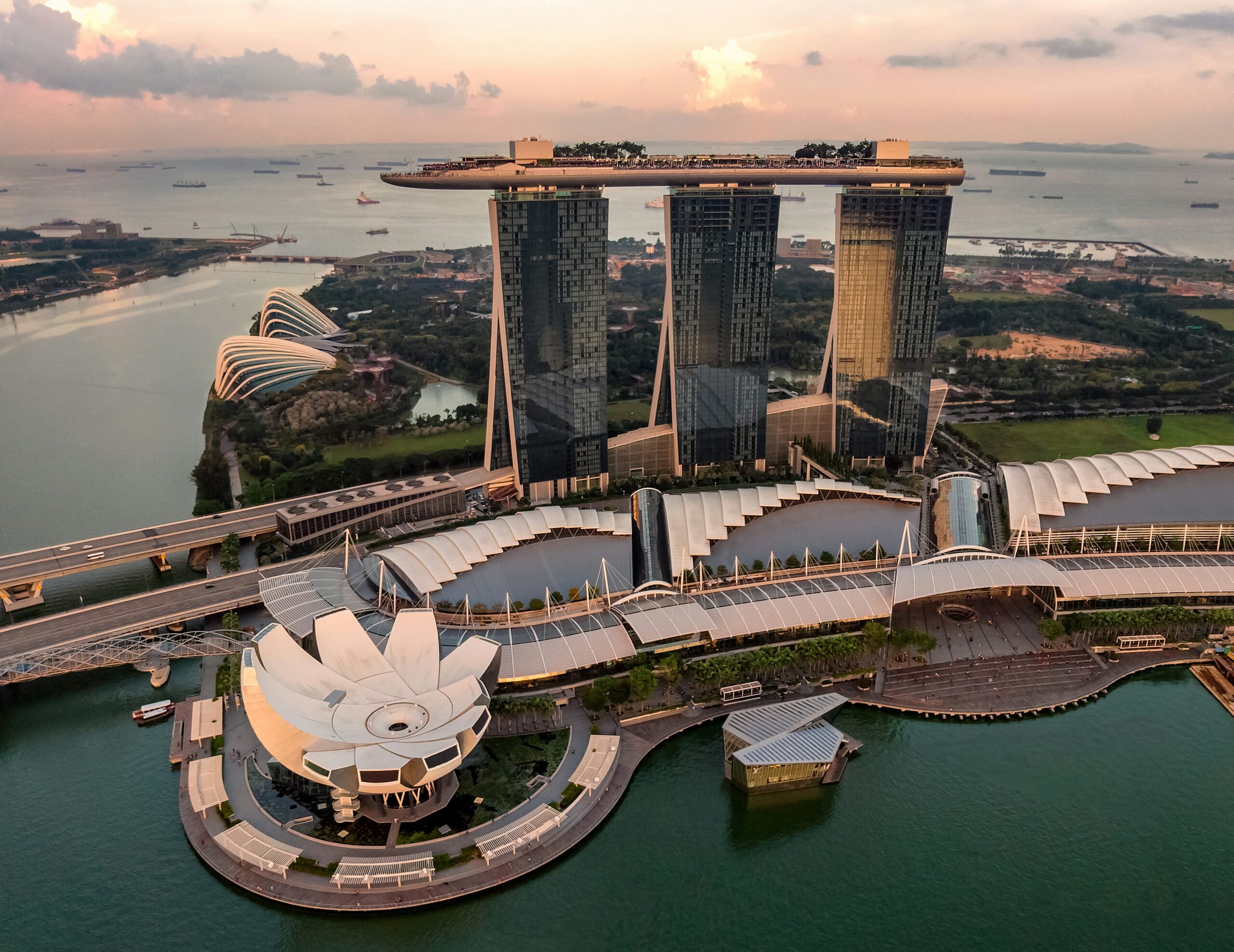
Asia’s Ultra-Rich Are Moving Wealth Into Gold, Digital Assets and Malaysia
Asia’s ultra-rich are changing how they preserve and grow their fortunes. According to Maybank Singapore CEO Alvin Lee, wealthy investors across the region remain heavily interested in gold and real estate while increasingly exploring digital assets and cryptocurrencies. At the same time, wealthy Chinese investors are showing growing interest in Malaysia as a destination for property, business and family relocation.
The trend highlights a broader transformation in Asian wealth management: capital is becoming more mobile, investment portfolios are becoming more diversified, and wealthy families are increasingly looking beyond traditional financial centers.
The latest observations from Maybank come as geopolitical tensions, changing interest rates, elevated gold prices and the global transfer of wealth between generations reshape investment decisions across Asia.
Asia’s Wealthiest Investors Are Diversifying
Ultra-high-net-worth individuals have traditionally relied on a combination of financial assets, real estate and precious metals to protect their wealth.
But according to Alvin Lee, the investment strategy of Asia’s wealthiest families is becoming more diversified.
Investors are looking at both financial instruments and physical assets, including property and precious metals. Gold remains particularly attractive because of its reputation as a store of value during periods of economic and geopolitical uncertainty.
The important development, however, is that wealthy investors are no longer limiting themselves to traditional assets.
Younger members of wealthy families are showing greater openness to digital assets, cryptocurrencies and other emerging investment categories.
That generational shift could become increasingly important as enormous amounts of wealth are transferred from older generations to their children and grandchildren.
The next generation of wealthy investors
The transfer of wealth between generations is changing investment behavior.
Older investors may traditionally favor established assets such as property, equities, bonds and gold. Younger investors who inherit or participate in managing family wealth may be more comfortable with technology-driven investments.
This creates a potentially important structural shift for global financial markets.
The future portfolio of an Asian family office could increasingly contain a mixture of:
- Gold and other precious metals
- Residential and commercial real estate
- Global equities
- Private businesses
- Digital assets
- Cryptocurrency
- Alternative investments
- Cash and other defensive assets
The objective is not necessarily to abandon traditional investments. Instead, wealthy families appear increasingly interested in combining wealth preservation with exposure to emerging opportunities.
Gold Remains a Major Wealth-Protection Asset
Despite the rise of digital assets, gold remains at the center of the investment strategy for many wealthy Asian investors.
Gold’s appeal is relatively straightforward: it is a globally recognized asset that does not depend on the financial health of a single company or government.
The CNBC report cited gold prices at roughly $4,400 per ounce, well above historical levels even after moving below earlier records. Goldman Sachs has also projected that gold could reach approximately $4,900 per ounce by the end of the year, supported in part by central-bank demand.
For wealthy investors, gold can therefore serve several purposes.
It can act as a hedge against inflation, a defensive asset during geopolitical crises and a way to diversify portfolios that may otherwise be heavily exposed to equities, currencies or real estate.
Why physical gold is moving toward Singapore
One particularly interesting development is the movement of physical gold from Dubai toward Singapore.
According to Maybank Singapore’s Alvin Lee, substantial quantities of physical gold are being shipped from Dubai to Singapore as capital flows adjust to changing geopolitical conditions.
The movement is significant because Dubai and Singapore have both emerged as major wealth-management and investment centers.
But Singapore possesses several characteristics that make it particularly attractive to international wealth.
Why Singapore Continues to Attract Global Wealth
Singapore has long positioned itself as one of Asia’s premier financial centers.
Its appeal to wealthy international investors is based on a combination of political stability, sophisticated financial infrastructure, strong intellectual-property protections and a business-friendly tax environment.
Lee said Singapore can benefit when regional or global crises occur because investors often seek jurisdictions perceived as relatively safe and stable.
The Middle East conflict has also affected the movement of wealth between Dubai and Singapore.
According to Lee, some capital that had previously moved from Singapore toward Dubai has begun returning to Singapore.
This illustrates an important characteristic of global wealth: the world’s richest investors can move capital relatively quickly when geopolitical conditions change.
For ordinary investors, geographic diversification can be difficult. For family offices and ultra-high-net-worth individuals, moving investments, businesses and physical assets between financial centers can be part of a long-term wealth-management strategy.
Wealthy Chinese Investors Are Looking Toward Malaysia
Perhaps the most significant regional trend identified by Maybank is the growing interest among wealthy Chinese investors in Malaysia.
According to Lee, Chinese investors are becoming increasingly open to Malaysia for both investment and relocation.
The attraction is partly based on valuation.
Malaysia can offer property and business opportunities at valuations that wealthy investors may consider more attractive than Singapore.
This does not necessarily mean that wealthy Chinese investors are abandoning Singapore.
Instead, it suggests that Southeast Asia’s wealth map is becoming increasingly diversified.
Singapore remains a major international financial center, while Malaysia can provide comparatively attractive real estate and operating costs.
That combination creates opportunities for investors who want exposure to Southeast Asia without concentrating all of their assets in one market.
Kuala Lumpur, Penang and Malacca Gain Attention
Three Malaysian destinations stand out in the Maybank assessment: Kuala Lumpur, Penang and Malacca.
Kuala Lumpur is particularly important because it combines a major metropolitan economy with a growing property market, corporate infrastructure and international connections.
For wealthy Chinese families, property purchases can have multiple purposes.
A residential property can provide a second home or family base. Commercial property can support a business. Real estate can also serve as part of a broader wealth-preservation strategy.
Penang has a long-standing connection with Chinese communities and remains attractive to international investors looking for a combination of business activity, residential opportunities and lifestyle amenities.
Malacca, meanwhile, offers another potential destination for investors seeking lower-cost property opportunities compared with Singapore.
Lee said increasing numbers of Chinese buyers are purchasing Malaysian property for both personal and business purposes.
China Remains a Major Source of Global Wealth
The potential scale of this capital movement is enormous.
The Hurun Global Rich List, published in March, counted approximately 1,110 billionaires in China, compared with about 1,000 in the United States.
That enormous concentration of private wealth means even a relatively small shift in the investment preferences of wealthy Chinese households can have consequences for property markets, financial services and regional economies.
Malaysia is particularly well positioned to benefit because of its geographic proximity to China and its established links with Chinese business networks.
The movement of wealthy individuals can also generate secondary economic effects.
When affluent investors purchase property, establish businesses or relocate families, they create demand for banking, legal services, education, healthcare, luxury retail, hospitality and professional services.
The Rise of Southeast Asia’s Wealth Economy
The Maybank observations point to a broader development across Southeast Asia.
For decades, Singapore dominated the region’s international wealth-management conversation.
Today, wealthy investors have a growing range of alternatives.
Dubai has become a major international wealth center. Singapore remains a critical Asian financial hub. Malaysia is attracting property and business investment. Hong Kong continues to play an important role in China’s international financial system.
This creates competition between jurisdictions for the world’s mobile wealthy.
Governments increasingly recognize that attracting wealthy residents and investors can generate substantial economic activity.
The competition is therefore not simply about attracting tourists or foreign companies.
It is also about attracting family offices, entrepreneurs, investors, business owners and high-net-worth households.
Digital Assets Are Becoming Part of the Wealth Conversation
Perhaps the most important long-term development is the increasing acceptance of digital assets.
Cryptocurrency remains controversial and significantly more volatile than traditional investments. Nevertheless, younger wealthy investors are increasingly willing to consider digital assets as part of a diversified portfolio.
For established family offices, this creates a difficult balancing act.
Traditional assets provide stability and established regulatory frameworks. Digital assets can provide exposure to new technologies and potentially high-growth markets, but they also introduce substantial volatility and regulatory uncertainty.
The growing interest described by Maybank therefore does not mean that wealthy Asian investors are abandoning gold or property.
Instead, the trend appears to be toward greater diversification across generations and asset classes.
What This Means for Global Investors
The movement of Asian wealth provides a useful signal for investors around the world.
Three major trends stand out.
First, geopolitical risk is influencing the location of capital. Investors are increasingly concerned about where their assets are held and whether a jurisdiction can remain stable during an international crisis.
Second, physical assets remain important. Despite the growth of artificial intelligence, cryptocurrencies and digital finance, wealthy investors continue to place enormous value on gold and real estate.
Third, the next generation is changing investment behavior. Younger heirs are more comfortable with technology and alternative asset classes, potentially reshaping family investment portfolios over the coming decades.
These trends could have consequences well beyond Asia.
As capital moves between Singapore, Malaysia, Dubai, China and other financial centers, investors, banks and governments will increasingly compete for the attention of the world’s wealthiest households.
The New Asian Wealth Map
The emerging picture is not one of wealthy investors abandoning one financial center for another.
It is more accurately a story about diversification.
Gold is moving between major trading hubs. Wealth is returning to Singapore. Chinese investors are exploring Malaysia. Younger generations are becoming more interested in digital assets.
Together, these trends suggest that Asia’s wealth economy is entering a new phase.
The most successful financial centers will likely be those capable of providing wealthy families with security, investment opportunities, property markets, financial services and long-term stability.
For Singapore, the challenge will be maintaining its position as Asia’s premier wealth-management hub.
For Malaysia, the growing interest from wealthy Chinese investors represents an opportunity to capture more international capital.
And for investors globally, the message is clear: Asia’s wealth is becoming increasingly mobile, diversified and technology-oriented.
Editorial Perspective
The movement of ultra-high-net-worth capital is often an early indicator of broader changes in the global economy.
When wealthy investors begin moving money, businesses and families across borders, they are responding to expectations about political stability, asset valuations, taxation, currency risk and economic opportunity.
The growing appeal of Malaysia alongside Singapore demonstrates that Southeast Asia is becoming increasingly important in global wealth management.
At the same time, the continued popularity of gold shows that even the world’s most sophisticated investors still value traditional stores of wealth.
The most important change may ultimately come from the next generation. As younger heirs take control of family fortunes, digital assets and technology-driven investments could become increasingly mainstream within private wealth portfolios.
Asia’s ultra-rich are not simply protecting their wealth. They are repositioning it for a more uncertain, more mobile and increasingly digital global economy.
Source: https://www.cnbc.com/2026/09/09/asia-ultra-rich-investing-wealthy-chinese-migrating-maybank.html




0 Comments