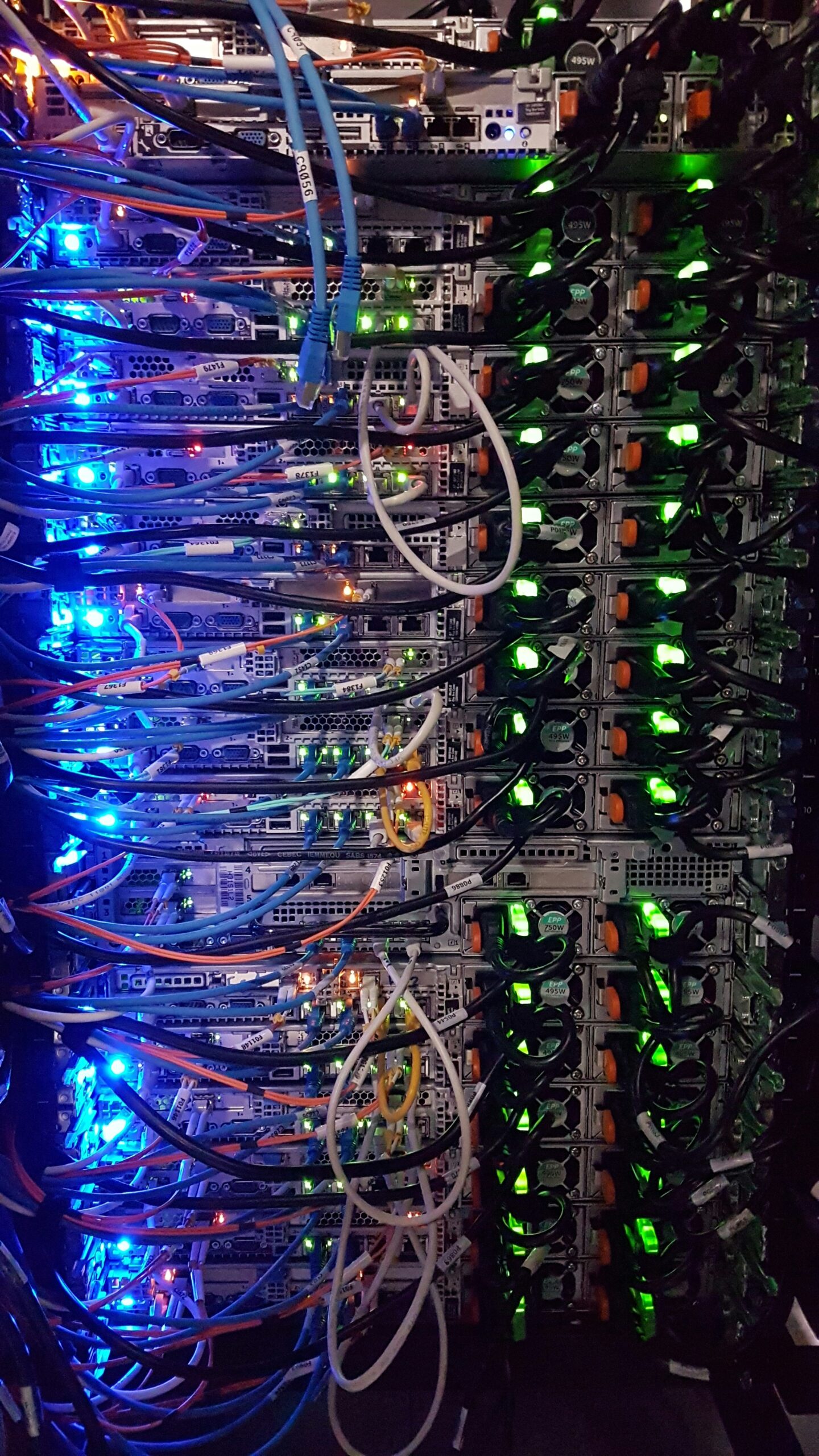
Anthropic has reportedly signed a $35 billion cloud computing deal with Nvidia-backed Lambda, highlighting the explosive demand for AI infrastructure, Nvidia chips and data center capacity.
Focus Keywords:
Anthropic $35 billion deal, Nvidia AI infrastructure, Lambda cloud computing, AI data centers, Claude AI, Nvidia chips, artificial intelligence computing, AI cloud capacity, generative AI infrastructure
Category: Technology / Artificial Intelligence / Business
Tags: Anthropic, Nvidia, Lambda, AI, Artificial Intelligence, Claude AI, Cloud Computing, Data Centers, AI Infrastructure, Hut 8, Technology News
Anthropic’s $35 Billion Cloud Deal Shows How Expensive the AI Race Has Become
The global race to dominate artificial intelligence is entering a new and dramatically more expensive phase.
Anthropic, the artificial intelligence company behind the Claude family of AI products, has reportedly signed a cloud-computing agreement worth approximately $35 billion with Lambda, a cloud infrastructure provider backed by Nvidia.
The scale of the reported agreement highlights one of the defining realities of the modern AI economy: developing advanced artificial intelligence is no longer primarily a software challenge.
It is increasingly an infrastructure challenge.
The most powerful AI companies now require enormous quantities of computing power, advanced semiconductors, electricity, data-center capacity and financing. As demand for generative AI accelerates, access to these resources is becoming one of the most important competitive advantages in the technology industry.
According to reporting on the agreement, the computing infrastructure connected to the deal will involve a major data-center project in Nueces County, Texas, being developed by Hut 8. The project is expected to provide approximately 350 megawatts of capacity, illustrating the extraordinary amount of energy now required to operate advanced AI systems.
For Anthropic, the reported agreement represents another major investment in the infrastructure needed to support the rapid expansion of Claude and its broader artificial intelligence business.
For Nvidia, it demonstrates something potentially even more significant: the chipmaker is increasingly becoming a central financial and strategic force behind the entire AI infrastructure ecosystem.
Nvidia Is Becoming More Than a Chip Company
For years, Nvidia was primarily known as one of the world’s leading semiconductor companies, particularly in graphics processing technology.
The artificial intelligence boom has transformed that position.
Today, Nvidia’s chips are among the most valuable strategic resources in the global technology industry. Companies developing advanced AI models depend heavily on high-performance computing infrastructure, and Nvidia hardware remains deeply embedded in that ecosystem.
But Nvidia’s role is expanding beyond simply selling chips.
The company has increasingly supported the broader AI infrastructure market through investments, partnerships and arrangements designed to help cloud providers and AI companies gain access to expensive computing capacity.
The Anthropic-Lambda agreement illustrates this evolving ecosystem.
Lambda is backed by Nvidia, while the reported Texas data-center project is being developed by Hut 8. Nvidia is also expected to play a significant role in the infrastructure arrangement surrounding the facility.
The result is a complex network connecting:
- AI developers
- Cloud-computing providers
- Semiconductor companies
- Data-center developers
- Energy infrastructure
- Financial institutions
This interconnected structure is rapidly becoming the foundation of the global AI economy.
Anthropic Is Buying Enormous Amounts of Computing Power
The reported $35 billion Lambda agreement is not happening in isolation.
Anthropic has recently pursued multiple enormous computing agreements as the company attempts to secure enough infrastructure to support its rapidly expanding AI operations.
Just days before the Lambda agreement became public, Reuters reported that Anthropic had also agreed to spend approximately $45 billion for AI computing capacity from Nscale, including infrastructure connected to a major data-center operation in West Virginia.
These agreements reveal the extraordinary scale of the competition between the world’s leading AI companies.
Artificial intelligence companies are increasingly competing not simply for software engineers or customers.
They are competing for:
Computing power.
Advanced chips.
Electricity.
Data-center space.
Long-term infrastructure contracts.
The companies capable of securing these resources may have a significant advantage in developing increasingly sophisticated AI models.
Why AI Computing Has Become a Strategic Resource
Modern generative AI systems require enormous amounts of computational power.
Training advanced large language models involves processing massive quantities of data across thousands or potentially tens of thousands of high-performance processors.
But the infrastructure challenge does not end when an AI model is trained.
Once products such as Claude are released to millions of users and businesses, companies must also operate the systems continuously.
Every AI request requires computing resources.
As usage grows, so does the demand for infrastructure.
This creates a powerful economic cycle:
- AI products become more popular.
- More users generate greater computing demand.
- AI companies require more data centers.
- Cloud providers purchase more advanced chips.
- Semiconductor companies expand production.
- Electricity demand rises.
- Infrastructure investment accelerates.
The Anthropic deal demonstrates how quickly this cycle is expanding.
The AI industry is increasingly becoming one of the world’s largest consumers of computing infrastructure.
Texas Is Emerging as a Major AI Data-Center Hub
The reported project connected to the Anthropic agreement is located in Nueces County, Texas.
Texas has become increasingly attractive to companies developing large-scale digital infrastructure because of its energy resources, land availability and growing data-center ecosystem.
The rise of AI is creating new opportunities for regions capable of supporting massive electricity consumption.
A 350-megawatt facility represents an enormous amount of power.
As more AI data centers are developed, electricity availability is becoming one of the most important factors influencing where technology companies build new infrastructure.
The AI boom could therefore reshape economic development across the United States.
Regions with access to:
- Affordable energy
- Transmission infrastructure
- Large amounts of land
- Data-center connectivity
- Favorable regulatory environments
may increasingly compete for AI investment.
The technology industry is becoming physically dependent on infrastructure in ways that previous generations of internet companies were not.
The AI revolution may be digital, but its foundation is increasingly industrial.
Hut 8’s Transformation From Bitcoin Mining to AI Infrastructure
The involvement of Hut 8 also reflects another important trend.
Companies that previously focused heavily on cryptocurrency mining are increasingly adapting their infrastructure for artificial intelligence and high-performance computing.
Bitcoin mining operations historically required large amounts of electricity and specialized computing infrastructure.
AI data centers have similar requirements.
As a result, companies with experience managing large-scale power-intensive operations are increasingly positioned to participate in the AI infrastructure boom.
The transformation of cryptocurrency-related infrastructure into AI infrastructure could become an important part of the next phase of the technology economy.
The companies that once competed for electricity to mine digital currencies may increasingly compete to supply computing capacity to artificial intelligence companies.
Nvidia’s Financial Strategy Is Drawing Attention
Nvidia’s expanding involvement in AI infrastructure has also generated questions among investors and analysts.
The company has reportedly explored financial arrangements designed to help AI cloud providers secure infrastructure and computing capacity.
Reuters recently reported that Nvidia had paused a financing initiative involving support for smaller AI cloud companies, following concerns about the structure of such arrangements and the broader risks associated with increasingly interconnected financing across the AI industry.
The broader concern is straightforward.
If a semiconductor company invests in or financially supports companies that then purchase or lease its technology, investors may question how much of the resulting demand is entirely independent.
Critics describe this risk as a form of circular financing.
However, Nvidia and its supporters argue that the AI industry requires new financial structures because infrastructure costs are increasing faster than many rapidly growing technology companies can finance independently.
The challenge is enormous.
Building large AI data centers can require billions of dollars in capital before significant revenue is generated.
Nvidia’s financial strength allows the company to play a larger role in helping expand the ecosystem that ultimately depends on its technology.
The AI Infrastructure Economy Could Be Worth Trillions
The Anthropic-Lambda agreement is another sign that the AI infrastructure economy may eventually become one of the largest investment cycles in technology history.
The competition is already pushing companies to invest heavily in:
- Nvidia GPUs
- AI processors
- Data centers
- Cloud computing
- Power generation
- Electricity transmission
- Cooling systems
- Semiconductor manufacturing
Major technology companies are increasingly measuring future computing capacity not simply in servers but in gigawatts of power.
That is a remarkable shift.
Artificial intelligence is becoming an industrial-scale technology.
The next generation of AI development may require infrastructure investments comparable to major energy, transportation and telecommunications projects.
Anthropic Faces Intense Competition From OpenAI and Google
Anthropic’s infrastructure expansion is also taking place in an intensely competitive market.
The company faces competition from some of the largest and most financially powerful organizations in the world.
These include:
- OpenAI
- Microsoft
- Meta
- Amazon
- xAI
Each company is pursuing increasingly powerful AI systems.
The competition is not only about developing the smartest model.
It is also about ensuring that millions of customers can reliably access AI services.
A company may develop an advanced model, but without enough computing infrastructure, it may struggle to serve users at scale.
That makes long-term cloud agreements strategically important.
Anthropic’s reported multibillion-dollar infrastructure commitments suggest that the company is preparing for continued rapid growth in demand for Claude and other AI products.
Nvidia Remains at the Center of the AI Economy
Perhaps the biggest lesson from the $35 billion agreement is Nvidia’s continuing influence over the direction of the AI industry.
The company is positioned at the center of a vast ecosystem.
AI companies need computing power.
Cloud providers need chips.
Data centers need customers.
Infrastructure developers need financing.
And Nvidia technology connects many of these participants.
Nvidia’s influence now extends far beyond the traditional semiconductor market.
The company has become one of the most strategically important infrastructure companies in the global economy.
Its success will increasingly depend not only on selling more chips but also on ensuring that the global AI ecosystem continues expanding rapidly enough to require them.
Could the AI Industry Create Too Much Data-Center Capacity?
Despite enormous demand, there are also risks.
Technology history contains multiple examples of companies investing too aggressively in infrastructure.
During the dot-com era, telecommunications companies built massive amounts of internet infrastructure in anticipation of future demand.
Eventually, some companies collapsed when capacity exceeded immediate needs.
The AI industry could face similar questions.
What happens if:
- AI demand grows more slowly than expected?
- Computing costs fall rapidly?
- New chips make existing hardware obsolete?
- AI companies reduce infrastructure spending?
- Too many data centers are built simultaneously?
These questions will become increasingly important as billions—and eventually trillions—of dollars flow into AI infrastructure.
For now, however, demand for computing capacity remains one of the strongest forces in the technology industry.
The Bottom Line: AI Is Becoming an Infrastructure Race
Anthropic’s reported $35 billion agreement with Nvidia-backed Lambda represents more than another major technology deal.
It illustrates the transformation of artificial intelligence into a global infrastructure race.
The future leaders of AI may not be determined solely by who develops the best algorithms.
They may also be determined by who controls access to:
Computing power.
Semiconductors.
Electricity.
Data centers.
Capital.
Anthropic is moving aggressively to secure those resources as competition intensifies.
The reported Lambda agreement, combined with Anthropic’s other major infrastructure commitments, shows that the cost of competing at the frontier of artificial intelligence is rising to extraordinary levels.
For Nvidia, the deal reinforces its position at the center of the AI economy.
And for the broader technology industry, it delivers a clear message:
The next stage of the artificial intelligence revolution will be built not only with algorithms—but with massive data centers, enormous amounts of electricity and hundreds of billions of dollars in computing infrastructure.
SEO Keyword Cluster
Primary Keywords:
Anthropic $35 billion cloud deal, Nvidia-backed Lambda, Anthropic AI infrastructure, Nvidia AI chips
Secondary Keywords:
AI cloud computing, Claude AI, artificial intelligence data centers, AI computing capacity, Nvidia infrastructure
Long-Tail Keywords:
- Why is Anthropic spending $35 billion on cloud computing?
- Anthropic Nvidia Lambda cloud deal explained
- How much computing power does AI need?
- Nvidia role in AI infrastructure
- AI data center boom in Texas
- Claude AI computing infrastructure
- Future of artificial intelligence data centers


0 Comments