
Big Tech’s AI spending could be $3 trillion higher than headline capital-expenditure figures suggest, raising new questions about data centers, chips, debt and investor risk.
Focus Keyphrase: Big Tech AI spending
Secondary Keywords: AI spending, artificial intelligence investment, Big Tech AI, AI data centers, AI infrastructure, off-balance-sheet commitments, technology stocks, Nvidia, Alphabet, Meta, Amazon, Microsoft, Oracle, AI bubble
Category: Technology / Artificial Intelligence / Business & Economy
Tags: AI, Artificial Intelligence, Big Tech, AI Spending, AI Infrastructure, Data Centers, Nvidia, Alphabet, Meta, Amazon, Microsoft, Oracle, Technology Stocks, Investing, Economy
Big Tech’s AI Spending Is Much Larger Than the Numbers Investors See
The artificial intelligence boom is producing extraordinary investment across the technology industry. Every quarter, companies such as Alphabet, Meta Platforms, Amazon, Microsoft and Oracle report enormous capital expenditures aimed at building data centers, buying advanced chips and securing the energy needed to operate AI infrastructure.
But those headline numbers may tell only part of the story.
A new analysis by The Wall Street Journal found that nine major technology companies had approximately $3 trillion in off-balance-sheet commitments, much of them connected to artificial intelligence infrastructure. The commitments include future data-center leases, chip and hardware purchases, energy agreements and other contractual obligations.
The finding provides a new perspective on the scale of the global AI investment boom—and the financial risks that could emerge if demand for artificial intelligence does not grow as quickly as technology companies expect.
The $3 Trillion AI Spending Gap
The distinction between reported capital expenditure and future contractual commitments is critical.
The technology companies analyzed by the Journal reported approximately $600 billion in capital expenditures over the most recent year, but their future off-balance-sheet commitments were several times larger.
According to the analysis, approximately $1.2 trillion of the commitments involve leases that have not yet begun, while another $1.9 trillion involves purchase commitments.
These obligations are not necessarily hidden in the sense of being undisclosed. Many are found in the footnotes of corporate financial filings. However, they can be easy for investors to overlook when focusing primarily on quarterly earnings, reported debt and capital expenditure.
That creates what could be described as an AI spending iceberg: the visible portion is already enormous, but a much larger amount of future spending sits underneath.
Why AI Data Centers Are Driving the Spending
The biggest reason behind the surge is the enormous infrastructure required to support modern artificial intelligence.
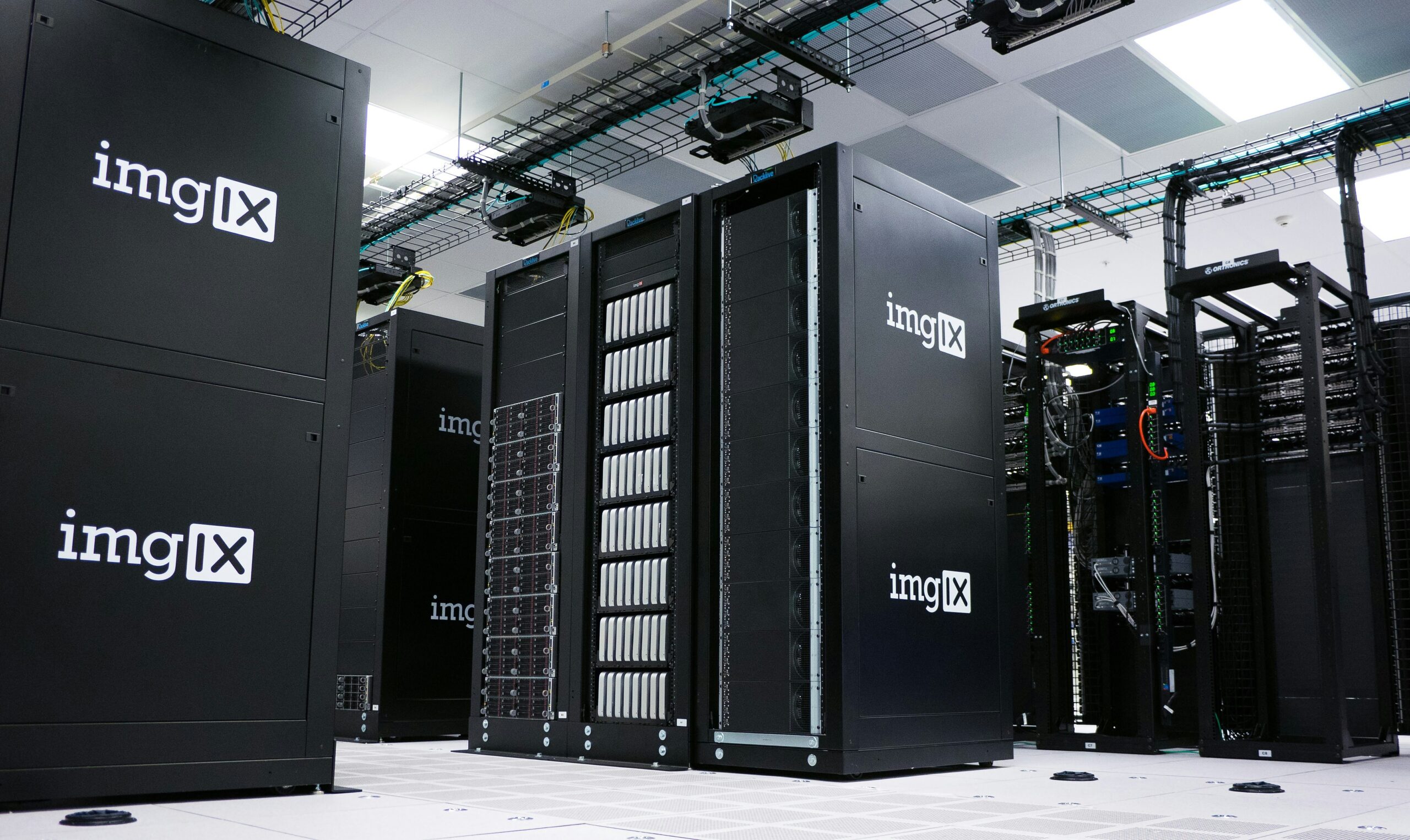
Training and operating advanced AI models requires massive computing capacity. That means companies need specialized processors, high-speed networking equipment, enormous data centers, cooling systems and reliable electricity supplies.
The infrastructure is also becoming more expensive because AI companies are competing for limited supplies of advanced computing hardware and energy capacity.
Instead of waiting several years to purchase everything they need, technology companies are increasingly signing long-term agreements to secure future capacity.
That strategy can make sense in a rapidly expanding market.
If AI demand continues to surge, locking in data centers, chips and energy today could give companies a major competitive advantage tomorrow.
The problem is that those commitments can become expensive if the assumptions behind them prove incorrect.
Alphabet’s Massive Commitments Highlight the Scale
Alphabet, Google's parent company, provides one of the clearest examples of how quickly these obligations can grow.
The Journal reported that Alphabet's purchase commitments and other contractual obligations reached approximately $811 billion as of June 30, compared with $332 billion just three months earlier.
The commitments primarily involve technical infrastructure, inventory and energy agreements associated with data-center operations. Some energy contracts extend decades into the future.
That increase illustrates an important development in the AI economy.
Technology companies are not simply spending money today. They are increasingly making financial commitments based on expectations about what the AI industry will look like several years from now.
For investors, that means today's balance sheet may not fully capture tomorrow's financial obligations.
Meta’s Hyperion Data Center Shows How AI Commitments Work
Meta's massive Hyperion data-center project in Louisiana is another example.
The facility is expected to be enormous, covering an area roughly equivalent to 1,700 football fields. Meta initially agreed to lease the facility for four years beginning in 2029, with options that could extend the relationship for as long as two decades.
Meta's initial lease commitment for Hyperion is approximately $12.3 billion.
However, because the lease payments have not yet started, those obligations do not appear on Meta's balance sheet in the same way as an existing operating liability would.
The company reported approximately $347 billion in total obligations for leases that had not yet commenced as of June, according to the Journal.
This accounting treatment is important because it demonstrates why headline financial statements may not immediately reveal the full scale of AI infrastructure commitments.
Big Tech Is Betting on Future AI Revenue
There is a logical reason companies are willing to take these enormous commitments.
The AI industry has experienced extraordinary demand from businesses, developers and consumers. Companies are racing to integrate AI assistants, coding tools, enterprise software, search, advertising, cloud computing and automation into their products.
Technology executives therefore have strong incentives to believe that AI-related revenue will continue growing rapidly.
If those expectations are correct, today's enormous infrastructure commitments could eventually generate substantial returns.
A company that secures data-center capacity and advanced chips before its competitors could have an important strategic advantage.
But that equation depends on one major assumption:
AI demand must continue growing fast enough to justify the infrastructure being built.
What Happens If AI Demand Falls Short?
This is where the financial risk becomes more complicated.
A company can reduce discretionary capital spending when economic conditions deteriorate. It can postpone a new facility or delay certain purchases.
Long-term contractual commitments are different.
Once companies sign agreements for leases, chips, energy or other infrastructure, canceling those commitments may be difficult or expensive.
If AI demand slows significantly, technology companies could find themselves paying for infrastructure that generates lower returns than expected.
That could pressure free cash flow and ultimately force companies to borrow more money.
The risk is particularly important because some technology companies are already experiencing periods in which capital expenditures exceed operating cash generation.
Alphabet and Amazon, for example, recently reported negative free cash flow as their capital spending surged.
That does not mean these companies are financially weak. Big Tech still has enormous revenues, valuable intellectual property and substantial access to capital markets.
But the scale of future commitments changes the risk calculation.
The AI Boom Is Changing Big Tech’s Financial Model
For years, investors viewed many technology giants as unusually attractive businesses because of their strong margins, enormous cash generation and relatively flexible balance sheets.
Artificial intelligence is changing that model.
The construction of massive data centers requires billions of dollars in upfront and long-term investment. AI processors are expensive. Energy requirements are increasing. Cloud providers are committing to infrastructure years before some of the expected revenue arrives.
The result is a technology industry that increasingly resembles a capital-intensive infrastructure business.
That could have major implications for investors.
The traditional question was often:
How much cash is a technology company generating today?
The more important question in the AI era may increasingly become:
How much money has the company already committed to spend tomorrow?
AI Spending Could Create a New Risk for Investors
Investors should not automatically interpret the $3 trillion figure as $3 trillion of conventional debt.
These commitments are not identical to bank loans, bonds or other forms of traditional borrowing.
Timing also matters. Some commitments stretch across many years, meaning the economic burden is very different from having the same amount of debt due immediately.
Nevertheless, the commitments represent future financial obligations that companies must consider when allocating capital.
The scale makes them important.
As these agreements become larger and more complex, investors may have a harder time determining the true financial exposure of individual companies.
That is especially relevant for technology stocks whose valuations already assume strong AI growth.
Could Big Tech Be Overbuilding AI Infrastructure?
The biggest long-term question is whether the AI infrastructure boom will ultimately match actual demand.
Optimists argue that current demand is evidence that the industry can support enormous future investment.
AI applications are expanding across healthcare, finance, software, manufacturing, education, advertising and professional services. If adoption continues, demand for computing power could remain exceptionally strong.
Skeptics see another possibility.
Technology companies could collectively build more AI infrastructure than the market ultimately needs.
If that happens, data centers could become underutilized, hardware investments could produce lower returns and companies could be left with expensive long-term commitments.
That would not necessarily cause an immediate financial crisis. But it could reduce profit margins, increase borrowing requirements and pressure technology-stock valuations.
What This Means for Nvidia and the AI Supply Chain
The implications extend beyond cloud companies.
Nvidia and other semiconductor suppliers benefit enormously when technology companies race to build AI infrastructure. Demand for advanced processors has been one of the most important economic consequences of the AI boom.
But the same supply chain also depends on the willingness of hyperscalers and other customers to continue spending.
If companies eventually slow their AI infrastructure investments, semiconductor demand could also weaken.
That creates a feedback loop across the AI economy: data-center construction supports chip demand, chip availability encourages more AI investment, and expectations of future AI demand justify additional infrastructure commitments.
If expectations change, the cycle could move in the opposite direction.
The Bigger Question: Is AI Investment Sustainable?
The $3 trillion figure does not prove that the AI boom is a bubble.
It does, however, demonstrate how difficult it is to measure the true financial scale of the artificial intelligence revolution.
Reported capital expenditures are already enormous. When future leases, chip purchases, energy contracts and other obligations are included, the amount of money committed to AI infrastructure becomes substantially larger.
For investors, the issue is not simply how much Big Tech is spending.
It is whether the economic returns from AI will eventually justify the extraordinary level of infrastructure investment now being committed.
That is one of the most important financial questions surrounding the AI industry in 2026.
Bottom Line
Big Tech's artificial intelligence investment is larger than quarterly capital-expenditure figures suggest.
According to The Wall Street Journal's analysis, nine major technology companies have approximately $3 trillion in off-balance-sheet commitments, including roughly $1.2 trillion in future leases and $1.9 trillion in purchase commitments.
The commitments reflect confidence in the future of AI—but they also create long-term financial exposure.
If AI adoption continues accelerating, today's infrastructure spending could become one of the most profitable technology investments in history.
If demand disappoints, however, the same commitments could become a major burden.
For investors, analysts and policymakers, the lesson is straightforward: the real cost of the AI revolution cannot be measured by capital expenditure alone. The most important numbers may be buried in the financial footnotes.
Source
The Wall Street Journal — Why Big Tech’s AI Spending Is $3 Trillion Higher Than It Seems




0 Comments