
📸🎥 My Personal Photos & Videos
Before you continue reading, I’d like to share that I have included my own photos and videos from my trip throughout this article. These personal visuals offer a closer look at the experience and bring the story to life from my own perspective.
Enjoy the article, and don’t miss the photos and videos from my trip! ✈️📷
Discover “Musical Bodies” at The Met Museum in New York, a major exhibition exploring the connection between the human body, musical instruments, identity and art.
Focus Keyword: Musical Bodies Met Museum
Secondary Keywords: Met Museum exhibition 2026, Musical Bodies exhibition, Metropolitan Museum of Art, museum exhibitions New York, musical instruments and art, Met Museum music exhibition, art and the human body
Category: Arts & Culture / Museums
Tags: Musical Bodies, Met Museum, Metropolitan Museum of Art, New York museums, museum exhibitions, art, music, musical instruments, culture, 2026 exhibitions
Musical Bodies at The Met Offers a New Way to See Art, Music and the Human Body
What if the human body itself were considered a musical instrument?
That deceptively simple question is at the heart of “Musical Bodies,” a major 2026 exhibition at The Metropolitan Museum of Art in New York. The exhibition explores the intimate relationship between people and musical instruments, showing how music is not simply something humans produce with objects—it is also something embedded in movement, breathing, rhythm, voice and physical expression.
The exhibition, reviewed by The Wall Street Journal, brings together objects from different periods and cultures to examine the relationship between instruments, art and the human form.
According to The Met, the exhibition features approximately 130 musical instruments and related works of art, including paintings, sculptures, drawings and other objects. It examines roughly 4,000 years of artistic and musical history.
That makes “Musical Bodies” more than a conventional musical-instrument exhibition. It is an exploration of what music tells us about being human.
The Human Body as the First Musical Instrument
The central idea behind “Musical Bodies” is both ancient and surprisingly contemporary: humans make music with their bodies before they ever pick up an instrument.
Clapping, tapping feet, singing, whistling, humming, vocalizing and beatboxing all transform physical movement into sound. The Met describes the body as a fundamental musical instrument, with rhythm existing naturally in everything from breathing to walking.
This perspective changes the way visitors might think about music.
A violin, drum or trumpet can be viewed as a technological invention designed to produce sound. But the exhibition asks visitors to consider the opposite relationship as well: how musical instruments have borrowed ideas from the human body.
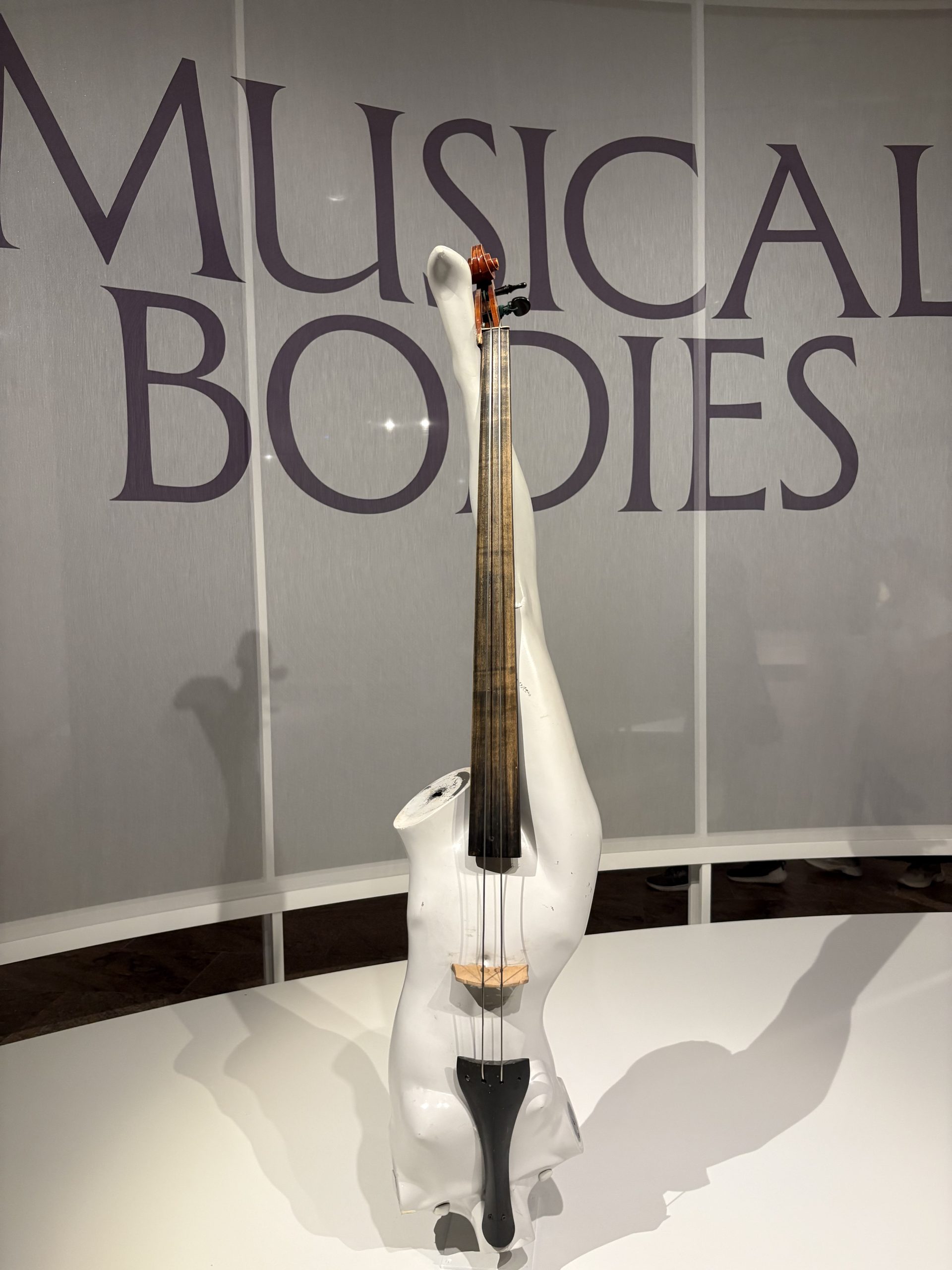
Across cultures, instruments have been designed to resemble heads, limbs, torsos and other parts of the human form. Some are figurative, while others use anatomical or bodily references in their decoration and construction.
The result is a fascinating boundary between human and object.
From Ancient Instruments to Prince's Guitar
One of the exhibition's greatest strengths is its enormous chronological and cultural range.
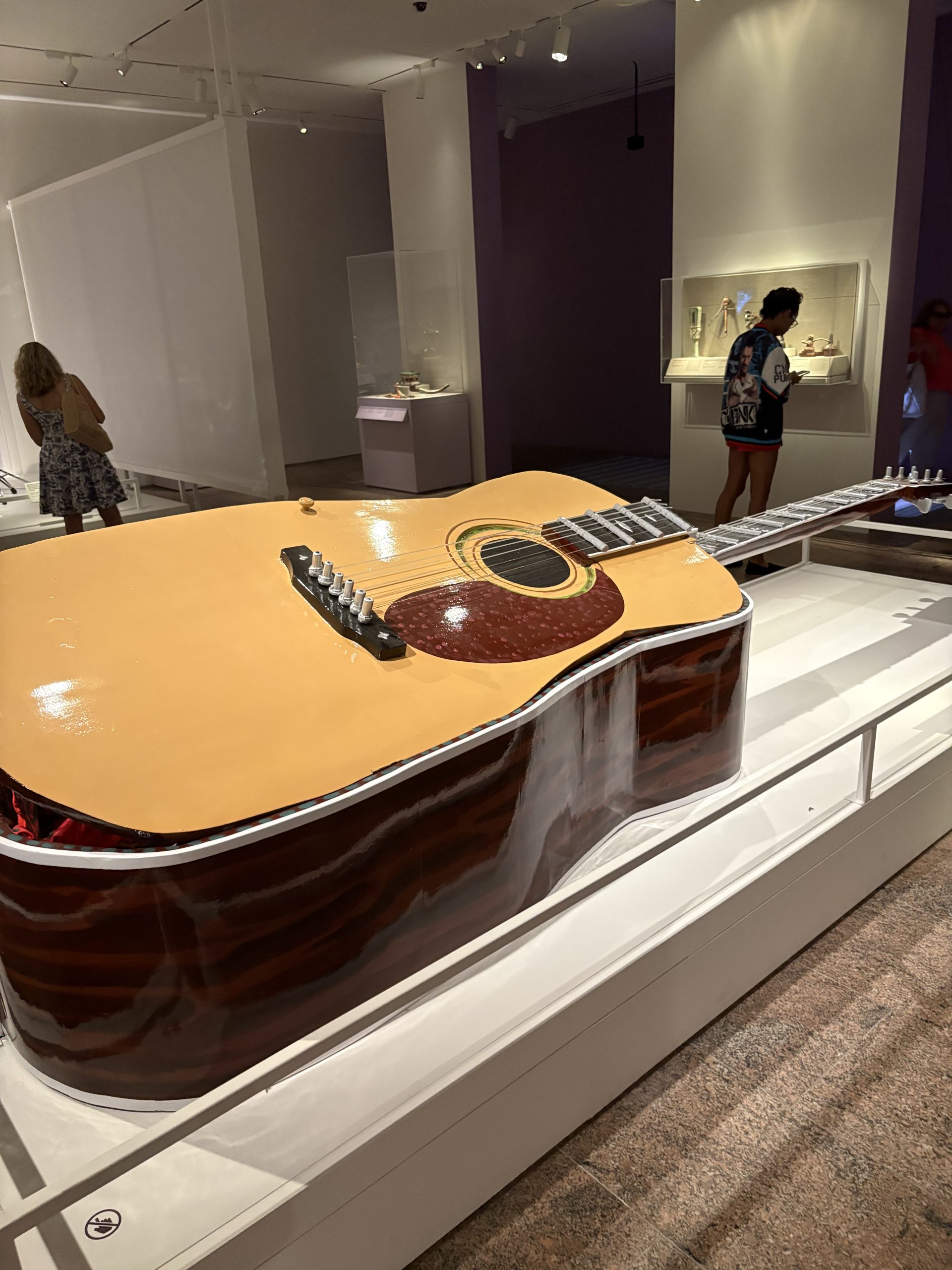
The Met says “Musical Bodies” moves across thousands of years of history, bringing together ancient Egyptian rattles, historical European instruments, paintings by artists including Titian and Edgar Degas, contemporary objects and even a notable guitar associated with Prince.
The exhibition's object list demonstrates just how broad the selection is.
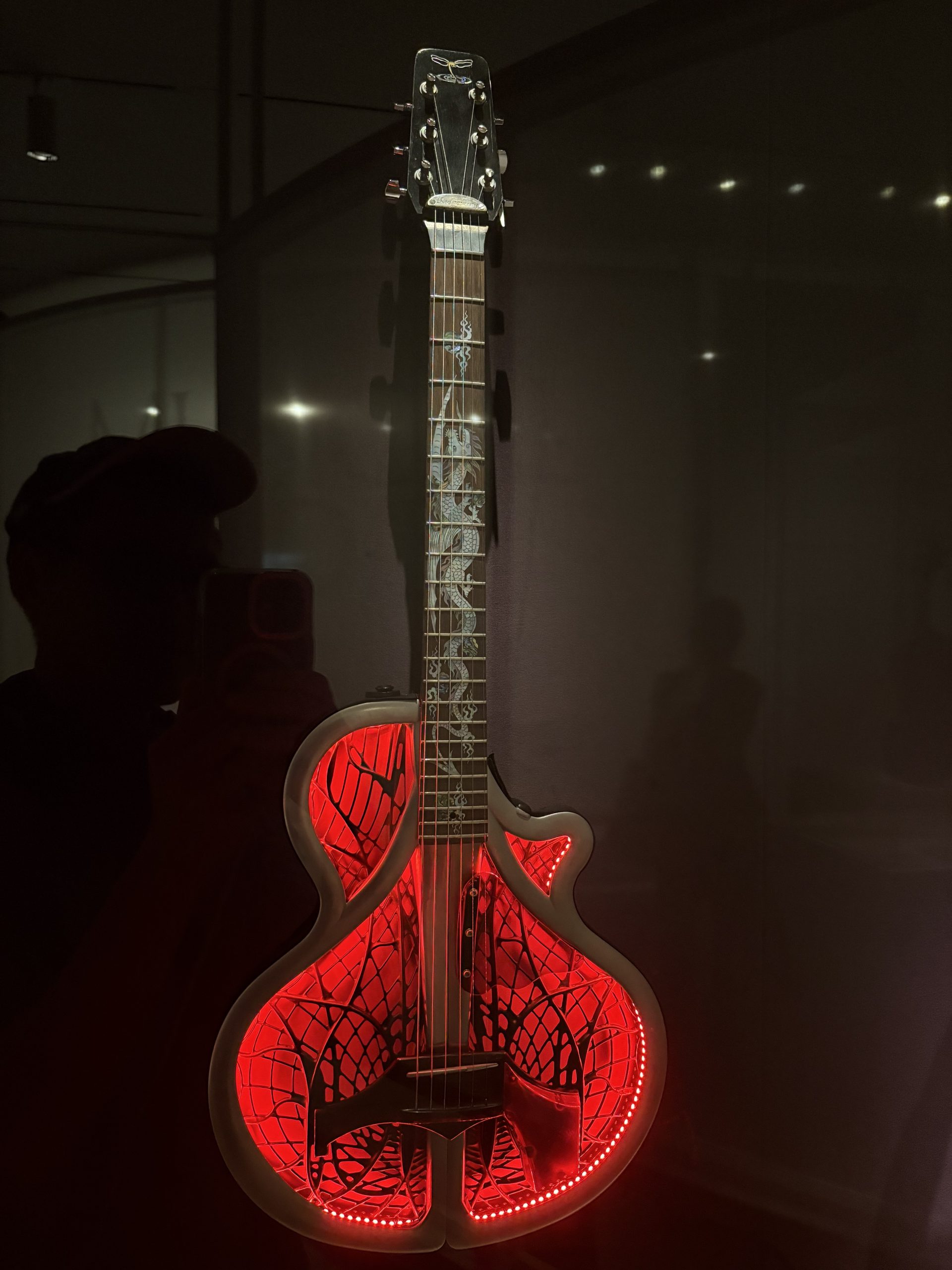
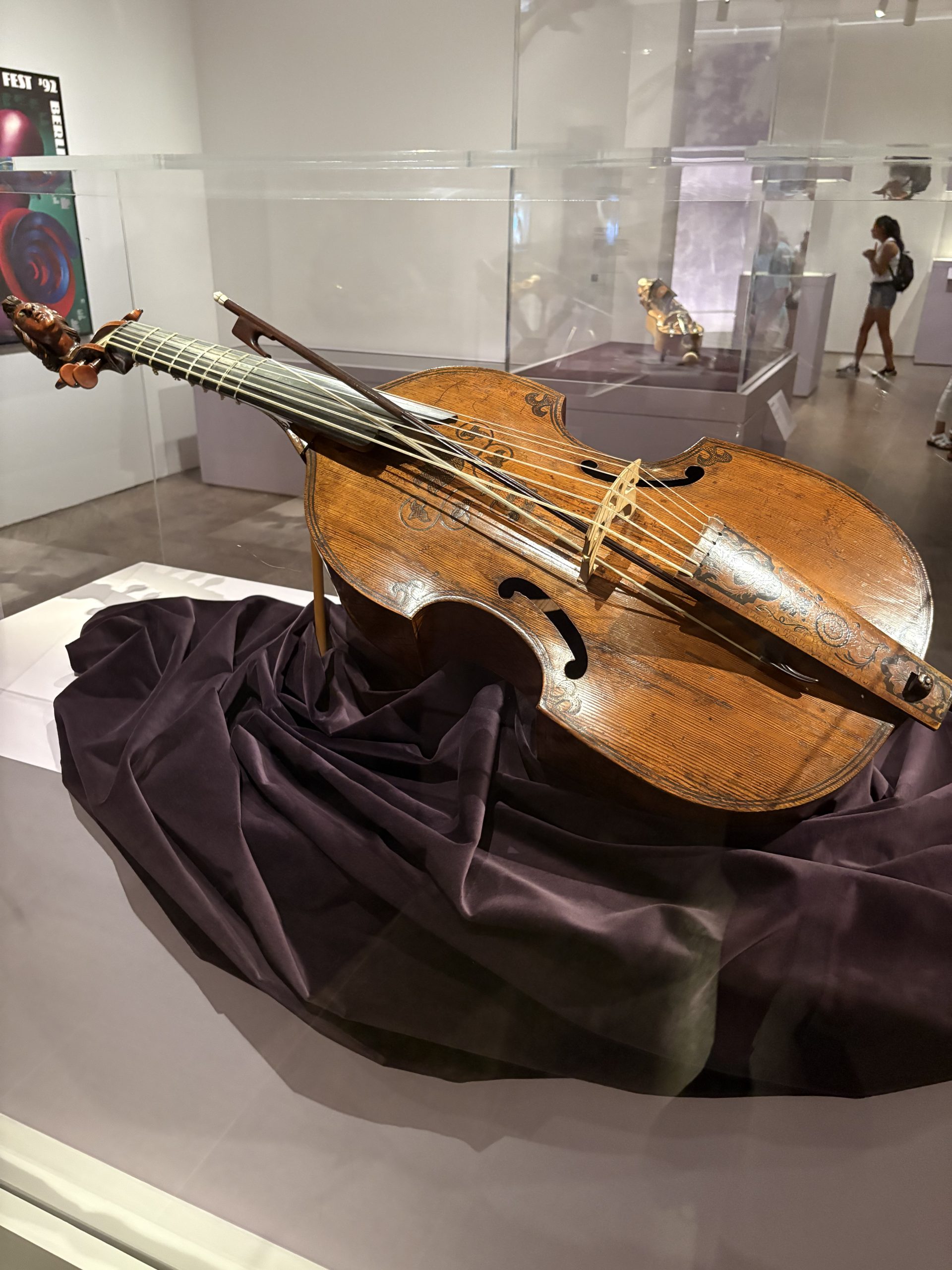
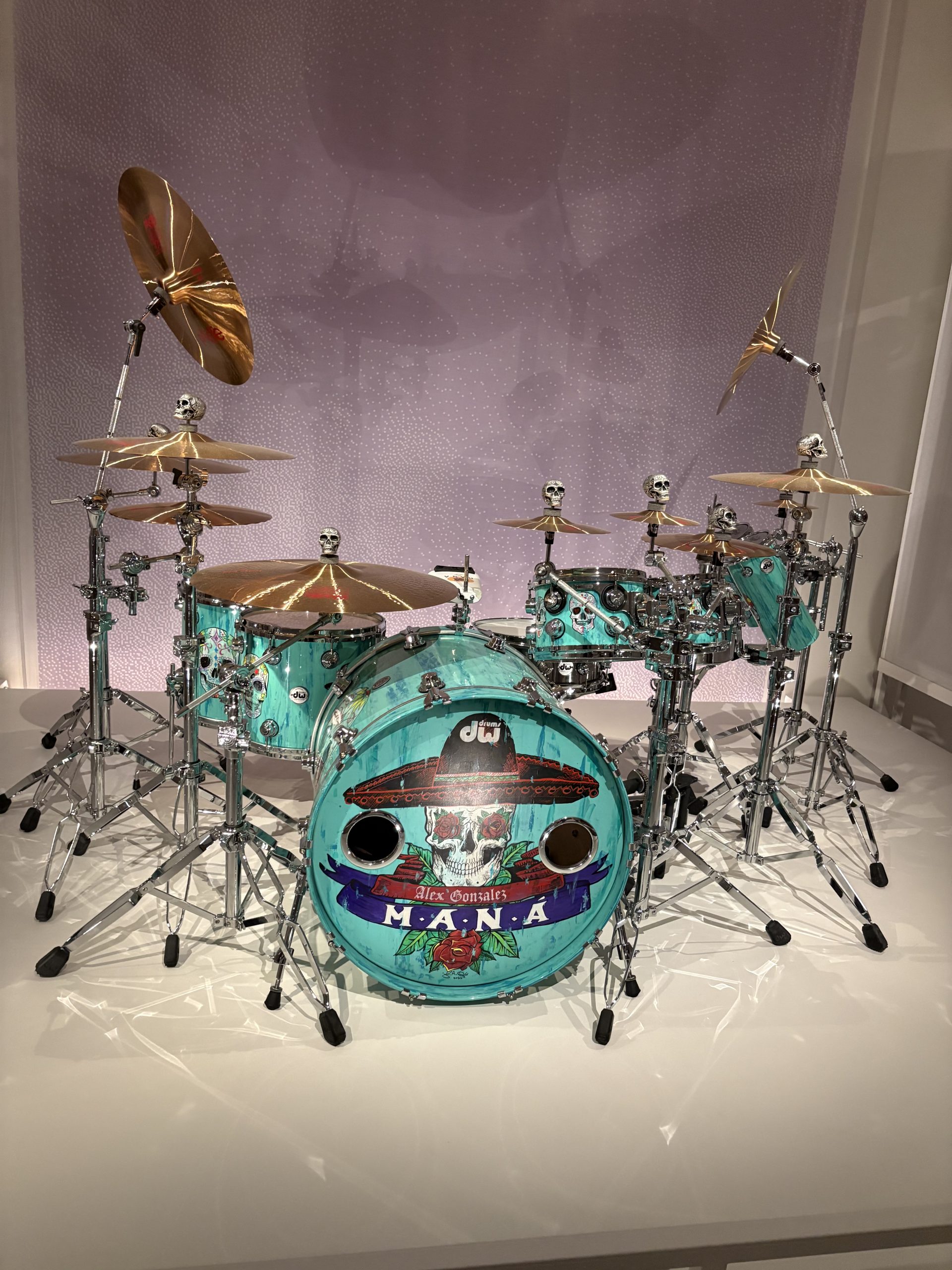
Visitors can encounter objects including an ancient Egyptian pair of clappers, a Cycladic marble female figure, an Antonio Stradivari violin, Indian and African instruments, a 1929 theremin, contemporary musical technology and a 2015 Ridgewing guitar.
This mixture is important because it prevents the exhibition from presenting music as belonging to one civilization, period or social class.
Instead, music becomes a universal human activity.
Instruments Are More Than Objects
A major theme of “Musical Bodies” is that musical instruments are not merely tools.
They can represent identity, belief, gender, social status, spirituality and cultural memory.
The Met's curatorial approach examines instruments through the perspectives of musicology, anthropology, art history, religion, mythology and popular culture.
That interdisciplinary approach gives the exhibition considerable intellectual depth.
A musical instrument can simultaneously be:
- A technological invention
- A work of visual art
- A cultural artifact
- A religious object
- A symbol of identity
- A tool for performance
- A representation of the human body
This is where “Musical Bodies” becomes especially interesting for museum visitors who may not consider themselves musicians.
The exhibition isn't really asking whether visitors know how to play an instrument. Instead, it asks them to think about why humans make instruments in the first place.
The Body, Identity and Culture
Music has always been connected to identity.
People use music to express where they come from, who they are and what communities they belong to. Musical instruments can therefore become powerful symbols of cultural identity.
The Met's exhibition explores this relationship through objects created in different societies and historical periods. It demonstrates that instruments can carry meanings far beyond their sounds.
This is particularly relevant in an increasingly globalized world.
A museum exhibition can place objects separated by thousands of miles and centuries next to each other, allowing visitors to see similarities that might otherwise remain invisible.
Different cultures may use completely different materials and construction techniques, yet their instruments can still reflect familiar human concerns: communication, celebration, spirituality, storytelling, identity and mortality.
When Instruments Become Human
Perhaps the most intriguing aspect of “Musical Bodies” is the exhibition's focus on anthropomorphic instruments—objects that take on human characteristics.
The Met divides its exploration into two broad conceptual areas: “Bodies” and “Beings.” The first examines how instruments mirror the human body, while the second considers how anthropomorphic instruments can represent identity and even appear to take on a kind of agency.
This creates an unusual museum experience.
Visitors are encouraged to look at an instrument not simply as something that produces sound but as something that can represent a person, community or belief system.
The concept also allows the exhibition to address subjects that can be difficult to discuss directly, including sexuality, death and the afterlife.
Music becomes a kind of intermediary—a way for societies to explore human experiences that are otherwise difficult to represent.
Why “Musical Bodies” Matters in 2026
Museums increasingly compete for visitors' attention in an environment dominated by digital entertainment.
A successful contemporary exhibition therefore needs to do more than display beautiful objects behind glass.
“Musical Bodies” offers a strong example of how museums can connect historical collections with questions that remain relevant today.
Technology is changing how people create and experience music. Digital instruments, electronic sound, wearable technology and computer-based performance have expanded the definition of what an instrument can be.
The exhibition reflects this evolution alongside centuries-old objects.
The Met's collection of musical instruments itself contains approximately 5,000 examples from six continents and the Pacific Islands, spanning from around 300 BCE to the present.
That broader collection provides an important foundation for understanding the exhibition's argument: musical creativity is not limited by geography or historical period.
An Exhibition for Music Lovers and Art Lovers
One of the strongest qualities of “Musical Bodies” is its ability to appeal to different audiences.
A musician may be interested in the instruments themselves.
An art lover may focus on the sculptures, paintings and visual design.
A historian may be interested in cultural exchange and changing ideas about the human body.
A visitor with no specialist knowledge of music can still understand the basic premise: humans have always found ways to turn their bodies, objects and surroundings into expressions of sound and identity.
The Met itself describes the exhibition as suitable for musicians, devoted listeners and people simply curious about human expression.
“Musical Bodies” at The Met: Visitor Information
“Musical Bodies” is being presented at The Met Fifth Avenue in Gallery 199 in New York City.
The exhibition opened June 7, 2026, and is scheduled to remain on view through September 27, 2026. It is included with museum admission.
The Metropolitan Museum of Art is located at:
The Met Fifth Avenue
1000 Fifth Avenue
New York, NY 10028
For visitors planning a New York museum trip, the exhibition provides an opportunity to experience music through an art-historical lens rather than through a traditional concert or performance.
The Bigger Idea Behind the Exhibition
“Musical Bodies” ultimately asks visitors to reconsider the separation between humans and the objects they create.
An instrument may appear to be an external object, but its purpose is deeply connected to the body. Fingers press keys and strings. Hands strike surfaces. Breath creates vibrations. Feet establish rhythm. Voices transform physical movement into sound.
In that sense, the relationship between musician and instrument is not simply mechanical.
It is physical, emotional and cultural.
The exhibition's greatest achievement may therefore be its ability to make something familiar seem strange again. Most people understand what a guitar, drum or violin is. But “Musical Bodies” encourages visitors to ask a more fundamental question:
Where does the human body end and the musical instrument begin?
That question gives the exhibition relevance far beyond the museum gallery.
Final Thoughts
The Met's “Musical Bodies” is an ambitious exploration of music, art, technology, culture and the human body.
By bringing together approximately 130 instruments and related artworks from different periods and cultures, the exhibition demonstrates that musical expression is inseparable from human identity.
For New York visitors, it offers a different kind of museum experience—one that encourages people not only to look at objects, but to think about their own bodies as instruments of rhythm, movement and expression.
In a world filled with increasingly sophisticated digital music technology, “Musical Bodies” delivers a surprisingly timeless message:
Before humans invented musical instruments, they already had the most fundamental instrument of all—the human body.
Official Exhibition Source
For current exhibition details, visitor information and the full list of objects, visit The Metropolitan Museum of Art — Musical Bodies.
Source for review: https://www.wsj.com/arts-culture/fine-art/musical-bodies-review-a-human-symphony-at-the-met-museum-a3e2a885?mod=hp_listc_pos3




0 Comments