
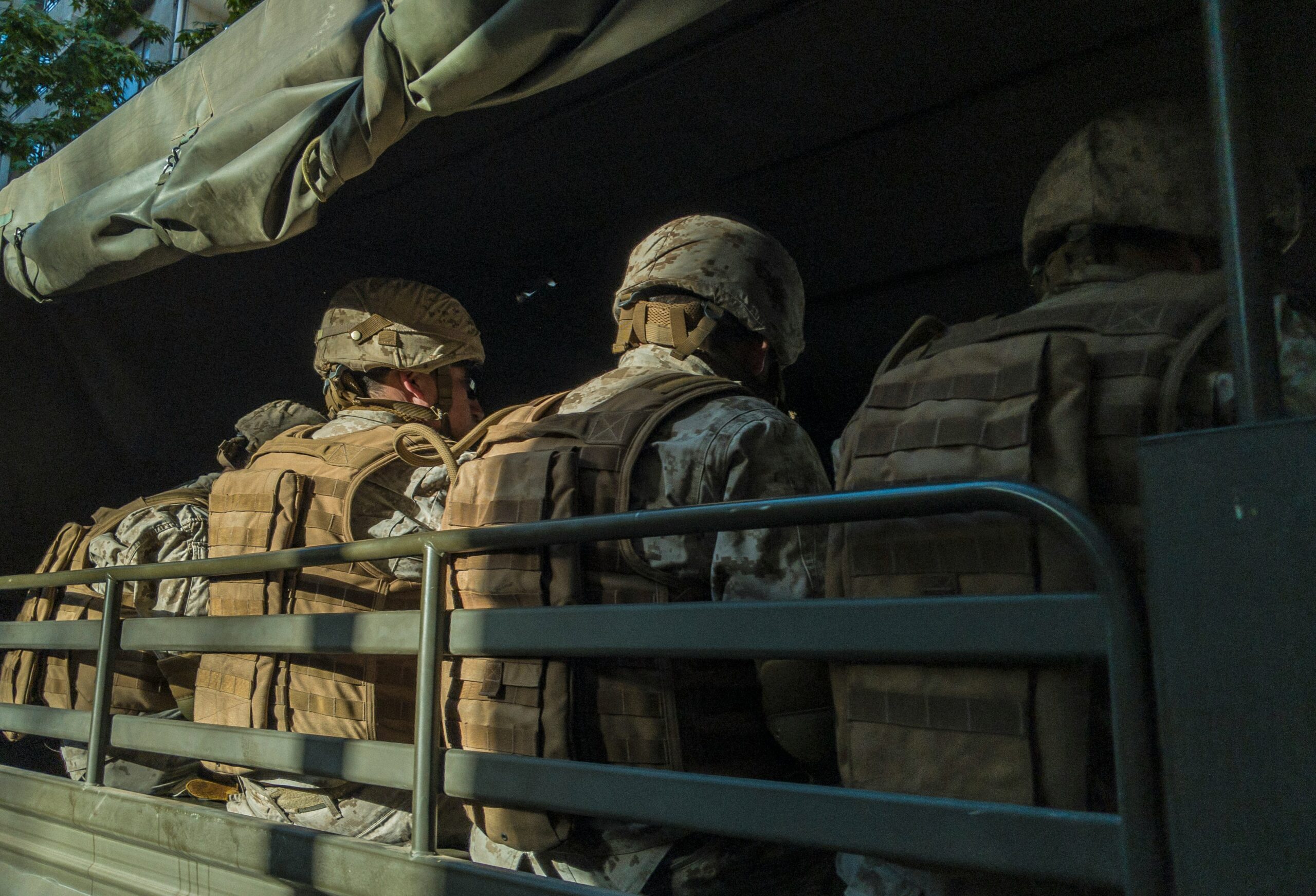
Pete Hegseth reportedly prepared a plan to cut U.S. troops in Europe before it was blocked by Marco Rubio and other Trump officials. The failed proposal still signals a major shift in NATO strategy, U.S. force posture in Europe, and Washington’s defense priorities.
Focus Keyphrase: Hegseth Europe troop cut plan
Pete Hegseth’s Blocked Europe Troop Cut Plan Exposes the Real Debate Over NATO, Trump, and U.S. Military Power in Europe
Defense Secretary Pete Hegseth reportedly prepared a dramatic plan to cut U.S. troops in Europe before the proposal was blocked by Marco Rubio and other senior Trump administration officials. According to The Wall Street Journal, Hegseth had intended to go to Brussels and tell NATO allies that the United States was preparing deeper force reductions in Europe — cuts that would go beyond the canceled armored brigade deployment to Poland and the earlier withdrawal of an infantry brigade from Romania. Instead, after internal resistance, the administration announced a six-month review of U.S. force posture in Europe.
That shift matters because the failed plan does not look like an isolated Pentagon improvisation. It looks like a preview of a larger fight over Trump’s NATO strategy, U.S. military commitments in Europe, and the extent to which Washington is willing to reallocate forces away from the European theater and toward Asia. The proposal may have been blocked. The strategic signal was not.
Why the Hegseth Europe Troop Cut Story Matters Far Beyond One Leaked Pentagon Fight
The headline fact — that Pete Hegseth’s Europe troop cut plan was nixed — understates the importance of the story. The real significance lies in what the proposal reveals about the Trump administration’s internal thinking. There is now clear evidence that parts of the administration are actively considering deeper U.S. troop cuts in Europe, even as Russia remains the central military threat to NATO’s eastern flank and the war in Ukraine continues to reshape Europe’s security order.
This matters because for years the debate over U.S. troops in Europe was framed as rhetorical pressure — a way for Trump and his allies to force European governments to spend more on defense. What the WSJ reporting suggests is that the debate has moved well beyond rhetoric. A concrete proposal was reportedly prepared. It included force reductions beyond moves that had already unsettled NATO allies. And it was serious enough that senior officials felt compelled to stop it before it reached Brussels.
For educated readers tracking the future of the alliance, that is the real takeaway: the question is no longer whether Washington is debating a smaller military footprint in Europe. The question is how aggressively it is prepared to pursue it.
What Pete Hegseth Reportedly Wanted to Do in Europe
According to the WSJ report, Hegseth planned to announce additional cuts to U.S. forces in Europe at a NATO meeting in Brussels. Those cuts would have gone beyond two decisions that had already alarmed allies:
- the canceled armored brigade deployment to Poland
- the withdrawal of an infantry brigade from Romania
After the proposal was circulated internally, it was blocked by senior officials including Rubio. Instead of unveiling immediate troop cuts, Hegseth publicly announced a review of America’s force posture and basing in Europe that could take up to six months.
That distinction matters. A troop-cut announcement is a direct strategic shock. A force-posture review is a slower instrument — but it can still be a precursor to cuts. In policy terms, a review is often how administrations turn a controversial political idea into a bureaucratically defensible recommendation. So while the bombshell plan was stopped, the review itself keeps the underlying issue alive: Will the Trump administration reduce the U.S. military presence in Europe?
The Core Strategic Question: Is Trump Rewriting the U.S. Role in NATO?
The Hegseth episode points to a deeper structural question: What is the Trump administration’s actual endgame for NATO?
There are at least three layers to the answer.
1. Trump’s long-standing hostility to Europe’s security free-riding
Trump has spent years arguing that NATO allies underinvest in their own defense while relying on the U.S. security umbrella. That view has shaped his public rhetoric, his transactional approach to alliances, and his repeated threats to downgrade American commitments if allies do not spend more. Hegseth’s public warnings to Europe fit squarely within that tradition.
2. The Pentagon’s push to prioritize Asia over Europe
The second layer is strategic rather than ideological. The Pentagon has increasingly framed China as the pacing threat for U.S. military planning. If Washington wants to concentrate more combat power, logistics, air defense, and naval capacity in the Indo-Pacific, then Europe becomes the obvious place to look for reductions. A recent WSJ report separately noted that the Pentagon has already cut some forces earmarked for Europe in a crisis as part of a broader effort to reallocate resources toward Asia.
3. A move toward a more conditional American role in European defense
The third layer is political leverage. Rather than formally abandoning NATO, the administration may be trying to redesign the alliance around a more conditional U.S. commitment — one in which troop levels, basing decisions, and funding become contingent on whether allies meet spending targets and align with U.S. operational priorities. Hegseth’s own public comments about allies “passing” or “failing” the Pentagon’s review point in exactly that direction.
Put those three layers together and the logic becomes clear: the blocked Hegseth troop-cut plan was not a random outburst. It fits a coherent, if disruptive, theory of how the United States should treat Europe under Trump.
Why Poland and Romania Matter So Much in the U.S. Troop Cut Debate
Any discussion of U.S. troop cuts in Europe becomes more serious when it involves Poland and Romania, because those countries sit on the frontline of NATO’s eastern and southeastern defense architecture.
Poland is a strategic hinge for NATO’s eastern flank
Poland is no longer just a loyal U.S. ally in Central Europe. It has become one of NATO’s most important military hubs: a logistics corridor for support to Ukraine, a staging area for allied operations, and a core deterrent position against Russia. Canceling an armored brigade deployment to Poland sends a message far larger than the troop numbers themselves. It tells allies that the physical architecture of deterrence on NATO’s eastern edge is negotiable.
Romania anchors NATO’s Black Sea flank
Romania matters because the Black Sea is increasingly central to European security. A reduction in U.S. military presence there does not simply affect bilateral U.S.-Romania ties. It changes how NATO thinks about southeastern Europe, Black Sea access, regional logistics, and the credibility of allied defense planning near Ukraine and the western edge of Russian power projection.
For readers trying to understand why this story matters, that is the key point: this is not just about troop accounting. It is about whether Washington is prepared to thin out the very parts of Europe where deterrence matters most.
Marco Rubio’s Intervention Suggests the Trump Team Is Still Split on Europe
One of the most revealing details in the report is that Hegseth’s plan was blocked after it reached Rubio and other senior officials. That matters because it suggests the administration does not yet have a settled consensus on the pace or scale of a European drawdown.
There are at least two plausible interpretations of Rubio’s intervention.
Interpretation one: the White House wants cuts, but not chaos
Under this view, Rubio and others were not objecting to the idea of reducing U.S. troops in Europe. They were objecting to the politics and timing of a sudden Brussels announcement that could rattle NATO allies, trigger congressional backlash, and hand Russia an obvious propaganda win.
Interpretation two: parts of the administration still fear strategic overreach
The second interpretation is that some officials remain wary of moving too quickly against the alliance while Europe is still dependent on U.S. logistics, intelligence, command-and-control systems, missile defense, and airlift. Europe may be increasing defense spending, but it is not yet capable of replacing the full range of American military functions on short notice.
Either way, the internal intervention tells us something important: the administration is arguing not only about whether to pressure Europe, but about how far to go in converting pressure into actual military retrenchment.
NATO’s Biggest Problem Is Not Just Fewer U.S. Troops in Europe — It’s Uncertainty
If this story has a strategic center of gravity, it is uncertainty.
NATO can adapt to many things, including a gradual shift toward greater European defense responsibility, if Washington is clear about the timeline and the end state. What is harder to manage is a cycle of public threats, internal reversals, mixed signals, and reviews that hint at one policy while delaying its implementation.
That uncertainty has at least four consequences:
1. It weakens deterrence through ambiguity
If Moscow concludes that the alliance is politically divided over the future of U.S. troops in Europe, the credibility of NATO’s deterrent posture becomes harder to read.
2. It complicates allied defense planning
European governments need to know which U.S. capabilities will remain in theater, where they will be based, and what assumptions still hold for crisis response.
3. It accelerates Europe’s push for strategic autonomy
The more unstable Washington’s signaling becomes, the stronger the argument in Europe for building independent defense capabilities rather than relying on future American reassurance.
4. It raises the risk of policy overcorrection
Some governments may rush to spend and reposition forces; others may hedge politically and prepare for a less reliable U.S. role. Neither reaction is ideal for alliance cohesion.
In that sense, the Hegseth story is not merely about troop levels. It is about the credibility of the transatlantic security bargain itself.
The Bigger Picture: The U.S. Debate Over Europe Is Now About Priorities, Not Principles
For most of the post-Cold War era, the assumption behind U.S. policy was that a large American role in Europe was strategically normal. That assumption is now eroding.
The debate inside Washington is no longer about whether NATO matters in principle. It is about how much Europe matters relative to Asia, how much military risk the U.S. is willing to offload onto allies, and how quickly America can reduce its European footprint without destabilizing deterrence.
That is why the blocked Hegseth plan deserves attention. It compresses several major geopolitical trends into one episode:
- the Trump administration’s effort to force Europe into higher defense spending
- the Pentagon’s desire to free resources for competition with China
- the political fragility of NATO burden-sharing debates
- the strategic vulnerability of frontline states such as Poland and Romania
- the growing uncertainty surrounding the future of U.S. force posture in Europe
Even if the exact proposal never resurfaces in the same form, the logic behind it is unlikely to disappear.
Final Analysis: Hegseth’s Failed Europe Troop Cut Plan Still Changes the NATO Conversation
The most important point for readers, policymakers, and investors watching transatlantic security is straightforward: Pete Hegseth’s blocked troop-cut plan still matters because it reveals how real the idea of shrinking the U.S. military presence in Europe has become.
The proposal was stopped. But it was serious enough to be drafted, serious enough to alarm senior officials, and serious enough to force a pivot toward a formal force-posture review. That means the future of U.S. troops in Europe, Trump’s NATO strategy, and the broader architecture of American power on the continent is no longer a speculative debate. It is an active policy contest.
And once that kind of contest begins inside Washington, allies have to assume the question is not whether change is coming — only how much, and how soon.
FAQ: Hegseth, NATO, and U.S. Troops in Europe
Did Pete Hegseth really plan to cut U.S. troops in Europe?
According to The Wall Street Journal, yes. Hegseth reportedly prepared a plan to announce additional troop cuts in Europe before the proposal was blocked by senior Trump administration officials.
Why was Hegseth’s Europe troop cut plan blocked?
The reporting indicates that Marco Rubio and other officials intervened after reviewing the proposal. The exact internal objections are not fully public, but the move suggests concern over the pace, scope, or diplomatic fallout of a sudden announcement.
What countries were affected by previous U.S. troop moves in Europe?
The report says the proposed cuts would have gone beyond the canceled armored brigade deployment to Poland and the earlier withdrawal of an infantry brigade from Romania.
Is the Trump administration still reviewing U.S. forces in Europe?
Yes. Instead of announcing immediate cuts, Hegseth said the U.S. would conduct a six-month review of force posture in Europe.
Why does this matter for NATO?
Because the debate is not just about troop numbers. It is about deterrence against Russia, allied confidence in U.S. commitments, and whether the United States is preparing to reduce its long-standing military role in Europe while shifting resources toward Asia.



0 Comments