
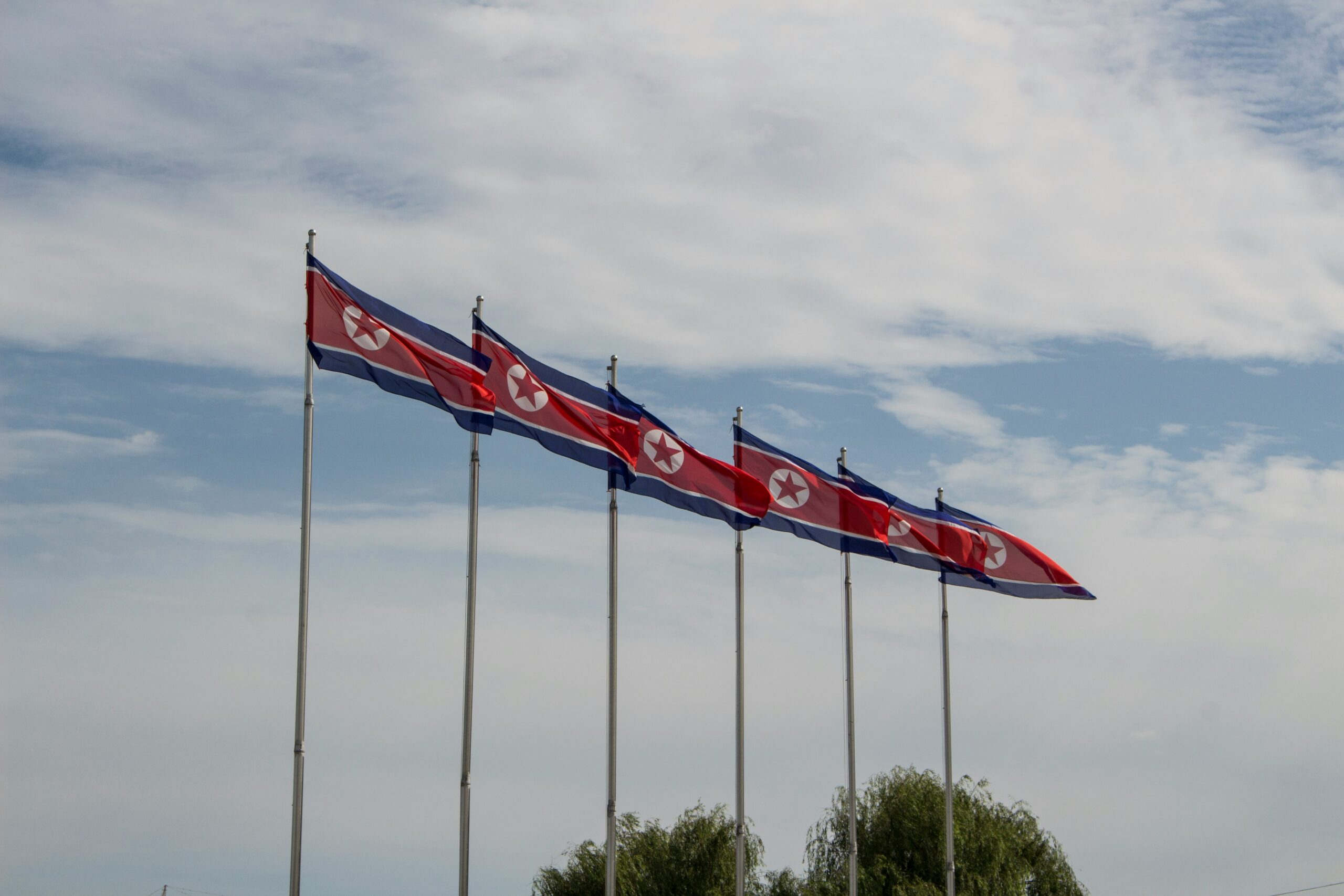
North Korea's economy is growing at its fastest pace in years. Discover how Kim Jong Un, Russia, China, and military exports are fueling an unexpected economic boom despite international sanctions.
Focus Keywords: North Korea economy, Kim Jong Un economy, North Korea GDP growth, Russia North Korea trade, China North Korea trade, North Korea sanctions, Pyongyang development, North Korea economic growth, North Korea business, North Korea geopolitical economy
North Korea’s Economic Miracle? How Kim Jong Un Is Defying Sanctions and Rebuilding the World’s Most Isolated Economy
For decades, North Korea has been portrayed as a failed economic experiment—a heavily sanctioned dictatorship trapped in isolation, chronic shortages, and international condemnation. Yet in 2026, a surprising narrative is emerging from one of the world's most secretive nations.
Instead of economic collapse, North Korea is showing signs of a remarkable resurgence.
New housing districts are rising across Pyongyang. Digital payment systems are spreading. Consumer technology adoption is accelerating. Trade flows with China are expanding. Billions of dollars from Russia-linked military cooperation are flowing into the country. Most surprisingly, North Korea's economy is now recording its strongest growth in nearly a decade.
The development is forcing economists, investors, intelligence agencies, and policymakers to confront a difficult question:
Have sanctions against North Korea failed?
North Korea's Fastest Economic Growth in Years
Recent estimates suggest North Korea's economy expanded approximately 3.7% in 2024, the fastest growth rate in eight years. Analysts believe the momentum has continued through 2025 and into 2026 as trade, construction, and military-related revenues increase.
For a country that endured severe economic disruption during the COVID-19 pandemic, the turnaround is remarkable.
Only a few years ago, North Korea sealed its borders, drastically reducing trade with China and triggering shortages of food, fuel, and industrial materials. Many observers predicted a prolonged economic crisis.
Instead, the regime adapted.
Today, North Korea appears to be entering a new phase—one marked by selective modernization, growing foreign partnerships, and stronger state control over economic activity.
The Russia Factor: A Geopolitical Windfall
Perhaps the most important driver of North Korea's economic recovery is its deepening relationship with Russia.
Since the outbreak of the Ukraine conflict, Moscow has increasingly relied on North Korea for military supplies and manpower support. Reports indicate that Pyongyang has supplied ammunition, artillery shells, and personnel while strengthening strategic ties with the Kremlin.
The economic benefits have been substantial.
Military cooperation has generated billions of dollars in revenue, providing Kim Jong Un with resources to fund infrastructure projects, industrial upgrades, and strategic development initiatives.
Beyond direct financial gains, North Korea is believed to be receiving technological assistance and military expertise that further enhance its strategic position.
The result is a mutually beneficial partnership: Russia gains critical support while North Korea gains economic breathing room.
China Remains North Korea's Economic Lifeline
While Russia has become increasingly important, China continues to be North Korea's indispensable economic partner.
Historically, China has accounted for the overwhelming majority of North Korea's external trade. Even under sanctions, commercial ties between the two countries have remained resilient.
The post-pandemic reopening of trade routes has accelerated economic activity.
Chinese goods, manufacturing equipment, electronics, and industrial components are once again flowing into North Korea. At the same time, Beijing appears increasingly interested in maintaining influence over Pyongyang amid growing Russian involvement. Recent diplomatic engagement between Chinese President Xi Jinping and Kim Jong Un underscores the strategic importance of the relationship.
Without China, North Korea's current economic revival would be far more difficult.
The Transformation of Pyongyang
Perhaps the clearest evidence of North Korea's changing economy can be seen in Pyongyang.
The capital city has undergone a dramatic physical transformation.
Visitors and analysts describe a city increasingly populated by:
- Modern apartment towers
- Digital payment platforms
- Ride-hailing applications
- Electric vehicles
- Shopping centers
- Technology-enabled services
- Newly constructed residential districts
The government reportedly completed around 10,000 housing units in a single year as part of an ambitious urban development program. Large-scale infrastructure investments are visible across multiple sectors.
These projects serve an important political purpose.
Economic development helps reinforce Kim Jong Un's legitimacy while demonstrating the state's ability to improve living standards despite international pressure.
North Korea's Digital Economy Is Expanding
One of the most overlooked aspects of North Korea's economic evolution is the rise of its digital economy.
Although disconnected from the global internet, North Korea has developed an increasingly sophisticated domestic digital ecosystem.
Smartphone ownership has expanded significantly. Mobile applications now support transportation, food delivery, healthcare services, and electronic payments. QR-code transactions have become increasingly common in urban centers.
This trend reflects a broader shift occurring under Kim Jong Un.
Unlike earlier periods of rigid central planning, the modern North Korean economy incorporates limited market mechanisms, technology adoption, and controlled entrepreneurship while maintaining strict political oversight.
The model resembles a uniquely North Korean version of state-managed modernization.
Why Sanctions Are Losing Their Impact
International sanctions were designed to isolate North Korea economically and limit its ability to fund nuclear weapons development.
However, recent events suggest those sanctions may be becoming less effective.
Several factors explain why:
1. Russia Provides Alternative Revenue
Military exports and strategic cooperation generate substantial income streams that bypass traditional economic restrictions.
2. China Maintains Trade Channels
Despite international pressure, commercial links between China and North Korea remain significant.
3. Domestic Adaptation
North Korea has spent years developing mechanisms to operate under sanctions, including domestic production and alternative financial networks.
4. Enhanced State Control
Kim Jong Un's government has tightened oversight of economic activity while directing resources toward priority sectors.
The combination has weakened the leverage that sanctions once provided.
The Hidden Reality: Growth Is Uneven
Despite the optimistic headlines, North Korea remains one of the poorest countries in Asia.
Most of the visible economic progress is concentrated in Pyongyang and among politically connected groups.
Large portions of the population continue to face economic hardship, limited access to consumer goods, and lower living standards.
Reliable economic data remains difficult to obtain, meaning many estimates rely on satellite imagery, trade statistics, intelligence assessments, and external modeling.
The apparent boom should therefore be viewed with caution.
Growth does not necessarily translate into widespread prosperity.
What North Korea's Economic Revival Means for Global Markets
The implications extend far beyond the Korean Peninsula.
A financially stronger North Korea could:
- Accelerate military modernization
- Expand nuclear capabilities
- Strengthen alliances with Russia and China
- Reduce incentives for diplomatic compromise
- Increase geopolitical tensions across East Asia
For investors and multinational businesses, North Korea remains largely inaccessible.
For governments, however, the country's economic resilience represents a growing strategic challenge.
The assumption that economic isolation alone could force policy changes in Pyongyang appears increasingly questionable.
Conclusion: The Rise of a New North Korean Economy
North Korea's economic rebound may become one of the most consequential geopolitical developments of the decade.
Driven by Russian military cooperation, Chinese trade, infrastructure investment, technological modernization, and tighter state management, Kim Jong Un has transformed what many expected to be a failing economy into a surprisingly resilient system.
The country remains heavily sanctioned, politically isolated, and structurally vulnerable.
Yet the evidence increasingly points to a reality that many policymakers did not anticipate:
North Korea is not collapsing.
Instead, it is adapting, evolving, and in some respects thriving.
Whether this economic momentum can be sustained over the long term remains uncertain. What is clear is that the global conversation about North Korea can no longer focus solely on sanctions and isolation.
The story now is growth, resilience, and the emergence of a new economic model that could reshape the balance of power in Northeast Asia for years to come.
Source: https://www.wsj.com/world/asia/north-korea-economy-success-e80f7062?mod=hp_lead_pos7




0 Comments