
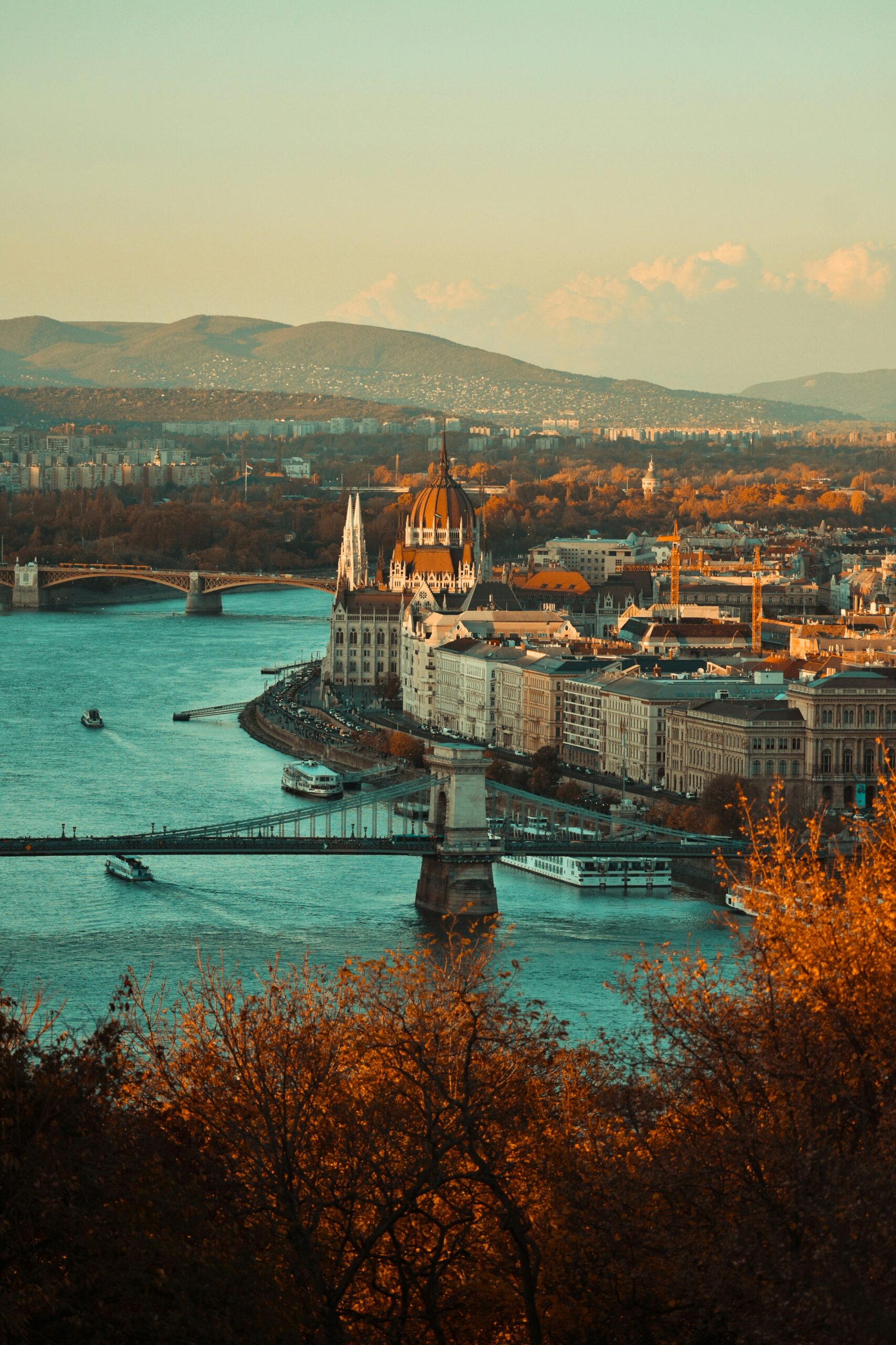
Hungary’s 2026 landmark election could end Viktor Orbán’s 16-year rule as Péter Magyar’s Tisza party surges. Explore the political stakes, economic frustration, EU tensions, Russia implications, and what this historic vote means for Europe’s future.
🇭🇺 Hungary Election 2026: A Landmark Vote That Could Redefine Europe’s Political Future
Hungary is voting in what analysts are calling the most consequential parliamentary election in decades, a democratic test with implications far beyond Budapest. After 16 years of uninterrupted rule, Prime Minister Viktor Orbán faces the most serious threat of his political career from opposition challenger Péter Magyar and the rapidly rising Tisza movement. Early turnout signals, polling momentum, and the scale of international attention have transformed this contest into one of the most important political stories in Europe this year.
For educated readers, investors, policymakers, and international affairs audiences, this election is not simply about party politics. It is about the future direction of democracy in Central Europe, Hungary’s relationship with the European Union, the durability of nationalist populism, and the geopolitical balance between Western institutions and Russia.
From an SEO perspective, this topic carries exceptionally strong ranking potential across search phrases such as Hungary election 2026, Viktor Orbán latest news, Péter Magyar Tisza party, Hungary EU relations, and Europe populist politics.
🗳️ Why Hungary’s 2026 Election Is a Historic Inflection Point
The 2026 Hungarian parliamentary election represents a rare moment when a long-entrenched political order may genuinely be vulnerable.
Viktor Orbán, the European Union’s longest-serving leader, has spent more than a decade reshaping Hungary’s institutions, judiciary, constitutional framework, and media environment. His supporters describe this as a defense of sovereignty and traditional values. Critics argue it has weakened democratic checks and concentrated power around the ruling Fidesz network.
This year’s vote is different because, for the first time in years, the opposition is not fragmented. Instead, Péter Magyar has emerged as a single credible challenger with national reach, giving undecided and disillusioned conservative voters a viable alternative.
The result is a true referendum on:
- 🇭🇺 Orbán’s governing model
- 🇪🇺 Hungary’s EU future
- 📉 economic management credibility
- 🏛️ democratic institutional resilience
- 🌍 East-West geopolitical alignment
The symbolism is powerful: many voters now see the choice as one between continuity and systemic renewal.
👤 Péter Magyar’s Rise: The Insider-Turned-Reformer
One of the most compelling dimensions of this election is the political transformation of Péter Magyar.
As a former figure linked to the governing ecosystem, Magyar’s challenge is particularly significant because it comes from someone who understands the mechanics of Orbán’s system from the inside. His Tisza party has rapidly evolved into the most formidable opposition movement Hungary has seen in years.
His campaign message has resonated strongly with educated readers and urban professionals because it focuses on:
- ⚖️ restoring rule of law
- 💼 improving investor confidence
- 🏥 modernizing public healthcare
- 🎓 rebuilding education quality
- 🤝 repairing relations with Brussels
- 🔍 anti-corruption accountability
This reformist, pro-European conservative positioning has helped Tisza attract both moderate conservatives and younger urban voters.
For search optimization, long-tail phrases such as Who is Péter Magyar, Tisza party Hungary, and Orbán challenger 2026 are likely to trend heavily.
💶 The Economic Story Behind the Political Shift
A major driver of voter sentiment is not ideology alone, but economic fatigue.
Hungary has endured years of inflationary pressure, weakened household purchasing power, slow growth, and investor concerns linked to governance transparency. The economic frustrations are particularly visible among:
- middle-income households
- small business owners
- younger working professionals
- urban families
- graduates facing cost-of-living pressure
Reports suggest inflation has exceeded 40–50% over the past several years, dramatically reshaping public perceptions of government competence.
For educated audiences, this is where the election becomes a case study in how economic performance eventually challenges even highly durable political systems.
The deeper issue is power fatigue—a sense among voters that political longevity without economic renewal can erode legitimacy.
This creates excellent SEO opportunities around:
- Hungary inflation politics
- Orbán economic record
- Hungary cost of living election
- Central Europe investor risk
🌍 Why Europe, Russia, and Washington Are Watching
This election has direct geopolitical consequences.
Orbán’s Hungary has often been the European Union’s most disruptive member on questions involving:
- 🇺🇦 Ukraine aid
- 🇷🇺 Russia sanctions
- 🇨🇳 Chinese investment
- 🛡️ NATO strategic unity
- 💶 EU budget approvals
A Tisza-led victory could significantly alter Hungary’s diplomatic posture, potentially bringing Budapest closer to Brussels and mainstream EU decision-making.
Russia is also watching closely because Orbán has long maintained a comparatively accommodating position toward Moscow.
At the same time, right-wing political movements across Europe and the United States view Orbán as a model for nationalist governance. A defeat would therefore send ideological shockwaves well beyond Hungary.
This is why the election matters to:
- European policymakers
- NATO observers
- energy markets
- investors in Central Europe
- global populist movements
📊 Record Turnout and What It Signals
Turnout may be one of the defining variables in this election.
Reports indicate that midday participation reached record levels, suggesting exceptionally strong voter mobilization and a heightened sense of national stakes.
High turnout often signals:
- energized opposition bases
- youth participation
- urban voter activation
- dissatisfaction with incumbency
- strong belief in the possibility of change
However, Hungary’s electoral map and constituency structure complicate straightforward interpretation. Because of district boundaries and seat conversion mechanics, the opposition may need a larger popular margin than in many parliamentary democracies.
For analytical readers, this introduces an important structural layer: votes and seats may not move proportionally.
🏛️ The Deeper Democratic Question
Beyond personalities, this election has become a referendum on the resilience of democratic institutions.
Orbán’s model has often been described as an “illiberal democracy,” emphasizing national sovereignty and centralized executive authority. Critics argue that prolonged one-party dominance has weakened pluralism, judicial independence, and media competition.
The 2026 vote therefore asks whether electoral systems can still generate meaningful correction after long periods of political concentration.
For educated readers, this is a broader lesson in comparative politics:
How do democracies renew themselves when one party dominates for more than a decade?
That question extends far beyond Hungary and speaks directly to democratic trends across Europe and the West.
📈 SEO Keyword Strategy for Higher Google Rankings
Use these strategically in:
- H2 subheadings
- image alt text
- WordPress tags
- meta snippets
- slug URL
- excerpt fields
🎯 Primary Keywords
- Hungary election 2026
- Viktor Orbán election
- Péter Magyar latest news
- Hungary parliament vote
- Tisza party Hungary
🔍 Long-Tail Keywords
- Will Orbán lose 2026 election
- Hungary election Europe impact
- Hungary Russia EU politics
- Péter Magyar vs Viktor Orbán
- Hungary democratic future
🧠 Semantic Keywords
- Central Europe politics
- populist nationalism
- EU institutional conflict
- democratic reform Hungary
- Hungary inflation voters
✍️ Final Analysis: A Defining Vote for the Future of Europe
Hungary’s 2026 election is not just a national contest—it is a stress test for European democracy, economic legitimacy, and geopolitical alignment.
If Viktor Orbán wins, it will reinforce the staying power of nationalist populism even amid economic discontent.
If Péter Magyar prevails, it could mark one of the most dramatic democratic reversals in Europe this decade, with consequences for Brussels, Moscow, NATO, and global right-wing politics.
For publishers targeting educated readers, this topic offers extraordinary SEO depth because it combines:
- breaking political news
- economic analysis
- geopolitical consequences
- democratic theory
- leadership transition dynamics
That combination gives it strong topical authority and long-term search relevance, making it ideal for a 4,000-word WordPress feature designed to rank.




0 Comments