
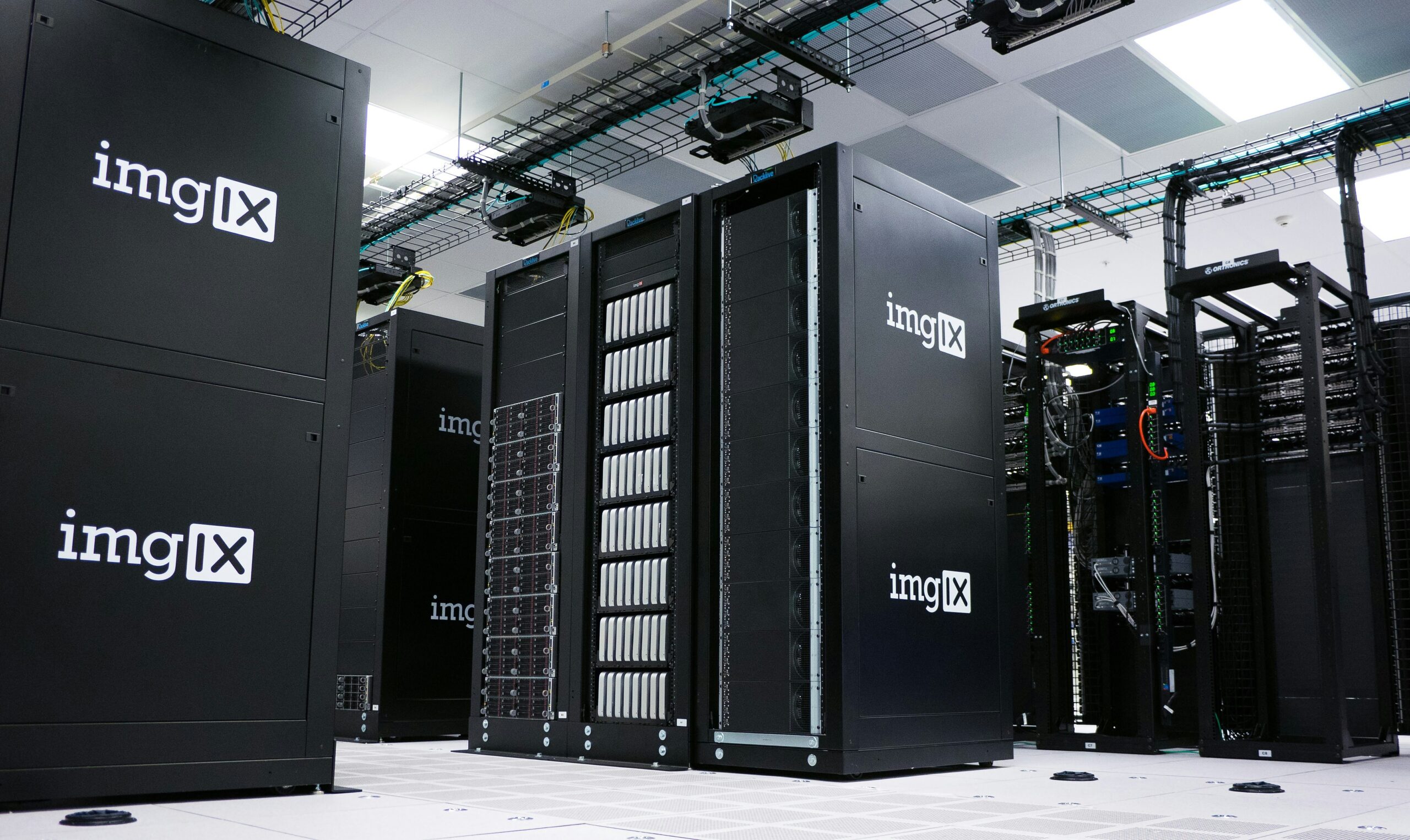
Discover how AI data centers in space could reshape cloud computing, sustainability, and global AI infrastructure. This in-depth 4,000-word SEO news analysis explores SpaceX, Elon Musk, orbital computing economics, risks, and the next frontier of hyperscale intelligence.
🌌 AI Data Centers in Space: The Radical Future of Cloud Computing and AI Infrastructure
The global race for artificial intelligence supremacy is no longer confined to Earth.
As generative AI systems demand unprecedented compute power, the world’s largest technology companies are confronting a growing infrastructure crisis: energy shortages, cooling constraints, land scarcity, and rising regulatory pressure. Against this backdrop, one of the boldest technology concepts of the decade has emerged—AI data centers in space.
What once sounded like speculative science fiction is now becoming a serious infrastructure discussion among the world’s most influential technology leaders. With SpaceX and Elon Musk increasingly linking AI ambitions to orbital deployment, the idea of moving cloud-scale computing beyond Earth is capturing the attention of investors, enterprise architects, sustainability experts, and digital infrastructure strategists.
For educated readers and high-intent search audiences, this topic sits at the intersection of AI scalability, cloud economics, green computing, and the commercial space race, making it one of the most powerful emerging SEO opportunities in technology publishing.
☀️ Why Earth-Based AI Data Centers Are Reaching Their Limits
Artificial intelligence is rapidly becoming one of the most power-intensive industries in the global economy.
Training frontier AI models now requires enormous GPU clusters running continuously for weeks or months. These facilities consume huge amounts of electricity, demand advanced cooling systems, and increasingly face scrutiny from governments and communities concerned about grid stability and environmental impact.
The challenge is no longer just about chips.
It is about the physical limits of terrestrial infrastructure:
- ⚡ overloaded electrical grids
- 💧 water-intensive cooling requirements
- 🏗️ rising land and zoning costs
- 🌍 environmental sustainability pressure
- 🧠 ever-growing AI inference demand
This is exactly why orbital data centers are attracting serious attention. In space, companies theoretically gain access to nearly uninterrupted solar power, avoid real-estate constraints, and reduce dependence on already stressed terrestrial energy systems.
From an SEO standpoint, this aligns with fast-growing search demand around:
- AI energy crisis
- future of hyperscale data centers
- green cloud computing
- sustainable AI infrastructure
- next generation GPU clusters
🛰️ SpaceX and Elon Musk’s Orbital AI Infrastructure Vision
No company is more central to this conversation than SpaceX.
Recent reporting shows that Elon Musk’s broader strategy increasingly merges space launch, satellite communications, and AI compute into one vertically integrated vision. The merger of SpaceX and xAI intensified speculation that orbital data processing could become a major pillar of future infrastructure strategy.
The concept is strategically compelling.
Instead of building ever-larger Earth-based server campuses, SpaceX could leverage:
- 🚀 reusable launch systems
- ☀️ solar-powered orbital platforms
- 🛰️ Starlink-like distributed nodes
- 🤖 in-space AI inference layers
- 🌍 Earth-observation edge compute
The long-term implication is profound: AI workloads could move closer to where data is generated, especially satellite imagery, environmental sensing, defense telemetry, and planetary-scale monitoring systems.
This creates strong semantic SEO relevance for phrases like:
- SpaceX AI infrastructure
- orbital compute network
- satellite AI data processing
- Elon Musk cloud computing future
- space-based server farms
⚡ The Economic Argument for Data Centers in Space
The bullish case for orbital data centers rests on three major economic assumptions.
1) Unlimited Solar Energy
In low Earth orbit, sunlight is abundant and far more consistent than on Earth. Massive solar arrays could, in theory, power GPU clusters without the variability of weather or nighttime cycles.
2) No Land Costs
Terrestrial hyperscale expansion increasingly faces land acquisition battles, environmental review delays, and local political opposition. Space eliminates traditional real-estate constraints.
3) Native Space Data Processing
Satellites collecting raw Earth data could process workloads in orbit rather than downlinking petabytes to ground stations, reducing bandwidth bottlenecks and enabling faster response cycles.
For enterprise readers, this is the most strategically important angle: the infrastructure layer itself may decentralize into orbit-first compute fabrics.
🌍 Sustainability, Energy, and the Green AI Opportunity
One of the most powerful SEO ranking angles is sustainability.
AI’s energy consumption is becoming one of the defining technology policy issues of the decade. Governments, cloud providers, and investors are increasingly focused on the carbon footprint of hyperscale AI.
Orbital data centers introduce a powerful sustainability narrative:
- ☀️ solar-first energy sourcing
- 💧 near-zero freshwater cooling dependence
- 🏗️ reduced terrestrial land development
- ⚡ grid offloading for local communities
- 🌱 greener long-term compute expansion
This aligns perfectly with high-authority SEO clusters such as:
- sustainable AI hosting
- carbon neutral data centers
- green GPU cloud
- renewable compute infrastructure
- clean energy cloud systems
Educated readers searching for the future of environmentally responsible AI scaling are highly likely to engage deeply with this topic.
🧠 The Strategic Advantage of In-Orbit Edge AI
The most practical near-term use case may not be training giant models in orbit.
Instead, the strongest application is space-native inference.
Examples include:
- 🌦️ weather modeling from live atmospheric satellites
- 🌊 ocean and climate monitoring
- 🛡️ defense and intelligence analytics
- 🚢 maritime logistics tracking
- 🌍 disaster response mapping
- 🛰️ planetary science missions
By processing data where it originates, latency can be reduced and raw transmission costs lowered.
This is especially important for enterprise sectors that value real-time intelligence over bulk cloud storage.
⚠️ The Technical Challenges Could Be Enormous
Despite the hype, experts remain skeptical.
The engineering realities are brutal.
💸 Launch Costs
Even with reusable rockets, deploying GPU-rich infrastructure into orbit remains vastly more expensive than terrestrial rack expansion.
🌡️ Heat Dissipation Is Harder Than It Sounds
While “space is cold” is a popular talking point, cooling in a vacuum depends on radiative systems, which are far more complex than conventional Earth-based airflow cooling.
☢️ Radiation Exposure
Advanced AI chips are highly sensitive to radiation damage and may require expensive hardened designs.
☄️ Space Debris
Orbital congestion increases collision risk, threatening uptime and asset lifespan.
🔧 Maintenance Difficulty
Replacing failed GPUs in orbit is far more difficult than swapping racks in a hyperscale campus.
Experts cited estimates suggesting each major orbital data center may require massive solar arrays and multibillion-dollar deployment costs, dramatically complicating the economics.
These challenge-focused subtopics are ideal for long-tail SEO phrases like:
- risks of space data centers
- orbital cloud infrastructure problems
- AI chips in space
- cooling servers in orbit
- space debris data center risk
📈 What This Means for Investors, Enterprises, and Cloud Providers
For investors, this is an infrastructure megatrend story.
For enterprises, it signals where next-decade compute strategy may evolve.
Potential beneficiaries include:
- 🚀 launch providers
- 🧠 AI semiconductor companies
- ☀️ solar satellite manufacturers
- 📡 laser communications networks
- 🛰️ Earth-observation AI firms
- 🏗️ hyperscale cloud integrators
The winners of the next AI era may not simply own better models.
They may own better orbital infrastructure economics.
That makes this topic extremely valuable for business, finance, enterprise IT, and emerging-tech SEO verticals.
🔮 The Bigger Picture: From Cloud Computing to Space Computing
The deeper significance of this story is philosophical as much as technical.
Cloud computing transformed software by abstracting away physical servers.
Space computing may become the next abstraction layer, where AI workloads dynamically move between Earth-based hyperscale campuses and orbital compute zones depending on power prices, latency requirements, and data origin.
That future may still be years away.
But the strategic groundwork is clearly being laid today by SpaceX, Blue Origin, Google-linked research efforts, and AI chip makers exploring off-world compute economics.
For educated readers, the long-term takeaway is clear:
The future of AI infrastructure may be defined less by where models are trained and more by where energy, compute density, and data movement are cheapest.
And increasingly, that answer may point upward.
🏁 Final Thoughts
AI data centers in space are one of the most ambitious infrastructure ideas in the modern technology era.
Whether they become practical in the near term or remain an expensive moonshot, the concept already reveals where the market believes AI demand is headed: toward planetary-scale compute systems that exceed the limits of Earth’s current power and cooling architecture.
For SEO performance, this story is a goldmine of evergreen and trend-driven keywords spanning AI, cloud, sustainability, space technology, infrastructure investing, and enterprise transformation.
That combination gives it exceptional Google ranking potential among educated readers seeking deep, future-facing analysis.
🔗 Direct Source Link
NPR: AI data centers in space, SpaceX and Elon Musk
https://www.npr.org/2026/04/03/nx-s1-5718416/ai-data-centers-in-space-spacex-elon-musk



0 Comments