
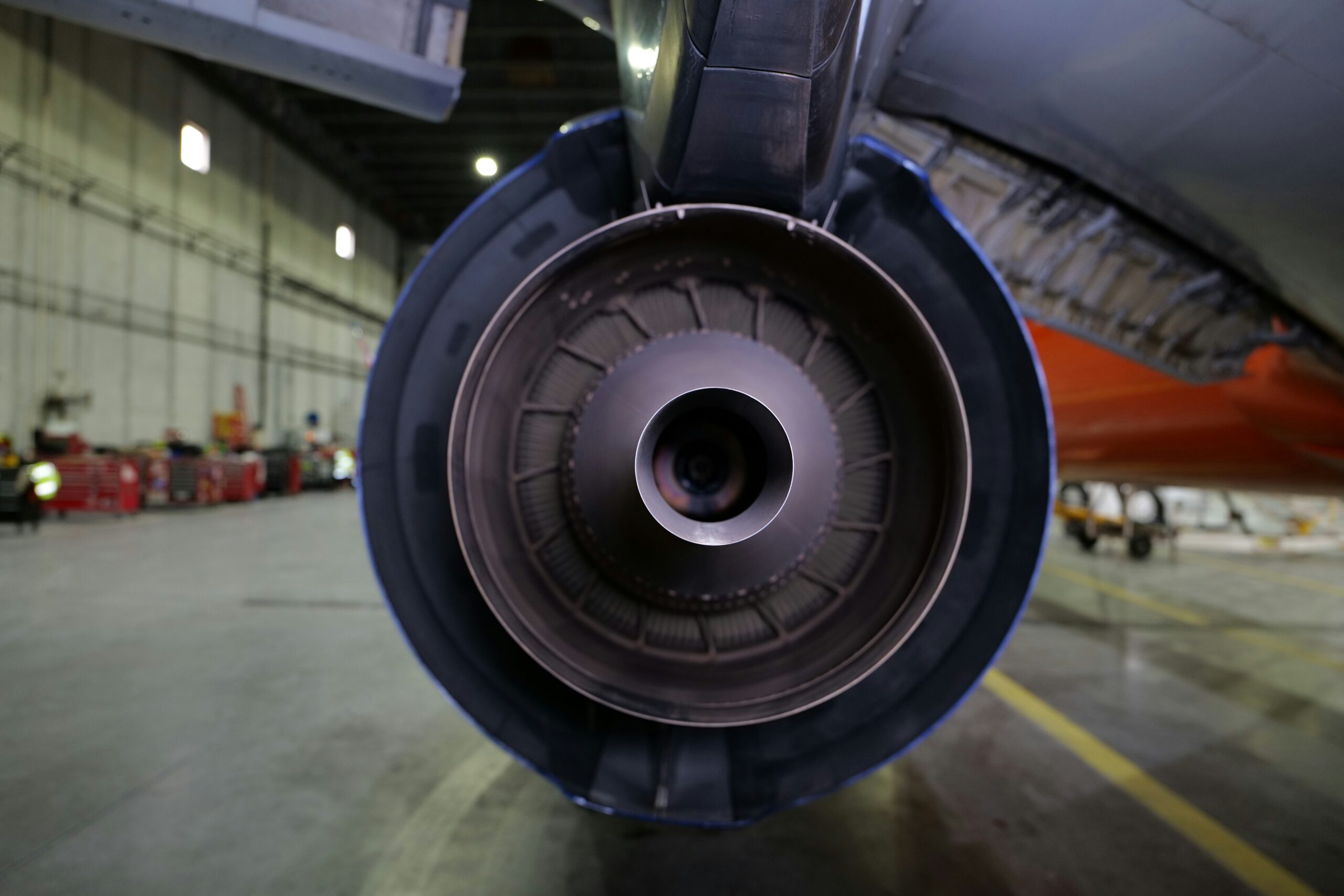
Jet engines are being repurposed to power AI data centers as electricity demand soars. Explore how aviation technology is reshaping energy infrastructure, cloud computing, and the future of AI at scale.
✈️⚡ Jet Engines Powering Data Centers: The Energy Revolution Behind AI
Artificial intelligence (AI) is redefining the global technology landscape. From large language models to autonomous systems, AI is powering innovation across industries. Yet behind this digital boom lies a pressing physical challenge: energy consumption.
Modern AI infrastructure demands unprecedented amounts of electricity. Hyperscale data centers hosting thousands of GPUs now rival the energy needs of small cities. To meet this demand, some companies are turning to a surprising solution: repurposed jet engines.
This article explores the mechanics, economics, environmental considerations, and long-term implications of using jet engines to power AI data centers, highlighting how innovation often emerges at unexpected intersections.
🌍 Why AI Data Centers Need Massive Energy
The AI Energy Explosion
AI models have grown exponentially in size and complexity over the past decade. Modern models like large language models (LLMs) require megawatts of continuous power to train effectively. Running these models involves:
-
Tens of thousands of GPU cores
-
Continuous cooling systems
-
High-speed storage and networking
For example, training a single advanced AI model can consume as much electricity as 10,000 households for a month. The energy demands are not just theoretical—they create tangible challenges for operators trying to deploy at scale.
Grid Limitations
Traditional power grids were never designed to handle sudden surges in demand. Data centers often face:
-
Multi-year delays for new grid connections
-
Transmission bottlenecks that slow deployment
-
Regulatory hurdles limiting energy expansion
-
Escalating electricity prices
These constraints make it difficult for AI companies to expand infrastructure quickly. Waiting years for grid upgrades is not an option in a competitive AI market.
🔧 Jet Engines as a Practical Solution
Aeroderivative Gas Turbines
Enter aeroderivative gas turbines—jet engines modified to generate electricity rather than thrust.
Originally designed for aircraft, these engines are repurposed to spin generators, producing electricity for on-site data centers. Benefits include:
-
High power-to-weight ratio
-
Rapid start-up capabilities
-
Reliability under extreme conditions
-
Ability to operate continuously
These systems allow AI operators to bypass traditional grid constraints, providing immediate power where and when it’s needed.
Deployment Flexibility
Repurposed jet engines can be:
-
Mounted on modular platforms or trailers
-
Integrated as temporary bridging power
-
Scaled to meet specific energy demands
-
Deployed quickly compared to building traditional power plants
This flexibility is particularly valuable for hyperscale operators racing to deploy AI infrastructure.
⚙️ How Jet Engine Turbines Work
Jet engines are adapted for data center use through several engineering modifications:
-
Thrust-to-Shaft Conversion – Redirecting turbine energy to spin a generator shaft.
-
Structural Support – Securely mounting engines for stationary operation.
-
Electrical Integration – Adding generator components and control systems.
-
Cooling and Emissions Management – Ensuring efficiency and environmental compliance.
Once operational, a single turbine can generate up to 48 megawatts, enough to power tens of thousands of server racks.
Case Study: Rapid Deployment
Some tech companies have deployed aeroderivative turbines on trailers outside existing data centers. Within months, these temporary systems provide sufficient energy for AI workloads—much faster than waiting for traditional grid connections.
⏱️ Speed as a Competitive Advantage
Immediate Benefits
Time is critical in AI development. A delay in powering a data center can lead to:
-
Lost revenue due to delayed model deployment
-
Increased costs from idle hardware
-
Competitive disadvantages in fast-moving markets
Jet engine turbines can be installed within months, giving operators a strategic edge over competitors relying solely on traditional energy sources.
Strategic Importance
In the AI era, every day counts. Rapid deployment of energy infrastructure can:
-
Enable faster training of AI models
-
Allow quicker rollout of AI-powered services
-
Reduce the risk of revenue loss due to downtime
The speed advantage is measurable in millions of dollars, making temporary energy solutions economically viable despite higher operating costs.
💰 Economics of On-Site Jet Engine Power
Cost vs. Benefit
While on-site turbine electricity is more expensive than grid power, the economic trade-offs favor rapid deployment. Key considerations:
-
Fuel costs vs. downtime
-
Capital investment in AI hardware
-
Opportunity cost of delayed AI services
For hyperscale data centers, the cost of temporary turbines is offset by the revenue and market share preserved by avoiding delays.
Long-Term Planning
Some operators use these turbines as bridging power while planning permanent grid connections, renewable integration, or hybrid energy systems. This approach balances immediate needs with long-term efficiency.
📈 Industrial and Market Implications
The demand for aeroderivative turbines is transforming multiple industries:
-
Aerospace companies repurpose retired engines.
-
Energy manufacturers design turbines optimized for stationary use.
-
Logistics firms provide rapid deployment solutions.
-
Maintenance and engineering services expand to support this niche market.
This cross-industry innovation illustrates the scale of the AI energy challenge and highlights the importance of collaboration.
🔋 Grid Limitations and Bottlenecks
Several factors limit traditional grid capabilities:
Transmission Challenges
New power plants require transmission lines, often delayed by permitting and construction hurdles.
Manufacturing Backlogs
Industrial turbines have long lead times due to high global demand.
Renewable Energy Limitations
Solar and wind are intermittent and need storage solutions to provide consistent energy.
Regulatory Constraints
Communities and governments increasingly scrutinize data center energy use.
Jet engines bypass many of these constraints, providing localized and reliable power in record time.
🌡️ Environmental Considerations
Carbon Emissions
Jet engine turbines typically run on natural gas or jet fuel, raising concerns about carbon footprints and climate impact.
Pollution and Community Impact
Localized emissions may affect surrounding communities, creating regulatory and environmental challenges.
Transitional Role
While not a permanent solution, jet engines serve as critical bridging power, enabling AI growth while long-term renewable and nuclear solutions mature.
🧠 The Physics Bottleneck
The energy demands of AI highlight a fundamental reality: software is limited by physics.
As AI models grow, energy consumption scales exponentially, creating a “physics bottleneck”. Temporary solutions like jet engine turbines circumvent short-term limitations but underscore the need for sustainable infrastructure.
🚀 Cross-Industry Innovation
The jet engine trend demonstrates how innovation emerges at industry intersections:
-
Aerospace provides expertise in high-reliability machinery.
-
Data centers bring large-scale computing expertise.
-
Collaboration produces solutions unattainable by either sector alone.
This convergence exemplifies the creative problem-solving driving the AI era.
🏗️ Modular and Flexible Power
Future data centers will likely combine multiple energy sources:
-
On-site gas turbines
-
Battery storage systems
-
Small modular nuclear reactors
-
Renewable microgrids
-
Hydrogen and alternative fuels
Distributed and modular energy solutions will become the standard, supporting AI growth while mitigating environmental and grid constraints.
📊 Global Economic Implications
Energy reliability is essential to economic competitiveness. Countries capable of rapidly scaling energy infrastructure gain strategic advantages in the AI economy. Impacts include:
-
National competitiveness in AI and cloud services
-
Industrial and manufacturing supply chain dynamics
-
Global technology adoption timelines
-
Energy market evolution
The intersection of energy and AI will shape the global economic landscape for decades.
🔮 Long-Term Outlook
Jet engine turbines are likely transitional, bridging the gap until permanent energy infrastructure scales. Expected developments:
-
Expanded grid capacity
-
Renewable and nuclear energy integration
-
Advanced energy storage technologies
-
Hydrogen and alternative fuels
-
AI-driven energy optimization
These trends point to a future where energy systems are flexible, resilient, and modular.
🏁 Conclusion
Jet engines powering data centers exemplify the ingenuity and urgency of the AI era.
Key takeaways:
-
Energy infrastructure is central to AI deployment.
-
Cross-industry innovation creates rapid solutions.
-
Temporary solutions like jet engines provide immediate advantages.
-
Sustainable, scalable energy systems are critical for long-term growth.
The digital revolution depends not only on software and algorithms but also on physical infrastructure capable of supporting exponential growth.



0 Comments