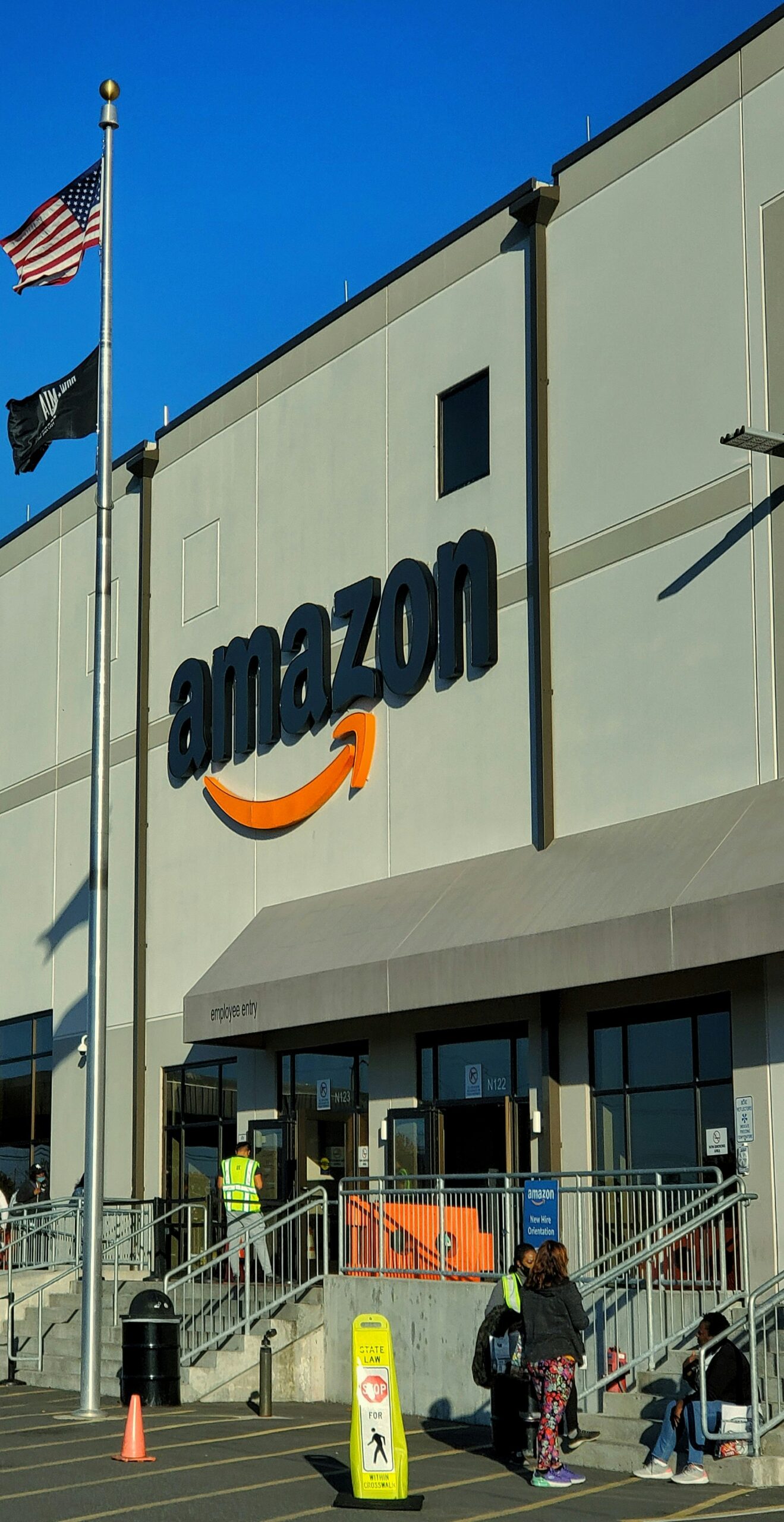
Amazon stock is experiencing a historic losing streak as investors react to massive AI spending and shifting market expectations. Discover the deeper economic, technological, and investment implications behind the decline.
Amazon’s Losing Streak Signals a Turning Point for Big Tech
📉💻🤖
The recent downturn in shares of Amazon has triggered one of the most intense debates in financial markets in years. For more than two decades, Amazon symbolized relentless growth, market disruption, and investor confidence. Now, after a prolonged slide in its stock price, the company finds itself at the center of a broader reassessment of the technology sector.
The decline is not merely about quarterly earnings or short-term volatility. It reflects a profound shift in how investors think about artificial intelligence, capital spending, long-term profitability, and the future trajectory of Big Tech.
This moment could mark the beginning of a new chapter in the global technology economy.
A Historic Slide That Shook Investor Confidence
📊
Amazon’s recent share decline represents one of its longest losing streaks in years. The fall erased hundreds of billions in market value and sent shockwaves through technology markets worldwide.
While Amazon has experienced corrections before, the tone of investor reaction this time is notably different. Instead of viewing the drop as a routine market fluctuation, many analysts see it as part of a deeper recalibration.
The trigger? A massive surge in planned capital expenditures — primarily dedicated to artificial intelligence infrastructure.
The $200 Billion Investment That Sparked Alarm
💰⚡
Amazon’s announcement of approximately $200 billion in capital spending stunned markets. Even in an industry accustomed to large investments, the scale of the commitment exceeded expectations.
The spending will fund:
-
Advanced AI data centers
-
Custom AI chips and hardware
-
Cloud computing infrastructure expansion
-
Machine learning platforms and services
-
Global networking upgrades
To Amazon executives, the message was clear:
Artificial intelligence is the company’s future.
To investors, the reaction was more complicated.
Massive spending often signals confidence — but it also raises concerns about profitability and cash flow.
Why Investors Reacted So Strongly
🧠📉
The core issue is timing.
Investors understand that AI could transform the global economy. But they also understand that building the infrastructure to support it is extraordinarily expensive.
Large investments today often mean smaller profits tomorrow.
In the current economic climate, many investors are prioritizing:
-
Short-term profitability
-
Stable cash flow
-
Predictable returns
Amazon’s announcement suggested the opposite: years of aggressive investment before full financial payoff.
From Tech Optimism to Tech Scrutiny
🔄
For years, Big Tech benefited from a powerful narrative:
Growth today equals profits tomorrow.
That narrative is now being tested.
The market is shifting from celebrating vision to demanding proof.
This shift is happening across the technology sector, but Amazon has become the focal point because of the scale of its spending.
The AI Gold Rush: Opportunity and Risk
🤖✨
Artificial intelligence is widely considered the most transformative technology since the internet.
Its potential applications include:
-
Automated software development
-
Autonomous logistics and robotics
-
Advanced cloud computing
-
Predictive analytics and advertising
-
Voice and conversational interfaces
Companies that dominate AI could shape the global economy for decades.
However, the race to build AI infrastructure resembles a modern gold rush.
And gold rushes are expensive.
The AI Arms Race Intensifies
⚔️
Major technology companies are investing heavily to secure leadership in AI.
The stakes are enormous:
-
Trillions of dollars in potential market value
-
Dominance in cloud computing
-
Control over next-generation digital platforms
Amazon’s cloud division, Amazon Web Services, sits at the heart of this competition.
But leadership requires relentless investment.
The Cost of Staying Competitive
💸
Building global AI infrastructure involves:
-
Massive data centers requiring huge energy supplies
-
Specialized semiconductor hardware
-
Advanced cooling and networking systems
-
Global connectivity and redundancy
These investments cost tens of billions annually.
For investors, this raises a fundamental question:
How long will the spending last?
The Free Cash Flow Dilemma
💵
One of the most closely watched financial metrics is free cash flow — the money a company generates after covering operating costs and investments.
Heavy capital spending can reduce free cash flow temporarily.
That doesn’t mean the investment is bad.
It means the payoff may take years.
This creates tension between long-term strategy and short-term investor expectations.
Higher Interest Rates Changed the Equation
🏦
The macroeconomic environment plays a crucial role in investor reactions.
In an era of low interest rates, investors were more willing to wait for long-term growth.
Higher interest rates change the math.
Future profits become less valuable in today’s terms, making long-term investments less attractive.
This shift has affected the entire technology sector.
Why This Moment Feels Different
⚠️
Amazon has weathered downturns before, but today’s environment combines multiple challenges:
-
Rising interest rates
-
Slower economic growth
-
Increased regulatory scrutiny
-
Massive AI capital requirements
The combination creates a unique moment of uncertainty.
The Retail Business Adds Complexity
🛒
Unlike many technology companies, Amazon also operates a vast retail business.
Consumer spending trends directly affect:
-
E-commerce revenue
-
Logistics costs
-
Inventory management
-
Advertising growth
If consumer demand weakens, the pressure on profitability increases.
Market Psychology at Work
🧠
Financial markets are driven as much by psychology as by numbers.
Investor sentiment has shifted from optimism to caution.
Key questions now include:
-
When will AI investments generate profits?
-
How long will spending remain elevated?
-
Could infrastructure be overbuilt?
-
Will competition reduce margins?
Until answers emerge, volatility is likely to continue.
Analysts Are Divided
📊
Not all experts view Amazon’s decline negatively.
Some analysts believe the stock may be oversold.
Their arguments include:
-
Strong long-term fundamentals
-
Leadership in cloud computing
-
Growing advertising business
-
Massive AI opportunity
Others remain cautious, emphasizing uncertainty around timelines and returns.
Advertising: Amazon’s Quiet Growth Engine
📢
One often overlooked aspect of Amazon’s business is advertising.
The company has built one of the world’s largest digital advertising platforms.
Key advantages include:
-
Access to purchase data
-
High-intent shoppers
-
Integrated e-commerce ecosystem
Advertising margins are typically higher than retail or cloud services.
This segment could become increasingly important in coming years.
The Logistics Advantage
🚚
Amazon’s global logistics network is another long-term asset.
Years of investment have created:
-
Warehouses worldwide
-
Advanced robotics systems
-
Fast delivery infrastructure
These capabilities provide competitive advantages difficult to replicate.
Lessons From Past Amazon Declines
📚
Amazon’s history includes several major sell-offs followed by strong recoveries.
Key historical downturns:
-
Dot-com crash
-
2008 financial crisis
-
Pandemic volatility
-
Interest rate cycles
Each time, the company invested heavily and emerged stronger.
Why Investors Are Demanding Proof
🧾
Markets are entering a “show me the results” phase.
Investors want measurable evidence that AI investments will deliver:
-
Revenue growth
-
Margin expansion
-
Competitive advantages
This shift reflects a more mature technology sector.
The Big Tech Reset
🔄
Amazon’s decline is part of a broader market reset.
After years of rapid gains, technology stocks are adjusting to new realities.
This reset may ultimately create a healthier foundation for future growth.
The Long-Term Vision Remains Powerful
🌎
Despite short-term challenges, Amazon’s long-term opportunities remain enormous:
-
Global e-commerce expansion
-
AI-powered cloud services
-
Digital advertising growth
-
Automation and robotics
The company continues to invest in future technologies.
What Investors Should Watch Next
🔎
Key indicators for the future include:
-
AI revenue growth
-
AWS performance
-
Free cash flow trends
-
Consumer spending patterns
-
Interest rate changes
The next 12–24 months will be critical.
A Turning Point for the Tech Industry
📌
Amazon’s losing streak represents more than a stock market event.
It reflects a turning point in how investors evaluate technology companies.
The era of unlimited optimism is evolving into an era of accountability.
Final Thoughts
🧠📉🚀
Amazon’s recent decline highlights the tension between bold technological ambition and financial discipline.
The company is betting heavily on artificial intelligence — a technology that could reshape the global economy.
The market’s reaction shows that investors now want proof, not just promise.
Whether this moment proves to be a temporary setback or the beginning of a longer reset remains uncertain.
But one thing is clear:
The future of Big Tech will depend on its ability to transform massive AI investments into real, sustainable profits.
Source
https://www.cnbc.com/2026/02/17/amazon-stock-losing-streak.html




0 Comments