
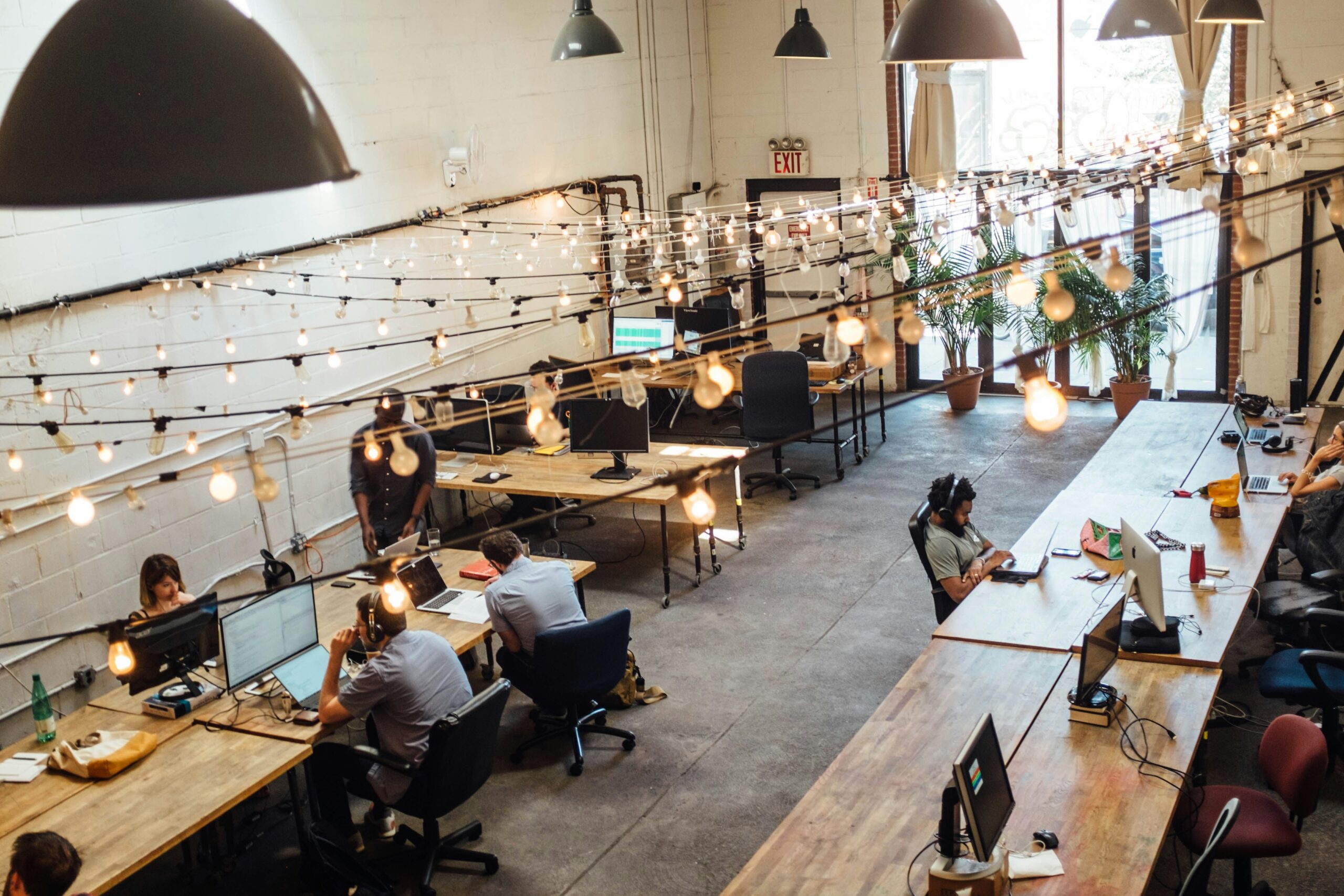
Discover how co-working spaces are reshaping commercial real estate in 2026. Flexible offices, hybrid work adoption, and corporate demand are driving a major shared workspace revival.
🚀 Introduction: The Co-Working Revival in 2026
The co-working industry is undergoing a major resurgence in 2026. After years of closures, bankruptcies, and market corrections, a new generation of shared office spaces is revitalizing the commercial real estate landscape. Hybrid work adoption, corporate expansion, and smarter business models are fueling record demand for flexible offices across the U.S. and globally.
Flexible workspaces are no longer optional—they are central to how businesses lease space, retain talent, and maintain productivity. This resurgence is not just a workplace trend; it is a strategic transformation in commercial real estate, urban planning, and workforce management.
🔄 Co-Working Comeback: From Crisis to Growth
The early co-working boom was marked by overexpansion, aggressive leases, and high leverage, which led to high-profile failures. Operators like WeWork overestimated demand, signed long-term leases, and collapsed under debt.
Today’s co-working revival is smarter, leaner, and data-driven. Key changes include:
-
Profitability-first business models 💰
-
Flexible, short-term leases 🧩
-
Modular, smaller locations 🏙️
-
Local market adaptation 🌎
-
Data-driven occupancy management 📊
This approach attracts corporate clients, startups, and freelancers, making the market more resilient and less prone to collapse.
💼 Hybrid Work: The Engine of Co-Working Demand
Hybrid work is now a permanent feature of modern employment, and co-working spaces are its physical backbone. Employees split their time among:
-
Home offices 🏠
-
Satellite co-working locations 🏢
-
Headquarters or corporate offices 🏛️
Flexible workspaces help companies:
-
Lower real estate costs 💸
-
Scale office space quickly 📈
-
Improve employee satisfaction and retention 😊
A survey of Fortune 500 companies in 2025 found that over 68% plan to continue hybrid schedules indefinitely, signaling sustained co-working demand.
🏢 Enterprise Adoption Driving Market Stability
In the past, co-working spaces primarily served:
-
Freelancers
-
Startups
-
Solo entrepreneurs
Now, large enterprises are the primary growth driver. Corporations use shared offices for:
-
Satellite offices 🌐
-
Temporary project teams 📂
-
Regional market entry 🚀
Enterprise adoption stabilizes revenue, attracting investors and landlords to the sector. This shift represents a major change in the business model—co-working is now a strategic asset, not a niche service.
📊 Co-Working Market Trends & Statistics
The growth of co-working is quantifiable and accelerating:
-
U.S. co-working space expanded from ~115 million sq. ft. in 2023 to ~158 million sq. ft. in 2026
-
Occupancy rates in shared offices often exceed traditional office space
-
Secondary cities and suburban locations are growing faster than primary downtown districts
Analysts predict flexible offices could account for up to 10% of total U.S. office inventory by 2030, demonstrating long-term viability.
🌆 Urban Impact: How Co-Working Is Reshaping Cities
Flexible offices are not just changing workplaces—they are transforming urban centers:
-
Revitalizing underused buildings 🏢
-
Increasing foot traffic in secondary neighborhoods 👣
-
Supporting local businesses ☕🍽️
-
Stabilizing commercial property values 💹
Hub-and-spoke office models allow employees to work closer to home while maintaining professional connectivity, easing congestion in downtown cores.
🛠️ Modern Co-Working Design & Experience
Design is now a core differentiator. Modern spaces focus on:
-
Wellness & quiet zones 🧘
-
Community networking & events 🤝
-
Enterprise-grade technology 📡
-
Hospitality-style amenities ☕
-
Natural light & greenery 🌿
Employee experience has become a competitive advantage. Companies now see co-working as enhancing productivity and collaboration, not just saving on office costs.
📉 Traditional Offices vs. Flexible Workspaces
Traditional offices face structural challenges:
-
Long-term lease obligations 📝
-
High upfront costs 💸
-
Underutilized space 🏚️
Flexible offices allow companies to scale space on-demand, optimize occupancy, and adjust budgets according to workforce needs.
🧭 Commercial Real Estate Implications
The rise of co-working has profound implications for investors and landlords:
-
Adaptive buildings with shared amenities are in high demand 🏢
-
Obsolete office stock faces increased vacancy risk 🚫
-
Partnerships with co-working operators create stable revenue streams 💼
Forward-thinking investors can capitalize on flexible workspace trends, while traditional landlords risk lagging behind.
🌍 Global Co-Working Trends
The shared office trend is global:
-
Multinational companies are using co-working to support global teams 🌐
-
Emerging markets adopt hybrid office models 🌎
-
Standardized co-working services facilitate cross-border collaboration 💻
Flexible workspaces are becoming integral to global corporate strategy, not just a U.S. phenomenon.
🔮 Future Outlook: Co-Working Beyond 2026
Predicted trends for the next 5–10 years:
-
AI-driven occupancy optimization 🤖
-
Specialized co-working spaces by industry 🏗️
-
Integration with corporate real estate strategy 💼
-
Expansion into mixed-use developments 🏙️
-
Sustainability-focused office design 🌱
Co-working will be central to hybrid work, corporate growth, and urban development, shaping the next era of professional environments.
💡 Case Studies: Co-Working Success Stories
1️⃣ Corporate Satellite Expansion
A Fortune 100 company implemented satellite offices in co-working hubs across secondary cities, reducing real estate expenses by 23% while improving employee engagement.
2️⃣ Localized Operator Growth
Smaller co-working operators focused on community-centric designs saw occupancy rates exceed 90%, outperforming larger national chains.
3️⃣ Hybrid Team Productivity
Companies adopting flexible office solutions reported 15–20% higher collaboration efficiency compared to traditional office setups.
These cases highlight why co-working is a strategic tool for companies and investors.
🧩 Conclusion: Co-Working Is No Longer Optional
The co-working revival of 2026 is strategic, sustainable, and data-driven. Flexible offices now offer:
-
Hybrid work support 🏢🏠
-
Enterprise adoption 💼
-
Enhanced employee experience 🧘🤝
-
Scalable, profitable business models 💰
Shared offices are transforming commercial real estate, employee experience, and urban landscapes, establishing themselves as essential to the modern workplace ecosystem.



0 Comments