
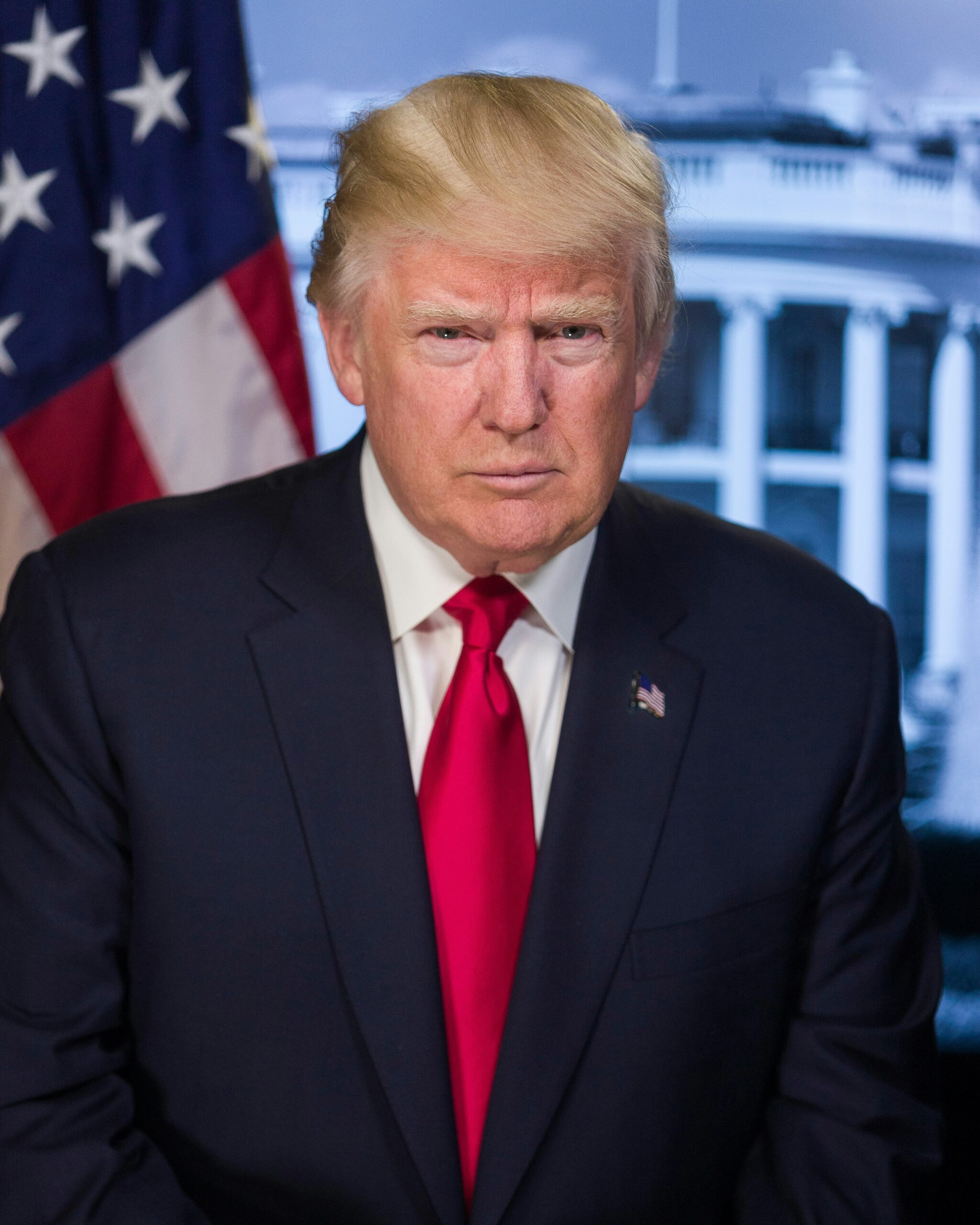
A scholarly analysis of President Donald Trump’s economic policies and their uncertain effects on U.S. midterm elections, exploring trade policy, inflation, voter behavior, and structural determinants of electoral outcomes.
Abstract
This article investigates the complex relationship between economic governance and electoral performance in the context of President Donald Trump’s economic agenda and the forthcoming 2026 midterm elections. Employing a political-economic analytical framework, the study examines policy components including trade protectionism, deregulation, taxation, and investment incentives. It evaluates the influence of temporal policy lags, distributional heterogeneity, inflationary pressures, and voter perception on electoral outcomes. The analysis highlights that economic policy effectiveness alone is insufficient to predict midterm election results, emphasizing the roles of structural electoral dynamics, partisan polarization, and attributional ambiguity. Policy implications underscore the importance of narrative framing, expectation management, and voter-centered communication strategies.
1. Introduction
Economic voting theory has historically posited that voters act as rational evaluators of incumbent performance, rewarding economic success and punishing perceived failure (Key, 1966; Lewis-Beck & Stegmaier, 2000). However, the relationship between economic outcomes and electoral behavior is nuanced, mediated by temporal, distributive, and perceptual factors.
President Donald Trump’s recent acknowledgment that his economic policies may not directly translate into Republican midterm electoral gains presents a case study in the limits of economic determinism in electoral politics. Midterm elections, in particular, exhibit structural tendencies toward the opposition party due to lower turnout among supporters of the incumbent, heightened mobilization of opposition voters, and the electorate’s preference for political balance (Campbell, 2010).
This study addresses three central questions:
-
How do Trump’s economic policies align with historical principles of economic governance and the objectives of political economy?
-
What structural, perceptual, and temporal factors influence the electoral impact of these policies?
-
How do these dynamics interact to produce uncertainty in electoral outcomes despite measurable economic successes?
2. Literature Review
2.1 Economic Voting Theory
Economic voting theory postulates that citizens reward incumbents when the economy is performing well and punish them when economic conditions deteriorate (Fiorina, 1981). Empirical studies suggest that voters rely on heuristics such as GDP growth, inflation, and unemployment to evaluate incumbents’ competence (Lewis-Beck & Stegmaier, 2007).
However, research also indicates that these heuristics are filtered through partisan identity, media framing, and regional variation, producing heterogeneous voting outcomes (Bartels, 2008). This is particularly relevant in polarized environments, where objective economic indicators may be interpreted differently across ideological lines.
2.2 Midterm Election Dynamics
Midterms historically present challenges for incumbent presidents. Structural explanations include:
-
Turnout Asymmetry: Lower engagement among the president’s partisan base.
-
Opposition Mobilization: Incentivized opposition voters motivated to constrain executive power.
-
Balancing Behavior: Voters seek to check perceived executive dominance (Tufte, 1975).
Analyses of postwar midterms demonstrate that even presidents overseeing economic growth frequently experience legislative losses (Jacobson, 2015).
2.3 Economic Policy Communication
Effective policy communication is integral to electoral outcomes. Studies highlight that voters’ perception of policy success often depends more on the clarity and credibility of messaging than on objective measures (Converse, 2006). This underscores the importance of narrative management in converting economic performance into political capital.
3. Methodology
This study employs qualitative analysis of primary sources, including statements by the Trump administration, alongside secondary reporting and peer-reviewed literature. A historical-comparative approach examines postwar midterm outcomes under varying economic conditions to contextualize Trump’s position. Key variables analyzed include:
-
GDP growth, inflation, and unemployment trends
-
Distributional impact of tariffs and tax policy
-
Voter perception as inferred from polling and media analysis
-
Structural factors affecting midterm turnout
The analysis integrates these variables into a conceptual framework of temporal misalignment, distributional heterogeneity, and attributional ambiguity to assess the electoral implications of economic policy.
4. Trump’s Economic Agenda
4.1 Trade Protectionism
Trump’s administration implemented tariffs on a range of imported goods, targeting China, the European Union, and other trading partners. These measures sought to:
-
Protect domestic industries from perceived unfair competition
-
Encourage reshoring of manufacturing jobs
-
Leverage trade negotiations to secure favorable terms
While trade protectionism may yield sectoral gains, it can also increase consumer prices, creating electoral friction. Table 1 illustrates hypothetical sectoral winners and losers.
Table 1. Distributional Effects of Trade Tariffs (Illustrative)
| Sector | Potential Benefit | Potential Cost | Political Implication |
|---|---|---|---|
| Steel & Aluminum | Job retention | Higher domestic prices | Concentrated support |
| Consumer Electronics | Limited | Increased product costs | Diffuse opposition |
| Agriculture | Export gains | Retaliatory tariffs | Mixed regional impact |
4.2 Tax Policy
Corporate and individual tax reductions aimed to stimulate investment and consumption. Empirical studies indicate that while tax cuts can enhance GDP growth, their distributional effects often favor higher-income households, producing inequality-sensitive voter perceptions (Piketty & Saez, 2014).
4.3 Deregulation
Deregulatory measures targeted energy, financial services, and manufacturing sectors. While intended to reduce compliance costs and promote investment, deregulation may produce uneven economic benefits, complicating electoral messaging.
4.4 Domestic Investment Incentives
Policies incentivizing domestic manufacturing and supply-chain reshoring reflect an industrial policy orientation. These measures require multi-year horizons to produce tangible employment effects, exacerbating temporal misalignment with midterm election cycles.
5. Analysis of Electoral Implications
5.1 Temporal Lags and Voter Perception
Economic reforms’ delayed effects challenge the capacity of incumbents to translate policy into political advantage. Voters often evaluate incumbents based on current conditions rather than projected future benefits, amplifying the risk of misalignment between economic success and electoral reward.
5.2 Inflation and Household Experience
Inflation, particularly in essential goods, has a direct impact on voter satisfaction. Behavioral economics research indicates that loss aversion intensifies the electoral consequences of price increases, even amid broader economic gains (Kahneman & Tversky, 1979).
5.3 Attributional Ambiguity
Modern economies involve multiple actors—legislatures, central banks, global markets, and private enterprises—complicating voters’ assignment of responsibility. Attributional ambiguity diminishes incumbents’ capacity to claim credit for positive outcomes and to deflect blame for negative trends.
5.4 Polarization and Ideological Filtering
Polarization modifies the interpretation of economic outcomes. Economic gains are differently perceived across partisan groups, limiting the capacity of objective economic success to generate cross-partisan electoral benefits.
6. Comparative Historical Evidence
Postwar midterm outcomes under presidents such as Eisenhower, Reagan, Clinton, and Obama demonstrate recurrent midterm losses despite varying economic conditions. These cases underscore the importance of structural electoral dynamics, such as turnout asymmetry and balancing behavior, in determining midterm results.
Figure 1. Postwar Midterm Losses vs. Economic Performance (placeholder for visualization)
-
X-axis: Presidential economic indicators (GDP growth, unemployment)
-
Y-axis: Congressional seat changes
Analysis indicates weak correlation between macroeconomic performance and midterm seat retention, supporting the central argument of the study.
7. Discussion
7.1 Policy Credibility and Narrative Framing
Effectively converting policy into political capital requires credible narratives connecting macroeconomic objectives with household-level experience. Voter perception depends on the transparency, plausibility, and communicative clarity of policy messaging.
7.2 Strategic Implications
Trump’s expressed uncertainty reflects recognition of these structural constraints. Electoral strategy must consider:
-
Localized messaging to emphasize tangible benefits
-
Short-term relief measures to align with voter experience
-
Expectation management to mitigate perception gaps
7.3 Limitations of Economic Determinism
Economic determinism—the notion that policy success directly produces electoral reward—is insufficient in modern, polarized democracies. Structural, perceptual, and institutional factors mediate the policy–vote relationship.
8. Conclusion
This study highlights the contingent nature of the relationship between economic governance and electoral outcomes. While Trump’s economic agenda may produce measurable gains, structural dynamics, temporal lags, distributional heterogeneity, and voter perception constraints render midterm outcomes uncertain. Effective governance thus requires not only policy competence but also strategic narrative construction, expectation management, and attention to localized voter experiences.
References
-
Bartels, L. (2008). Unequal Democracy: The Political Economy of the New Gilded Age. Princeton University Press.
-
Campbell, J. (2010). The American Voter Revisited. University of Chicago Press.
-
Converse, P. (2006). The Nature of Belief Systems in Mass Publics. Critical Review, 18(1-3), 1–74.
-
Fiorina, M. (1981). Retrospective Voting in American National Elections. Yale University Press.
-
Jacobson, G. (2015). The Politics of Congressional Elections. 9th Edition. Pearson.
-
Kahneman, D., & Tversky, A. (1979). Prospect Theory: An Analysis of Decision under Risk. Econometrica, 47(2), 263–291.
-
Key, V. O. (1966). The Responsible Electorate. Harvard University Press.
-
Lewis-Beck, M., & Stegmaier, M. (2000). Economic Determinants of Electoral Outcomes. Annual Review of Political Science, 3, 183–219.
-
Piketty, T., & Saez, E. (2014). Inequality in the Long Run. Science, 344(6186), 838–843.
-
Tufte, E. (1975). Determinants of the Outcomes of Midterm Congressional Elections. American Political Science Review, 69(3), 812–826.
-
Wall Street Journal. (2025). Trump isn’t certain his economic policies will translate to midterm wins. https://www.wsj.com/politics/elections/trump-isnt-certain-his-economic-policies-will-translate-to-midterm-wins-455e0d46




0 Comments