
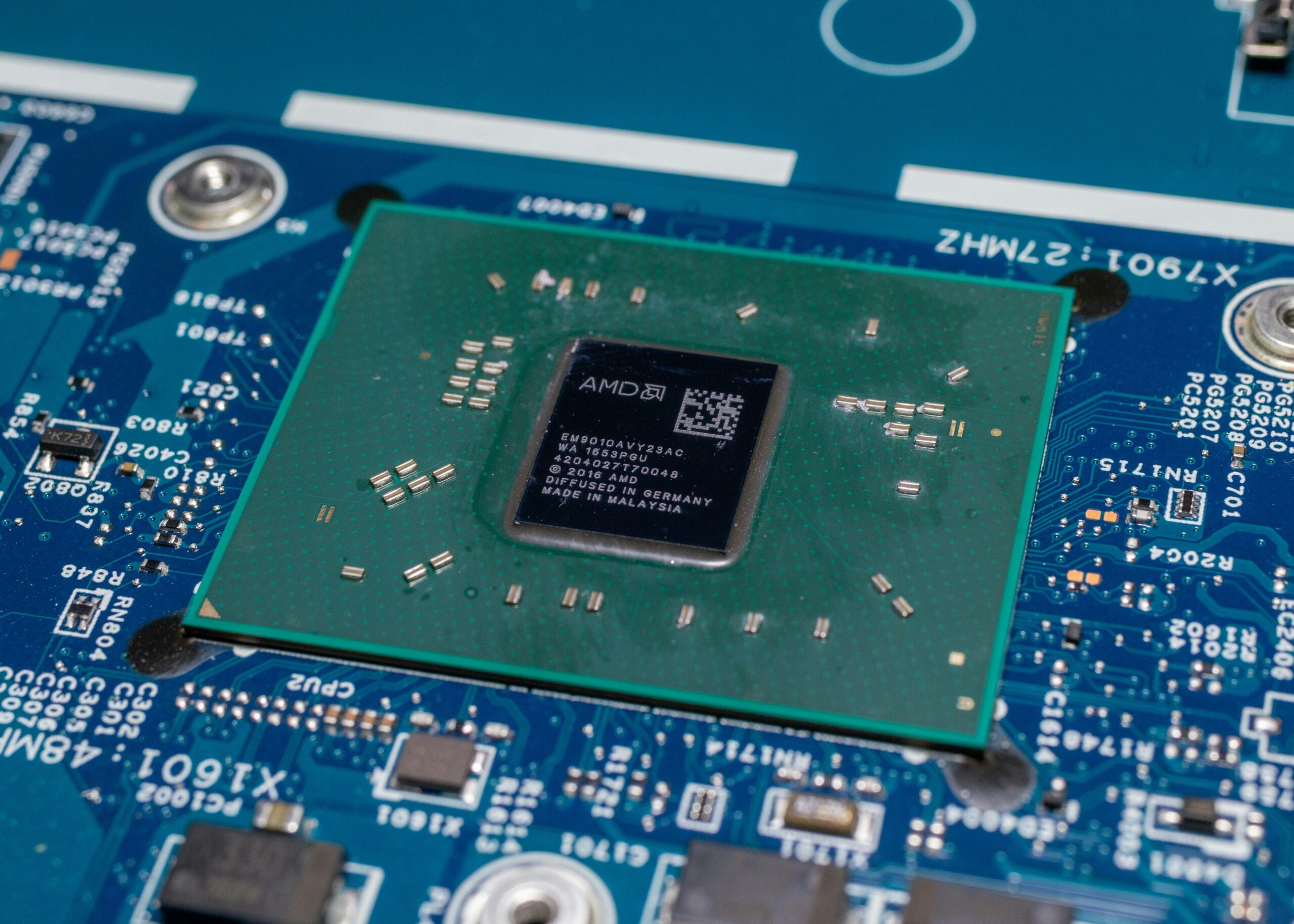
The U.S. has approved Nvidia’s H200 AI chip exports to select Chinese buyers, marking a major shift in global tech policy. This in-depth 3500-word analysis explores what the decision means for AI innovation, geopolitics, supply chains, global markets, and future U.S.–China competition.
🧠 Nvidia’s H200 Export Approval: A Turning Point in the Global AI Race
In late 2025, the United States made a strategic decision that quickly sent ripples across the global technology landscape: Nvidia’s advanced H200 AI accelerators can now be legally exported to approved customers in China, reversing nearly a year of increasingly restrictive controls.
This move represents far more than a simple export license.
It marks a geopolitical recalibration, an economic shift, and a technological inflection point for the world’s two biggest AI powers.
For months, China-focused AI labs, chip distributors, cloud providers, and advanced computing research institutions had operated under tight constraints. Meanwhile, Nvidia—still the world’s dominant AI chip producer—grappled with lost market share, excess inventory, and billions of dollars in write-downs. The U.S. government, too, faced mounting pressure from industry analysts who warned that extreme restrictions might inadvertently harm America’s competitive edge.
The approval of H200 exports is therefore not just a policy change—it is a signal of how the future of global AI competition may unfold.
This article unpacks the economic, political, technological, and long-term strategic consequences of this decision, offering a high-depth analysis tailored to educated readers looking for clarity beyond headlines.
📦 1. What Exactly Is the Nvidia H200 — and Why Does It Matter?
To understand the significance of the export approval, one must understand the chip in question: the Nvidia H200.
💻 The H200 at a Glance
The H200 is part of Nvidia’s “Hopper” architecture family, succeeding the widely deployed H100. It delivers:
-
Higher memory bandwidth
-
Improved training and inference efficiency
-
Enhanced performance in large language model workloads
-
Better throughput for real-time AI processing
-
Higher parallel compute capacity
In short, although not the absolute newest (Nvidia’s Blackwell and Rubin architectures surpass it), the H200 is still a front-line, high-performance AI accelerator capable of running cutting-edge generative AI systems. It is powerful enough to meaningfully advance:
-
Large Language Model development
-
Autonomous vehicle perception
-
Scientific simulations
-
National AI research
-
Cloud-scale AI services
While restricted from the most advanced U.S. chips, China’s AI companies still view the H200 as an enormous performance upgrade compared to older A100/H800-style chips.
🏛️ 2. Why the U.S. Restricted AI Chips to China in the First Place
The original restrictions emerged from escalating concerns regarding:
-
AI’s role in military modernization
-
Advanced semiconductor dependency
-
Data model training that may support security use-cases
-
National strategic competition
By mid-2024 and 2025, the U.S. had:
-
Blocked Nvidia’s H100 exports
-
Restricted custom China-market variants
-
Banned Blackwell-series exports
-
Considered further measures affecting cloud access
The result:
China’s access to state-of-the-art U.S. chips was sharply limited.
However, this also caused economic blowback.
Nvidia estimated billions in unsold inventory. China—once responsible for up to 95% of Nvidia’s AI chip revenue in certain segments—became nearly inaccessible. This created a contradiction: limit China’s tech progress while not undermining American leadership.
The new H200 approval reflects the U.S. attempting to balance national security concerns with domestic economic realities.
⚖️ 3. Why the U.S. Finally Approved H200 Chip Exports
Multiple forces pushed policy makers toward a partial reopening of AI chip exports.
🔹 3.1 Economic Pressure on U.S. Semiconductor Leadership
Nvidia’s China sales collapse was not trivial—it risked:
-
Reducing U.S. global semiconductor dominance
-
Slowing investment into new fabs
-
Undercutting the U.S. lead in AI innovation
-
Encouraging China to accelerate domestic alternatives
The economic logic was clear:
Total restrictions are not sustainable in a globalized semiconductor market.
🔹 3.2 Geopolitical Strategy and Controlled Engagement
The U.S. seeks a managed technological relationship with China—not an outright severing of ties.
Allowing H200 exports under controlled conditions enables:
-
Some level of cooperation
-
Government revenue participation
-
Monitoring of downstream usage
-
Prevention of China’s total disengagement from U.S. supply chains
In short: the U.S. wants leverage, not isolation.
🔹 3.3 Avoiding Acceleration of China’s Domestic Chip Development
Excessive isolation often accelerates self-sufficiency.
If China had zero access to Western chips, it would invest even more heavily in domestic GPU replacements. This could undermine U.S. influence in global semiconductor standards and architecture norms.
📊 4. Economic Consequences: How the Market Will React
The reopening of China’s market—estimated at tens of billions annually—carries major economic implications.
💰 4.1 Nvidia’s Revenue Rebound
Nvidia stands to regain:
-
A massive customer base
-
Distributor networks
-
Cloud partners
-
AI-lab relationships
This could reverse earlier write-downs and boost:
-
Stock value
-
R&D budgets
-
Long-term investment capacity
📈 4.2 AI Acceleration in China
Access to H200 accelerators will:
-
Speed up generative AI deployment
-
Bolster Chinese cloud providers
-
Strengthen domestic tech platforms
-
Support government-backed AI initiatives
While not as powerful as the Blackwell series, H200 performance is still transformative for training large models.
🌏 4.3 Global AI Market Competition Intensifies
Japan, South Korea, Europe, Singapore, India, and the Middle East have all been scaling their AI infrastructure spending.
China’s renewed access to advanced chips ensures it remains a front-runner, not a laggard.
🛰️ 5. Strategic and Geopolitical Implications
Beyond economics, this decision reshapes global geopolitical strategy.
🌐 5.1 A More Competitive Global AI Landscape
The AI race is not solely between the U.S. and China.
The Middle East is investing billions in supercomputers.
Europe is building its own sovereign AI models.
India is rising as a major data center hub.
The U.S. may have calculated that:
-
Allowing limited exports supports global competitiveness
-
Restricting only the most advanced chips maintains leadership
-
Revenue-sharing helps fund future regulation and R&D
🛡️ 5.2 Controlled Access as a Policy Tool
Rather than a total ban, a “managed access” model allows the U.S. to:
-
Track exports
-
Vet buyers
-
Impose auditing conditions
-
Maintain a technological gap
It is a strategic compromise—not a surrender.
🤝 5.3 International Relations and Trade Diplomacy
The move signals a shift toward:
-
Re-engagement
-
Economic pragmatism
-
Reduced escalation
Other allies (Japan, Netherlands, South Korea) may adjust policies depending on U.S. direction.
🧬 6. How This Decision Affects AI Research and Innovation
AI research relies heavily on computing hardware.
🔍 6.1 China’s Boost in Model Training
With H200 chips:
-
Training cycles shorten
-
Model scaling becomes more feasible
-
AI research labs gain competitiveness
-
Cloud platforms can deploy new enterprise-scale AI services
📚 6.2 Impacts on Universities and Research Institutions
Chinese academic institutions will gain better access to:
-
Supercomputing clusters
-
GPU-accelerated research labs
-
Cross-disciplinary AI/ML infrastructure
This elevates China’s overall research capacity.
🧩 6.3 The Global AI Ecosystem Modernizes Faster
A more competitive environment forces:
-
Faster innovation cycles
-
More efficient chip designs
-
Broader adoption of AI across industries
🏭 7. What This Means for Supply Chains and Chip Manufacturing
🔧 7.1 Strengthening U.S. Tech Supply Chains
Revenue generated from exports can fuel:
-
New U.S. fabs
-
Advanced packaging facilities
-
Talent development
-
Supply chain resilience
🔩 7.2 Chinese Cloud and Data Center Growth
H200 availability will likely increase:
-
Data center construction
-
AI platform scaling
-
Model-as-a-service offerings
-
Edge AI deployments
China is already one of the world’s largest cloud markets—this accelerates growth further.
🚢 7.3 The Global Semiconductor Ecosystem Diversifies
Taiwan, South Korea, the U.S., and Europe all play critical roles.
The new export policy may shift supply chain flows but also reduce risk of over-concentration.
🔭 8. Long-Term Outlook: What Comes Next?
This decision is only one step in a broader geopolitical competition.
📌 Key Trends to Watch
-
Will China accelerate domestic GPU development faster?
-
Will the U.S. restrict future architectures (Rubin, Blackwell-Next)?
-
Will cloud providers in China create new tiers of AI services?
-
Will global AI regulation begin to include compute thresholds?
-
Will U.S.–China tech tensions cool or escalate?
🧭 The Likely Future
The export approval of H200 chips marks the beginning of a more nuanced phase of U.S.–China tech policy:
-
Not fully open
-
Not fully closed
-
A managed, strategic engagement
Both nations remain deeply interdependent in semiconductor supply chains, research networks, rare earth materials, and global market demand.
This is unlikely to change soon.
✨ Conclusion: A Complex but Strategic Reopening
The U.S. approval for Nvidia’s H200 exports to China is a calculated compromise.
It reflects:
-
Economic necessity
-
Strategic calibration
-
Global competitiveness
-
The ongoing reality of mutual interdependence
This is not the end of AI competition—it is the start of a more sophisticated era, where policy, economics, and technology will shape the future of global power.



0 Comments