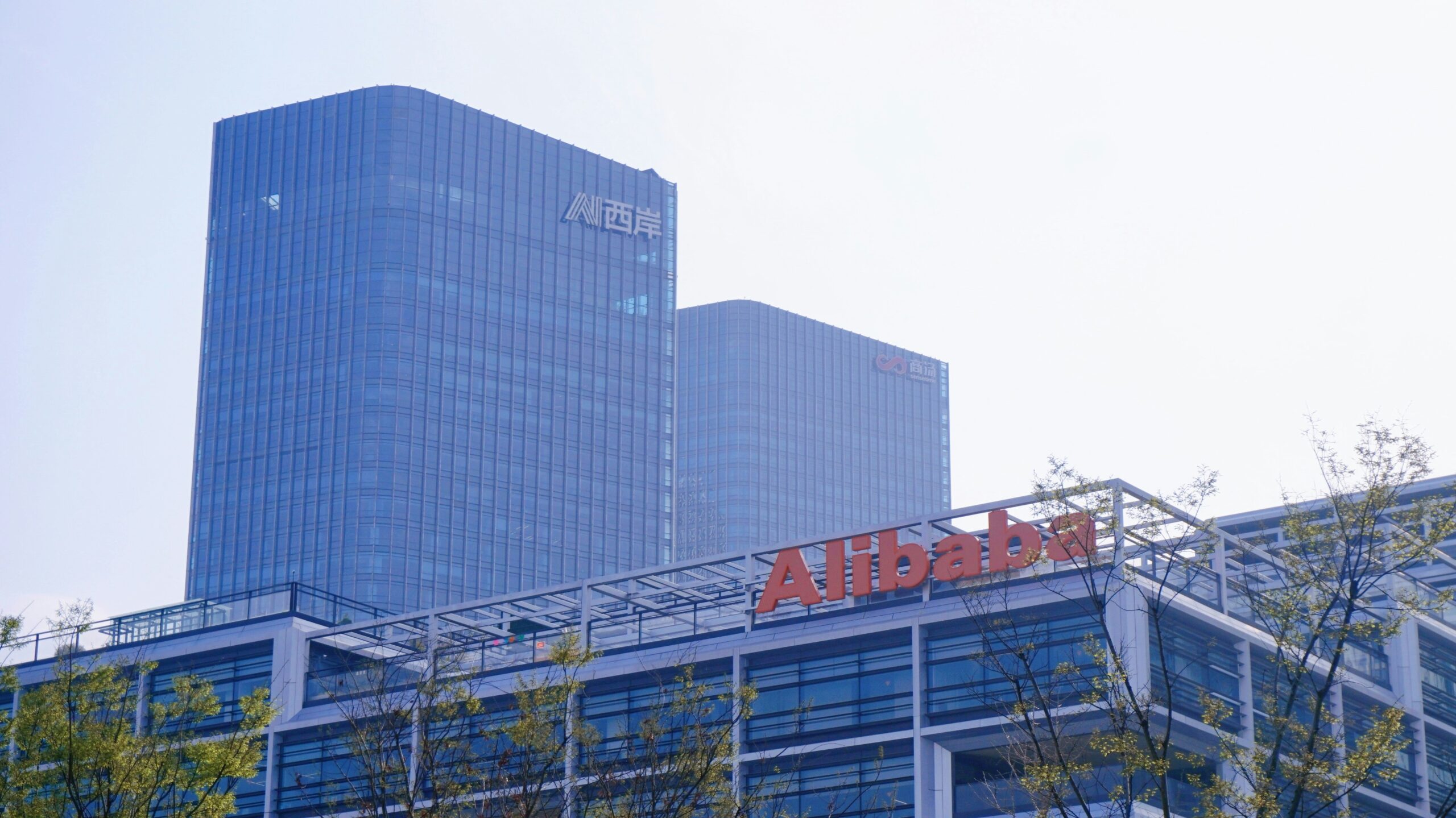
Alibaba sees strong share price gains following a major increase in cloud revenue driven by artificial intelligence. This long-form analysis explores how AI is reshaping Alibaba’s business strategy, investor expectations, and the future of China’s cloud market.
1. Introduction: A Turning Point for Alibaba
Alibaba, one of China’s most influential technology conglomerates, is experiencing a renewed wave of investor confidence after reporting a significant jump in cloud revenue powered by AI-related demand. This development arrives during a pivotal moment for the company, which has spent the last several years navigating market restructuring, regulatory pressures, global economic volatility, and ongoing competition in e-commerce.
The surge in Alibaba’s share price reflects more than a single quarter of performance. Instead, it signals a shift in how global investors perceive the firm’s strategic priorities. For the first time in several years, Alibaba appears to be aligning its core competencies with emerging technological forces—particularly artificial intelligence, enterprise cloud adoption, and data-driven automation.
This article offers an extensive, in-depth examination of Alibaba’s cloud momentum, why AI has become a central pillar of its growth ambitions, and what the surge in investor confidence could mean for its next chapter.
2. The Broader Economic Setting
Over the past half-decade, China’s technology sector has undergone notable transformations. Domestic competition has intensified, global markets have become more complex, and industry leadership increasingly depends on innovation rather than scale alone. Alibaba, once the unrivaled leader of China’s consumer digital economy, has faced challenges on several fronts:
2.1 Shift in consumer spending habits
Slower economic recovery, evolving retail preferences, and emerging domestic competitors have reshaped the e-commerce terrain. Traditional assumptions—such as the inevitability of high online retail growth—no longer hold with the same certainty.
2.2 Regulatory changes
Chinese tech firms, including Alibaba, have adapted to new compliance expectations, more transparent data governance, and increasingly coordinated oversight of platform economies.
2.3 Rising investment into AI technologies
Global tech giants are investing heavily in AI infrastructure, model development, and cloud-AI hybrids. This rise in AI demand creates an environment where cloud providers—especially those equipped with proprietary AI capabilities—can capture new revenue streams.
2.4 International competition
China’s digital giants today must compete not only at home but also for strategic relevance in global technology markets. Companies capable of deploying AI at scale stand to gain both domestic and international clients.
Against this backdrop, Alibaba’s recent cloud sales surge is not merely a financial win—it is a signal that the company may have found the right foundation to rebuild long-term momentum.
3. Cloud as Alibaba’s Strategic Core
Alibaba Cloud entered the market over a decade ago and has grown into China’s leading cloud infrastructure provider. While early growth was rapid, the last several years saw a slowdown as enterprises hesitated on major digital spending and competition from other Chinese firms intensified.
The current upturn marks an important inflection point. Cloud computing is inherently a long-horizon business—one where short-term fluctuations indicate broader technology adoption trends. Alibaba’s strong performance suggests a renewed acceleration in demand for cloud-AI hybrid services.
3.1 Why cloud matters more now than ever
Cloud computing enables companies to adopt advanced technology without building massive infrastructure. AI, large-scale computing, and data analysis rely heavily on flexible, scalable cloud environments. As AI models become more complex, the demand for high-performance cloud resources rises.
Alibaba’s cloud platform is positioned at the intersection of three powerful forces:
-
enterprise digital transformation
-
adoption of modern AI tools
-
demand for data security, privacy, and analytics
If Alibaba succeeds in aligning these sectors, its cloud division could become its strongest and most stable revenue pillar.
4. The AI Catalyst: Why Demand Is Surging
AI has rapidly shifted from a theoretical advantage to a practical necessity for competitive businesses. This shift is global, and Alibaba has sought to position itself as a major provider of enterprise-grade AI infrastructure, models, and tools.
4.1 The rise of large-scale AI workloads
Training modern AI models requires enormous compute capacity. Enterprises deploying chatbots, recommendation systems, autonomous operations, and predictive analytics are turning to cloud providers that can deliver:
-
high-speed GPUs or specialized chips
-
scalable memory
-
distributed computing systems
-
low-latency data processing
Alibaba’s cloud architecture is specifically designed for these workloads, making it attractive to organizations needing advanced AI capabilities.
4.2 AI as a differentiator for cloud services
Historically, cloud providers competed on storage capacity, pricing, uptime, and network stability. Today, the competition increasingly centers on:
-
AI model performance
-
integrated AI development tools
-
enterprise-level AI support
-
compliance-ready AI services
Thus, Alibaba’s investment in AI is not optional—it is essential for long-term relevance.
4.3 AI’s role in Alibaba’s internal ecosystem
Alibaba is not just selling AI—it uses AI internally across:
-
e-commerce personalization
-
logistics optimization
-
fraud detection
-
content moderation
-
supply chain prediction
This internal experience allows Alibaba to offer enterprises solutions that have been thoroughly tested at massive scale. Few organizations operate systems as complex as Alibaba’s retail, logistics, and financial services platforms.
5. Financial Snapshot: Why Investors Reacted Strongly
Alibaba’s share price surge reflects a broader market realization that the company may be re-entering a growth cycle shaped by:
-
AI-driven cloud revenue
-
stabilization of its marketplace businesses
-
improved operational discipline
-
new strategic clarity
Investors, especially institutional ones, often prioritize long-term indicators such as cloud adoption rates, enterprise client growth, and margins in high-tech divisions. Alibaba’s cloud business—being more stable and less cyclical than e-commerce—plays a central role in restoring investor confidence.
5.1 Rebalancing revenue structure
Alibaba’s long-term health increasingly depends on diversifying away from reliance on consumer retail. A stronger cloud business means:
-
greater resilience
-
higher profit margins
-
more predictable cash flow
This structural shift makes Alibaba more comparable to global technology peers who derive much of their value from cloud and software.
6. Competitive Positioning in China’s AI Cloud Landscape
China’s cloud market is competitive, with major players including Alibaba Cloud, Tencent Cloud, Huawei Cloud, and others. The race is no longer about who can provide the most storage—it is about who can offer the strongest AI-cloud synergy.
6.1 Alibaba’s advantages
-
massive data center footprint
-
years of cloud innovation
-
proprietary AI model development
-
integration with e-commerce and digital services
-
strong developer ecosystem
6.2 Areas where Alibaba faces competition
-
government cloud contracts
-
large enterprise relationships
-
hardware-accelerated AI infrastructure
-
partnerships with automakers, banks, and public institutions
Alibaba’s recent momentum suggests that it is regaining ground in these strategic sectors.
7. AI-Driven Cloud Use Cases Driving Adoption
The sectors fueling the strongest AI-cloud demand in China today include:
7.1 Manufacturing
AI-enhanced automation, predictive maintenance, and digital twin technologies require vast computing resources.
7.2 Finance
Banks, insurance firms, and investment institutions rely on AI to manage risk, evaluate customer behavior, and optimize operations.
7.3 Retail and e-commerce
Personalized recommendations, dynamic pricing models, and supply chain algorithms increasingly require advanced AI.
7.4 Public services and smart cities
China continues to invest heavily in urban digital infrastructure, where AI and cloud technologies play a central role.
7.5 Transportation and logistics
Autonomous systems, route optimization, and real-time tracking depend heavily on AI compute capabilities.
These industries collectively represent enormous demand for cloud resources, and Alibaba is well-positioned to serve them due to its broad product range.
8. Strategic Refocusing: Alibaba’s New Corporate Identity
After years of diversified expansion, Alibaba appears to be redefining its core identity. Where it once presented itself as an all-in-one digital ecosystem, the new narrative is clearer:
“A technology company focused on cloud computing, AI, and digital solutions.”
This repositioning matters for several reasons:
-
It simplifies investor expectations.
-
It aligns with global tech trends.
-
It allows for consistent long-term capital allocation.
-
It clarifies Alibaba’s future roadmap.
One of the most compelling aspects of this strategic shift is that it mirrors global tech leaders that have successfully pivoted into AI and cloud as dominant revenue categories.
9. Impact on Alibaba’s Long-Term Trajectory
The recent surge in cloud revenue is not just a quarterly victory—it may indicate long-term strength in Alibaba’s most technologically advanced business division.
9.1 Strengthening global competitiveness
By doubling down on AI-driven cloud services, Alibaba positions itself to compete not only within China but globally. Although geopolitical considerations influence market access, the demand for strong AI-cloud platforms transcends borders.
9.2 Enhancing enterprise relationships
Enterprise clients tend to sign multi-year contracts. A single year of strong performance may unlock a decade of predictable, high-margin business.
9.3 Moving toward a more stable growth model
Cloud revenue tends to grow steadily due to subscription models, usage-based billing, and long implementation cycles. This can help stabilize Alibaba’s earnings.
9.4 A foundation for future innovation
AI and cloud capabilities open doors to:
-
smart manufacturing
-
AI-powered health services
-
digital education
-
sustainable energy modeling
-
enterprise automation
These fields could become multi-billion-dollar revenue segments over time.
10. Challenges Alibaba Still Faces
Despite the positive momentum, Alibaba’s path is not without obstacles. Understanding the risks helps create a realistic assessment of the company’s long-term potential.
10.1 Domestic competition remains intense
Other Chinese firms continue to invest aggressively in AI cloud infrastructure. Leadership in this field is far from guaranteed.
10.2 Global market limitations
International expansion is increasingly sensitive due to political factors, data security concerns, and regional restrictions.
10.3 High capital expenditures
AI infrastructure requires enormous investment in data centers, chips, and R&D.
10.4 Profit margin volatility
Cloud computing margins often start low due to infrastructure costs. Achieving profitability at scale is a multi-year process.
However, none of these challenges appear insurmountable—and Alibaba’s most recent performance suggests it is actively addressing them.
11. Investor Outlook: Why Market Confidence Is Returning
Investors typically examine four core pillars when evaluating a tech company’s long-term potential:
-
growth
-
profitability
-
competitive advantage
-
clarity of strategy
Alibaba’s recent cloud performance indicates strength in all four areas.
11.1 Renewed confidence in leadership
Alibaba has communicated a clearer, more disciplined direction. Investors appreciate consistency and long-term planning.
11.2 A broader shift toward AI investment
Global investment trends favor companies deeply involved in AI. Alibaba fits this category more securely than ever before.
11.3 Understanding Alibaba as an AI-driven enterprise
The market increasingly views Alibaba not simply as an e-commerce giant but as an emerging AI-powerhouse with strong infrastructure capabilities.
12. The Future of Alibaba Cloud
Alibaba Cloud is positioned to become:
-
a leading AI infrastructure provider in Asia
-
a key player in enterprise transformation
-
an innovation partner for public and private sectors
-
a foundational layer for next-generation digital ecosystems
The momentum built through AI-driven sales could accelerate further as more industries adopt advanced computing technologies.
13. Conclusion: A New Phase in Alibaba’s Evolution
Alibaba’s recent surge in cloud revenue, fueled by rapid AI adoption, signals a transformative moment for the company. After years of adaptation and restructuring, Alibaba is moving into a new era where:
-
cloud computing strengthens its revenue foundation
-
artificial intelligence defines its competitive identity
-
long-term investor confidence is finally rebuilding
Alibaba’s future will depend on its ability to stay ahead in AI innovation, compete effectively in cloud services, and deliver long-term value to enterprise clients. But for now, the company appears to have reestablished its footing—and the market has taken notice.
The rise in Alibaba’s share price reflects not only a strong earnings report but a renewed belief in the potential of its cloud and AI strategy. If the company sustains this momentum, it could redefine its role in the global technology landscape over the next decade.
Sources: CNBC




0 Comments