
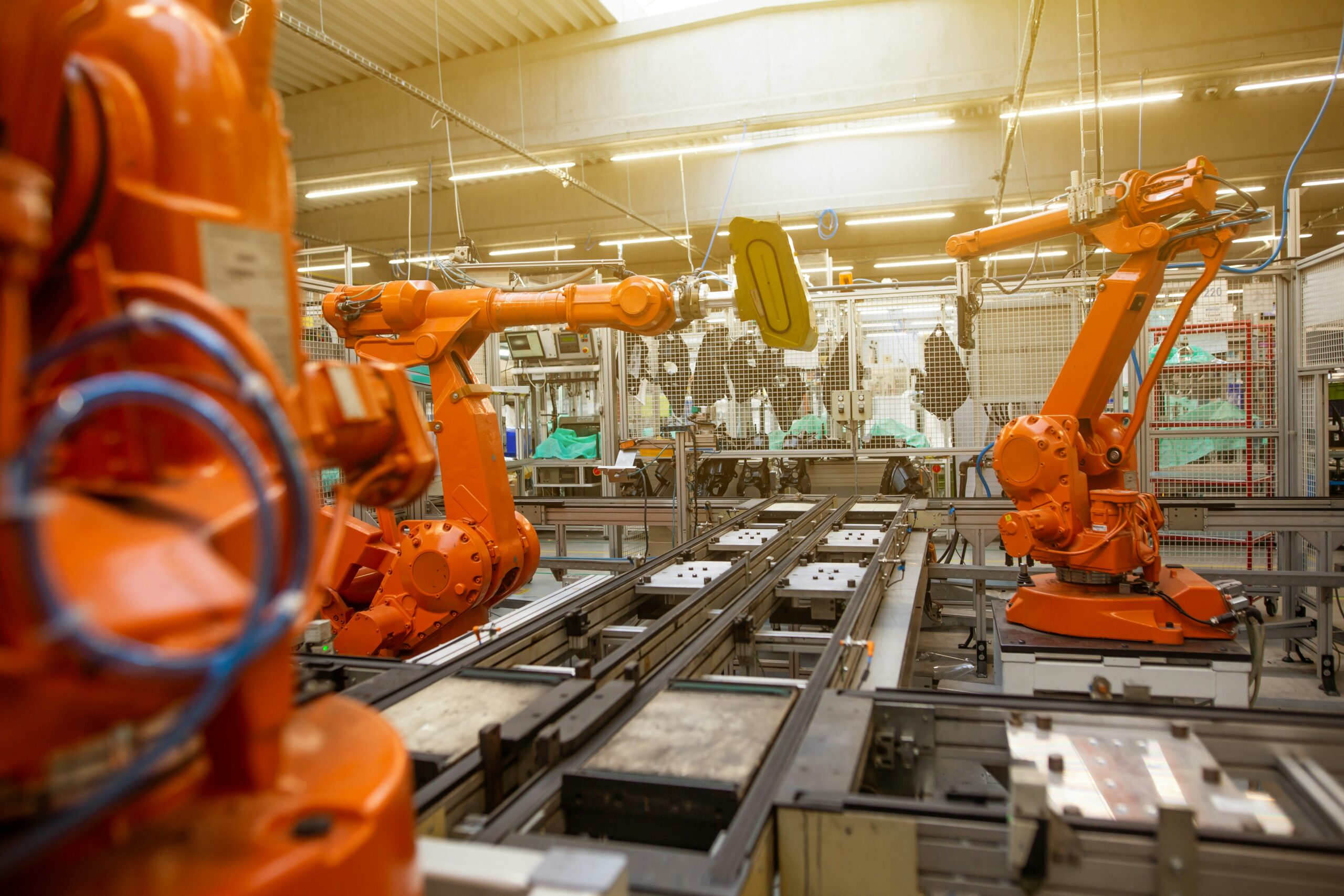
China is rapidly reshaping global manufacturing through advanced AI robotics, automated production lines, and intelligent factory systems. This in-depth 4500-word analysis explains how robotics, artificial intelligence, and national industrial strategy are redefining China’s economic model — and what it means for global competition, supply chains, and the future of work.
Introduction: The Dawn of a New Industrial Age
China has entered a new era of industrial transformation. For decades, the country served as the world’s largest workshop — a global manufacturing engine powered by low labor costs, vast industrial zones, and an immense workforce. Today, that model is being fundamentally rewritten. AI-powered robots, automated factory systems, and intelligent industrial software are reshaping how China produces everything from consumer electronics to steel, chemicals, cement, automotive parts, textiles, and logistics services.
This shift is not happening quietly or gradually. It is unfolding at a remarkable speed, driven by national strategy, technological breakthroughs, demographic pressures, and intense competition within China’s own manufacturing landscape. Factories that once depended on thousands of workers are increasingly turning to robotic arms, mobile industrial robots, automated logistics vehicles, and AI “factory brains” that coordinate production.
What’s emerging is an industrial environment that is faster, more integrated, more data-driven, and far more automated than the world has ever seen. And for many observers, this transformation signals not simply the modernization of an aging manufacturing sector, but the emergence of a new global industrial standard — one led by China.
This 4500-word analysis examines how robotics and artificial intelligence are reshaping China’s economy, the key players behind the shift, the technologies driving the transition, the economic and geopolitical consequences, and the challenges China faces as it builds the factories of the future.
1. Why China Is Turning to AI Robotics Now
1.1 Demographic Pressures and Rising Labor Costs
For decades, China’s enormous workforce was one of its greatest economic advantages. But demographic realities have shifted dramatically. The population is aging, the labor force is shrinking, and young workers are less willing to take jobs involving physical strain, repetitive actions, or harsh working conditions.
In many coastal manufacturing hubs, factories struggle to hire enough workers, even with increased wages. As labor costs rise, companies face pressure to remain competitive — and robots present a solution.
AI robotics are not just replacing human labor; they are filling gaps in a labor market that can no longer supply enough factory workers to meet the needs of China’s massive manufacturing apparatus.
1.2 The National Push Toward Industrial Upgrading
China’s leadership has long viewed robotics and artificial intelligence as strategic technologies essential for national competitiveness. Multiple multi-year industrial policies have emphasized automation, intelligent manufacturing, and digital industrial systems.
Unlike previous eras of industrial reform, this push is coordinated across:
-
government ministries
-
major state-owned enterprises
-
leading private-sector technology firms
-
academic and research institutions
The goal is not simply efficiency — it is technological sovereignty. China sees robotics and AI as tools to reduce dependence on foreign industrial equipment, improve supply chain resilience, and stake out leadership in advanced manufacturing.
1.3 Competitive Pressures Within China
China’s manufacturing ecosystem is incredibly competitive. As tens of thousands of factories compete for global clients, those that fail to modernize risk losing contracts to more automated rivals. The companies with the most efficient production systems enjoy advantages in:
-
cost
-
speed
-
reliability
-
product quality
These competitive pressures create a natural incentive to adopt automation — especially the newest generation of AI-enabled robotics.
2. Inside China’s New Generation of AI-Powered Factories
China’s factories have not simply added robots to existing workflows. They have redesigned entire production systems around data, machine learning, predictive modeling, and real-time robotics coordination.
2.1 The Emergence of “Factory Brains”
One of the most significant developments is the rise of AI-driven “factory brains,” centralized systems that manage production in real time. These systems integrate:
-
robotics control
-
quality inspection
-
logistics routing
-
energy optimization
-
predictive maintenance
-
process automation
Instead of managing a single task, the factory brain oversees everything from heating temperatures in a furnace to the movement of robotic arms assembling consumer electronics.
These systems are capable of processing millions of data points per minute. Unlike traditional automation software, AI systems can adjust workflows on the fly, anticipate bottlenecks, and continually learn from the production environment.
2.2 The Spread of “Dark Factories”
Dark factories — manufacturing sites with minimal or no lighting because robots operate without human workers — are becoming increasingly common in high-automation sectors such as electronics, automotive components, and metal fabrication.
Robots perform tasks such as:
-
welding
-
soldering
-
packaging
-
sorting
-
heavy lifting
-
precision assembly
These factories often run continuously. Humans primarily monitor performance via control rooms, stepping in only for maintenance or technical issues.
2.3 Humanoid Robotics Enter the Scene
A new trend in China’s manufacturing evolution is the introduction of humanoid robots designed to mimic human movement. While traditional industrial robots excel at repetitive, predictable actions, humanoid robots can theoretically perform tasks designed for human workers — without redesigning the factory layout.
Many of these robots use reinforcement learning and human-supervised training. When one robot learns a new skill, the “knowledge” can be transferred to others via cloud networks, dramatically accelerating deployment.
Industries testing humanoid robots include:
-
automotive manufacturing
-
electronics assembly
-
warehouse logistics
-
retail warehousing
-
specialized industrial tasks
Though still early in development, China is scaling humanoid robots far faster than many analysts expected.
2.4 Robotics in Heavy Industry: Steel, Cement, and Chemicals
Advanced industrial automation is not limited to high-tech sectors. Even heavy industries like cement, steel, and chemical refining — once seen as resistant to automation — are undergoing rapid modernization.
AI systems in these industries control:
-
furnace temperatures
-
chemical ratios
-
energy consumption
-
equipment timing
-
emissions monitoring
Industrial robots perform hazardous tasks in environments where safety risks are high.
This shift has both economic and environmental implications. Automated heavy industry consumes less fuel, produces fewer emissions, and reduces safety risks for workers.
3. Key Players Building China’s Robotics Revolution
China’s transformation is being propelled by a powerful coalition of companies spanning robotics, AI models, industrial equipment, cloud computing, and manufacturing.
3.1 Robotics Manufacturers
China now hosts some of the world’s largest robotics producers. They build robots for:
-
assembly lines
-
logistics
-
material handling
-
welding
-
packaging
-
inspection
Domestic companies are capturing market share by offering competitive pricing and strong integration with local factories. Many are scaling rapidly to meet demand fueled by government incentives and private investment.
3.2 AI and Industrial Software Firms
AI models designed specifically for industrial applications are transforming operations. These models perform:
-
pattern recognition
-
predictive analysis
-
equipment optimization
-
defect detection
Industrial AI is becoming a major competitive advantage, allowing factories to operate with unprecedented efficiency.
3.3 State-Owned Enterprises
Large state-owned companies in steel, cement, energy, mining, and transportation play a critical role. These firms operate vast facilities where efficiency gains can save millions of dollars annually. Their adoption of automation technologies accelerates the development of standardized, scalable solutions.
3.4 Startups and Research Laboratories
Highly specialized startups are emerging across China, developing:
-
humanoid robots
-
machine vision systems
-
cloud robotics platforms
-
autonomous logistics vehicles
-
factory simulation software
Many collaborate closely with universities and state research institutions, pushing technological boundaries through applied science and engineering.
4. How AI Robotics Improve Efficiency and Productivity
Although automation delivers cost savings, its greatest impact lies in how it transforms the nature of industrial work.
4.1 Real-Time Optimization
AI systems continually analyze production data to:
-
detect inefficiencies
-
anticipate breakdowns
-
adjust workflows
-
reorder tasks
-
reduce downtime
This “always-on” intelligence exceeds what human managers can achieve manually.
4.2 Increased Precision and Reduced Errors
Machine vision, AI inspection, and robotic coordination create extremely consistent output. Defects are detected early, reducing waste and improving product quality.
4.3 Energy and Resource Savings
In sectors like cement, steel, and chemical refining, small optimizations can yield major resource savings. AI can reduce energy consumption by fine-tuning industrial reactions, adjusting machine timing, and balancing loads.
4.4 Safer Working Environments
Robots increasingly perform the most hazardous tasks, lowering injury risks. Factories become safer as automation takes over dangerous operations.
4.5 24/7 Operation Without Additional Labor
Unlike human workers, robots do not require breaks, sleep, or shift rotations. Combined with low maintenance costs, this allows factories to run continuously.
5. Economic and Global Implications of China’s Automation Push
China’s automation drive will reshape global manufacturing, supply chains, trade flows, and labor markets.
5.1 Strengthening China’s Global Manufacturing Dominance
Automation allows China to maintain — and even expand — its position as the world’s leading manufacturing base, despite rising wages. Countries that hoped to pull manufacturing away will face tougher competition.
5.2 Increasing Self-Reliance in Strategic Industries
Automation reduces China’s dependence on foreign industrial technologies and robotics systems. Over time, China aims to supply its own:
-
industrial robots
-
AI models
-
factory software
-
semiconductor components
-
automation infrastructure
This strengthens economic resilience.
5.3 Reducing Outsourcing Pressures
As automation lowers labor requirements, the economic incentive to move factories to other low-wage countries weakens. China can retain high-value production domestically even as wages rise.
5.4 Geopolitical Consequences
China’s technological leadership in industrial automation has geopolitical dimensions. Mastery of AI robotics gives China leverage in:
-
global supply chains
-
technology standards
-
manufacturing markets
-
international trade relationships
AI-driven manufacturing becomes not just an economic asset but a strategic tool.
6. Challenges Facing China’s Automation Transition
Despite its rapid progress, China faces significant challenges as it scales robotics and AI across industry.
6.1 Technical Complexity
High-level automation requires expert knowledge in:
-
mechanical engineering
-
AI model training
-
robotics design
-
industrial software integration
-
advanced manufacturing processes
Shortages of skilled talent remain a major obstacle.
6.2 Integration Costs
Even when robots themselves are inexpensive, integrating them into complex production systems is difficult. Small and medium manufacturing firms may struggle with the upfront investment.
6.3 Hardware Dependencies
Although China leads in production volume, it still depends on foreign technology for certain advanced components such as high-precision sensors and high-end chips.
6.4 Cybersecurity Risks
In hyper-connected factories, vulnerabilities in industrial networks could lead to:
-
production disruption
-
intellectual property theft
-
system manipulation
Securing these systems is critical.
6.5 Employment Transitions
Automation will inevitably change the labor landscape. While China argues that demographic trends will offset job losses, millions of workers may still face challenges transitioning to new roles.
7. The Future of Chinese Manufacturing: Intelligent, Automated, and Global
China’s push into AI robotics marks the beginning of a new chapter in industrial history. The factories emerging across the country are not merely modernized — they represent a fundamentally new industrial paradigm.
7.1 From Mass Production to Intelligent Production
Traditional mass production focuses on scale and repetition. Intelligent production adds:
-
adaptability
-
data-driven decision-making
-
real-time optimization
-
robotic coordination
-
predictive operations
This evolution fundamentally changes how factories operate and compete.
7.2 Integration of the Physical and Digital Worlds
China’s newest factories integrate:
-
IoT sensors
-
cloud platforms
-
digital twins
-
simulation engines
-
AI-model monitoring
-
robotics fleets
These systems allow virtual environments to mirror real factories in real time, enabling predictive planning and optimization that were once impossible.
7.3 The Rise of Fully Autonomous Factories
While fully autonomous factories are still developmental, China is moving quickly toward this goal. In the coming decade, it is likely that entire industrial parks will be designed to operate with minimal human oversight — from raw materials to finished goods.
7.4 Global Influence and Technology Export
China’s automated manufacturing systems will increasingly be exported abroad. As Chinese robotics and industrial AI companies grow, they will shape the technology standards and industrial practices of other nations.
Conclusion: The World’s New Industrial Frontier
China’s transformation through AI robotics is not a futuristic concept — it is a present-day reality unfolding at extraordinary speed. The country’s manufacturing sector is becoming:
-
more automated
-
more intelligent
-
more efficient
-
more competitive
-
more strategic
This shift represents one of the most significant industrial transformations of the 21st century.
China’s bet on AI-driven robotics is bold, long-term, and deeply interconnected with national strategy. It will shape global manufacturing leadership, influence supply chains, and redefine how the world’s products are made.
Whether other nations adapt quickly or fall behind will determine the next era of industrial competition. But one thing is clear: the center of gravity in global manufacturing is shifting — and China is positioning itself at the forefront of the new AI-powered industrial age.
Source: WSJ



0 Comments