

Introduction
In a significant policy shift, the U.S. State Department has issued new guidance that could affect thousands of immigrants seeking entry to the United States. The updated rules emphasize an applicant’s health condition, potential reliance on public benefits, and financial stability. For visa applicants, especially those with chronic medical conditions or limited resources, the stakes have never been higher.
This article explores:
-
The details of the new visa guidance
-
How it differs from previous policies
-
Populations most affected
-
Practical steps applicants can take
-
Broader implications for U.S. immigration trends
The changes mark a notable pivot in immigration policy, intertwining health, finance, and risk assessment in a way that could reshape immigrant demographics for years to come.
New U.S. Visa Guidance: What You Need to Know
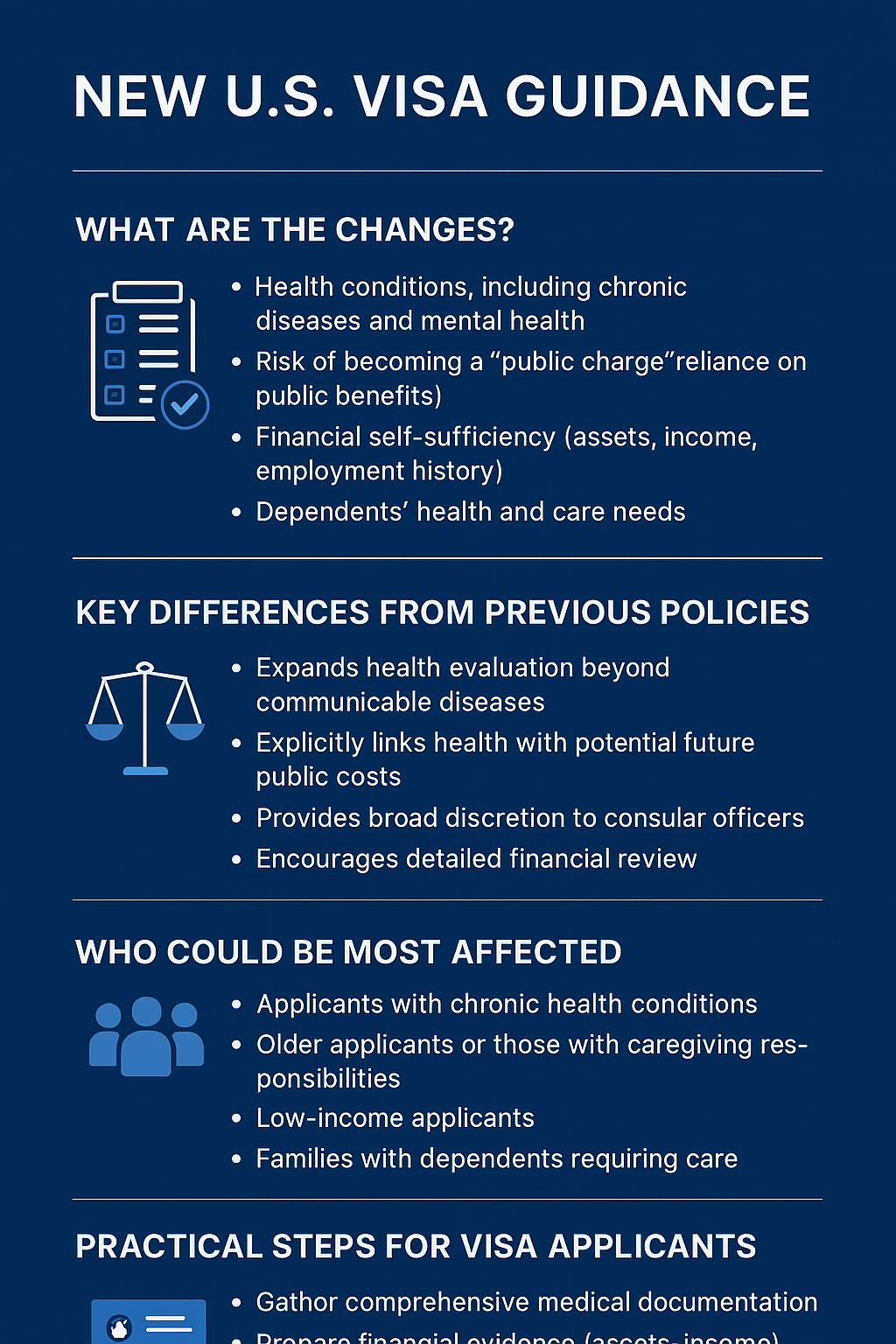
According to multiple news outlets, the 2025 guidance instructs consular officers to assess visa applicants using a “totality of circumstances” approach, weighing:
-
Health conditions: Chronic diseases, obesity, neurological disorders, and mental health conditions can now influence visa decisions. This goes beyond the traditional focus on communicable diseases like tuberculosis or required vaccinations.
-
Public charge risk: Officers must consider whether an applicant—or any dependents—may rely on U.S. public benefits in the future.
-
Financial self-sufficiency: Income, assets, employment history, and education are scrutinized to evaluate an applicant’s ability to support themselves without government assistance.
-
Dependents’ health: Family members’ needs, including children and older relatives, may affect an applicant’s eligibility.
The overarching goal, according to the administration, is to ensure that immigrants are self-sufficient and do not pose a financial burden on U.S. social services.
Key Differences From Previous Policies
Historically, immigrant visa applications focused primarily on:
-
Communicable disease screening: Required by CDC standards.
-
Vaccination compliance: Ensuring applicants had routine immunizations.
-
Basic financial documentation: Limited review of personal resources or dependents’ needs.
The 2025 guidance is transformative because it:
-
Expands health evaluation to chronic and non-communicable conditions.
-
Explicitly links health with potential future public costs.
-
Provides broad discretion to consular officers under the “totality of circumstances” standard.
-
Encourages a detailed review of financial, educational, and employment history.
This shift moves visa adjudication from a narrow medical focus to a holistic evaluation of risk, resources, and self-sufficiency.
Who Is Most Likely to Be Affected
Certain groups face a higher risk of visa denial under the new guidance:
-
Applicants with chronic health conditions: Obesity, diabetes, cardiovascular disease, neurological disorders, and mental health conditions are specifically highlighted.
-
Older immigrants: Age combined with potential caregiving responsibilities may weigh against approval.
-
Low-income applicants: Those without substantial financial assets or stable employment are particularly vulnerable.
-
Families with dependents: Children or elderly relatives with health concerns may complicate applications.
-
Immigrants from lower-income countries: Demonstrating financial self-sufficiency may be especially challenging.
Experts warn that these factors may disproportionately impact applicants from marginalized or low-income backgrounds, potentially reducing diversity in U.S. immigration.
Practical Steps for Visa Applicants
To navigate the new rules effectively, applicants should:
-
Gather comprehensive medical documentation: Include diagnosis, treatment plans, and prognosis for chronic conditions. Demonstrate stability and ability to manage health independently.
-
Prepare financial evidence: Bank statements, employment verification, property ownership, investments, and any other proof of financial self-sufficiency.
-
Document dependents’ health and needs: Show the ability to provide care without requiring public assistance.
-
Highlight skills and education: Evidence of employable skills, higher education, or professional certifications can strengthen the application.
-
Consult an immigration attorney: Expert guidance is critical, especially for navigating public charge considerations and discretionary decision-making.
-
Stay updated on policy changes: Regulations may evolve, and recent guidance could be refined or challenged in court.
Broader Implications for U.S. Immigration
The 2025 guidance has implications beyond individual visa applications:
-
Potential decline in visa approvals: Analysts predict stricter scrutiny may reduce approvals, particularly among applicants with chronic conditions or limited resources.
-
Shift in immigrant demographics: The policy could influence the composition of immigrants entering the U.S., favoring younger, healthier, and financially self-sufficient individuals.
-
Equity concerns: The focus on health and wealth may disproportionately affect applicants from lower-income countries or marginalized communities.
-
Impact on family-based immigration: Families with dependents requiring care may face increased hurdles, potentially reshaping family reunification trends.
-
Legal challenges and policy debates: The broad discretion granted to consular officers could trigger litigation, particularly around consistency and due process.
Expert Analysis
Dr. Maria Lopez, a professor of immigration law, notes:
“This policy represents a major shift in U.S. immigration philosophy. Health and wealth are now formal criteria for entry. Applicants need to approach the process strategically, with comprehensive documentation to demonstrate self-sufficiency.”
Immigration attorneys emphasize that preparation is critical, as consular officers now have wider discretion in interpreting “risk” and evaluating eligibility.
Conclusion
The U.S. visa landscape is changing dramatically in 2025. Applicants now face scrutiny not just for past health or financial history, but for projected risk of becoming a public charge. Families, older adults, and those with chronic conditions must be especially vigilant.
To improve chances of approval:
-
Prepare comprehensive medical and financial documentation
-
Demonstrate self-sufficiency for both applicants and dependents
-
Seek professional legal guidance
-
Stay informed about policy updates
This new approach underscores a broader trend: U.S. immigration is increasingly viewed through the lens of health, economic stability, and long-term self-reliance. Applicants who proactively adapt to these criteria will have a competitive advantage in the evolving immigration environment.
SEO Keywords
Immigrant visas 2025, U.S. visa health policy, public charge visa, Trump administration immigration, visa financial requirements, chronic illness visa, U.S. consular guidelines, family immigration U.S., immigrant self-sufficiency, visa eligibility 2025
Source: NPR News




0 Comments