
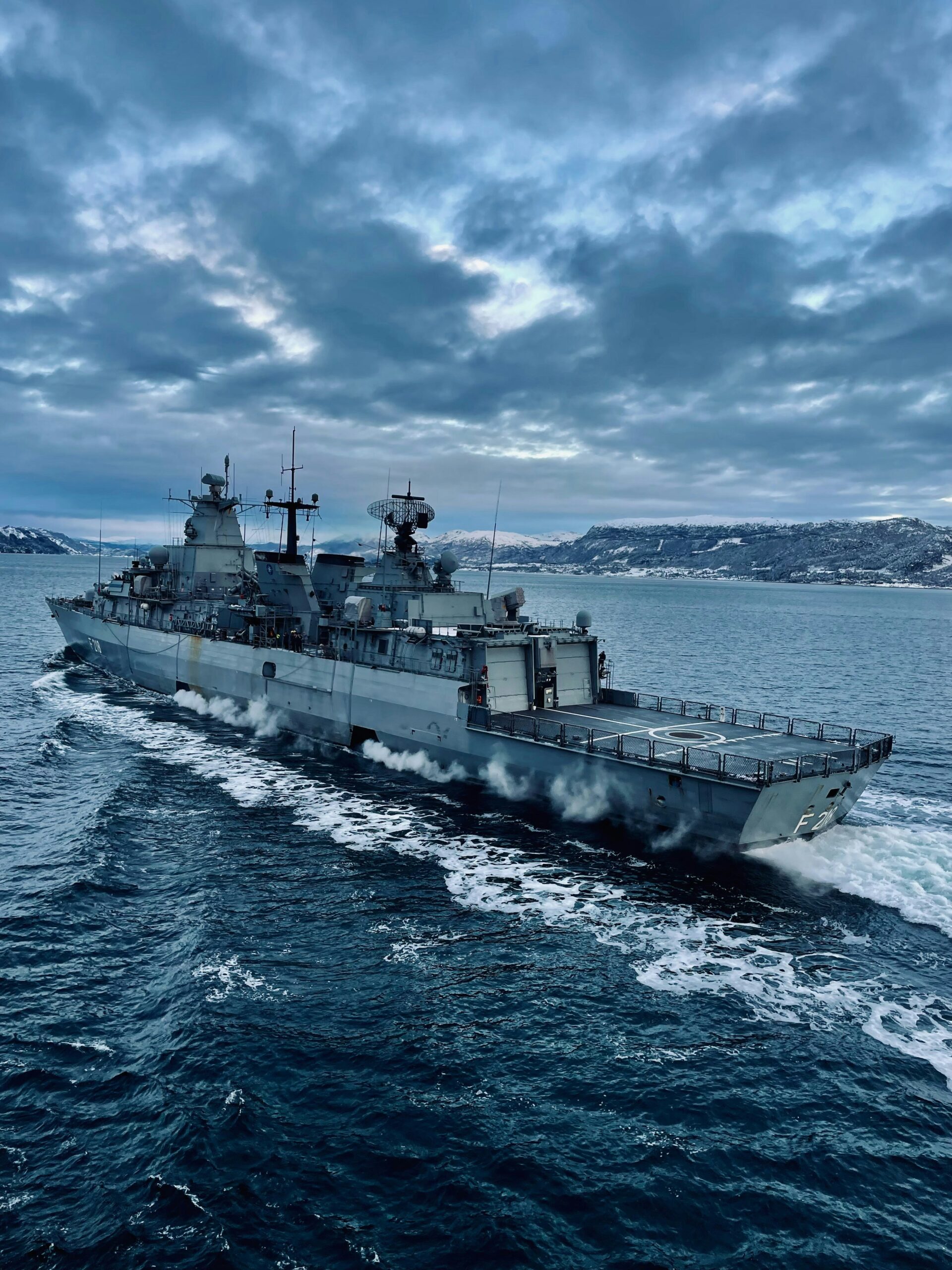
Overview: Largest U.S. Aircraft Carrier Deploys to Latin America
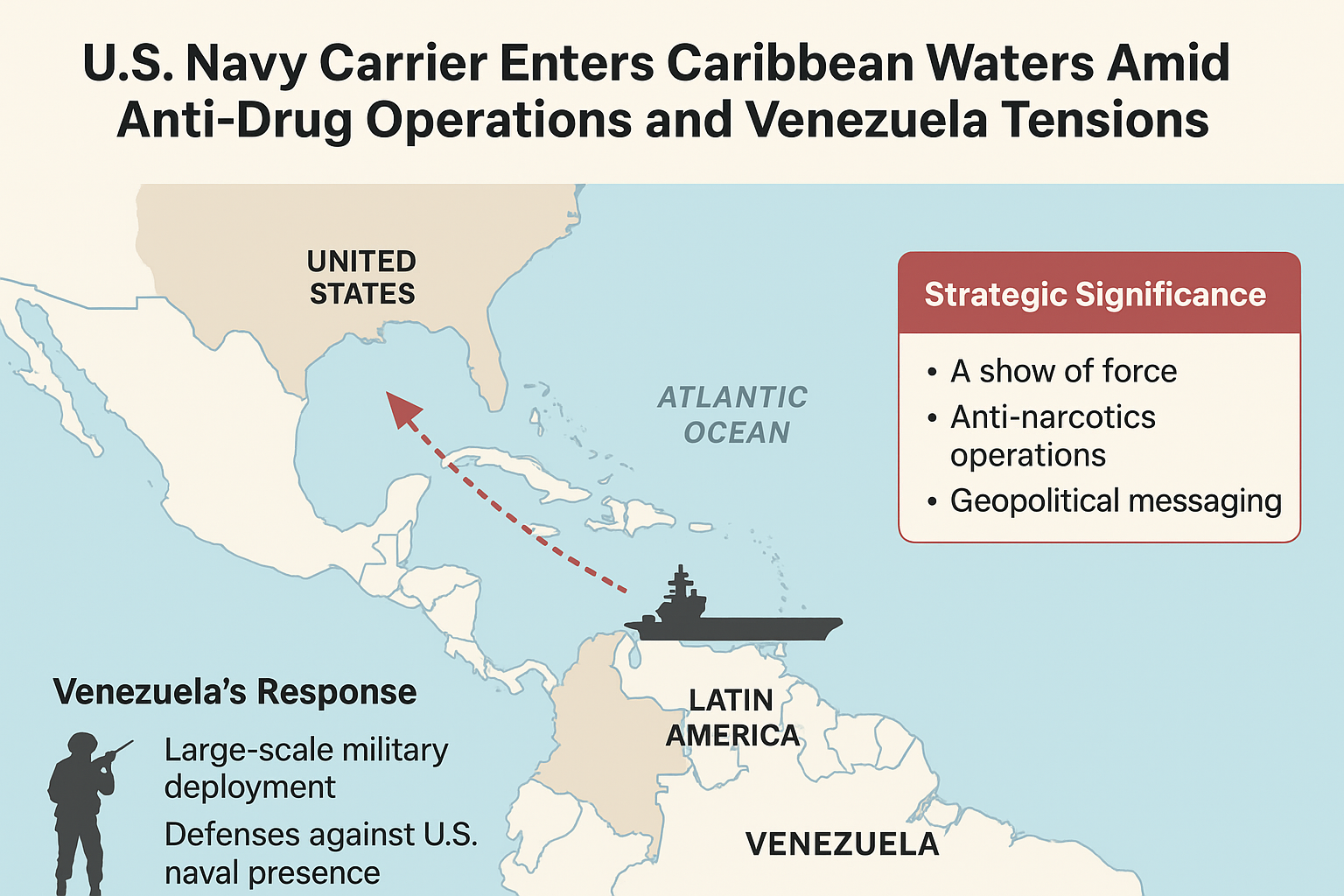
The U.S. Navy has deployed the USS Gerald R. Ford, the country’s largest and most technologically advanced aircraft carrier, to the waters of the Caribbean and Latin America. This deployment, officially part of anti-drug and counter-narcotics operations, marks the largest U.S. military presence in the region in over three decades.
According to the Pentagon, the carrier strike group includes thousands of sailors, dozens of fighter jets, and advanced surveillance systems, designed to monitor and disrupt illicit trafficking networks operating in the Caribbean corridor toward the U.S. mainland. (The Guardian, 2025)
Strategic Significance: A Show of Force
The U.S. frames this deployment as part of its ongoing “war on drugs,” targeting transnational criminal organizations and sophisticated smuggling operations. Experts highlight that beyond anti-narcotics operations, the deployment sends a clear geopolitical message to the Venezuelan government and other regional actors.
Key points:
-
Military Scale: The USS Gerald R. Ford is the largest U.S. warship ever built, capable of carrying up to 90 aircraft and cutting-edge surveillance systems.
-
Regional Reach: Operations cover key Caribbean sea lanes, including approaches to Venezuela, Colombia, and the Lesser Antilles.
-
High-Level Signaling: Analysts suggest the move underscores U.S. concerns about Venezuelan political instability and its alleged support for illicit networks.
Venezuela’s Response: Heightened Alert
Venezuelan President Nicolás Maduro has ordered a large-scale deployment of Venezuelan military and civilian militia forces in response to the U.S. carrier’s arrival. Maduro described the presence as a “provocation” and warned that Caracas will defend its territorial waters and national sovereignty.
The move comes amidst ongoing tensions between Washington and Caracas, with U.S. policymakers citing human rights violations, drug trafficking, and regional instability as core concerns. (The Guardian, 2025)
Regional Diplomacy: Latin American Governments React
At a recent Community of Latin American and Caribbean States (CELAC) summit, 58 out of 60 member countries signed a joint declaration emphasizing diplomacy and legal frameworks over military intervention. Venezuela and Nicaragua were notably absent from the declaration, highlighting ongoing divides in the region.
Experts note that while the U.S. emphasizes anti-narcotics operations, regional perception of the deployment is mixed, with some governments welcoming cooperation against trafficking networks, while others view it as a form of militarized pressure.
Implications for Drug Trafficking and Security
-
Potential Disruption: Enhanced U.S. surveillance and interdiction capabilities may temporarily disrupt cocaine and synthetic drug flows toward the U.S.
-
Adaptation by Traffickers: Criminal networks are likely to adjust routes or increase sophistication, reducing the long-term effectiveness of direct military interventions.
-
Regional Security Risks: Heightened U.S. naval presence could trigger unintended incidents with regional navies or civilian vessels.
Historical Context: Lessons from Past Interventions
The scale of this deployment recalls previous major U.S. interventions, including:
-
1989 Panama Invasion: The U.S. intervened to remove Manuel Noriega, citing drug trafficking and regional security.
-
1980s Caribbean Patrols: Extensive naval operations aimed at interdicting cocaine shipments.
Analysts argue that these historical examples highlight both the strengths and limitations of military-led anti-drug campaigns, particularly in balancing effectiveness with regional diplomatic consequences.
Expert Commentary: Geopolitics Meets Counter-Narcotics
Dr. Helena Torres, a Latin American security analyst, noted:
“While the U.S. emphasizes counter-narcotics, deploying a carrier of this size is inevitably interpreted as a geopolitical statement. It risks escalating tensions with Venezuela while also testing regional alliances.”
Meanwhile, U.S. defense officials assert that coordination with local governments is ongoing, with the goal of minimizing misunderstandings and ensuring maritime safety.
What to Watch Next
-
U.S. Operational Effectiveness: How successful will the carrier strike group be in intercepting illicit trafficking?
-
Venezuelan Countermeasures: Will Caracas escalate militarily, or limit its response to political signaling?
-
Regional Diplomacy: How will neighboring governments balance cooperation with the U.S. versus opposition to perceived militarization?
-
Drug Flow Adaptation: Tracking changes in smuggling patterns and the role of other international actors.
Conclusion
The deployment of the USS Gerald R. Ford underscores the intersection of anti-drug operations, regional diplomacy, and U.S. strategic signaling. While the U.S. emphasizes counter-narcotics, Venezuela’s response and broader Latin American reactions suggest that military presence alone cannot resolve underlying regional tensions.
Educated readers and analysts should monitor this deployment for its implications on geopolitics, regional stability, and drug trafficking patterns, as well as the broader trends in U.S.-Latin America relations.
Source: The Guardian




0 Comments