

The Luxury Hotel Boom of 2025: Why Affluent Travelers Are Redefining Hospitality Spending
Introduction
In 2025, a striking trend is reshaping the U.S. and global hospitality markets: affluent travelers are spending more than ever on luxury accommodations. While middle-market and budget hotels face slowing bookings, high-end properties are thriving, with record-breaking room rates and surging occupancy.
According to a recent report in The Wall Street Journal, luxury hotels are seeing a wave of unprecedented spending, driven by both increased wealth among the high-net-worth population and a growing prioritization of experiences over price sensitivity. This boom is not just a fleeting trend — it is redefining what premium hospitality means in a post-pandemic world.
1. The Wealth Effect: How Affluence Drives Luxury Travel
High-net-worth individuals (HNWIs) are the cornerstone of this boom. Many have experienced significant financial gains over recent years, particularly from equities, real estate, and entrepreneurial ventures. With these gains comes a greater disposable income, which has translated into a willingness to pay premium prices for unforgettable travel experiences.
-
Record-high room rates: Luxury hotels in U.S. cities such as New York, Los Angeles, and Miami have seen their average nightly rates climb to new highs — in some cases exceeding $1,000 per night.
-
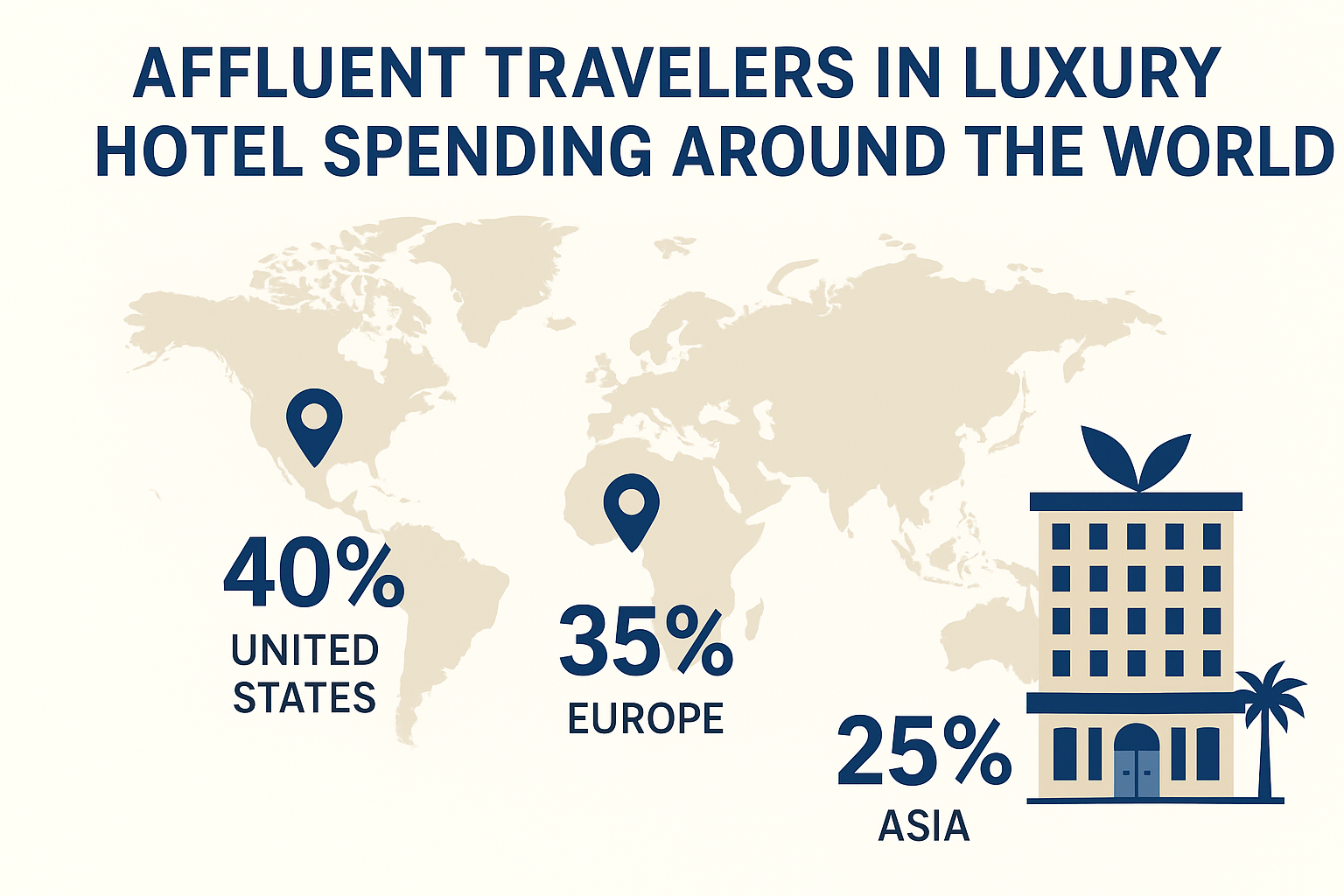
Global comparisons: While luxury travel was once concentrated in European capitals, affluent domestic travelers now account for the bulk of demand, with U.S. luxury hotels outperforming expectations.
Insight: This trend highlights a decoupling between mass-market travel, which is experiencing modest growth, and the ultra-luxury segment, which is seeing robust expansion.
2. Experience Over Price: Why Luxury Travelers Pay More
Affluent travelers today are not just purchasing rooms — they are investing in exclusive, curated experiences. The modern luxury traveler seeks more than comfort: they want personalization, exclusivity, and a sense of being part of something unique.
-
Private villas & suites: Families increasingly opt for multi-room villas instead of standard hotel suites to enjoy space, privacy, and multigenerational comfort.
-
Yacht stays & exclusive retreats: Experiences that combine luxury with adventure — like chartered yachts or secluded resorts — are seeing rising popularity.
-
Bespoke services: From personal butlers to curated itineraries and in-room wellness amenities, luxury properties are differentiating themselves with unmatched service quality.
3. Market Dynamics: Why Luxury Hotels Are Outperforming
Several macro and microeconomic factors explain why luxury hotels continue to thrive:
-
Domestic travel surge: Despite challenges in international tourism, U.S. affluent travelers are fueling demand for domestic luxury properties.
-
Pricing power: The luxury segment has significant pricing flexibility. While mid-tier hotels struggle with occupancy and rate growth, luxury hotels can increase prices without losing demand.
-
Scarcity and exclusivity: Limited availability of top-tier accommodations reinforces the sense of exclusivity that affluent travelers crave.
Data point: The top 10% of luxury hotels in major U.S. markets often charge more than double the rates of standard luxury properties, reflecting their ability to cater to high-net-worth clientele.
4. The Evolution of Guest Expectations
Luxury travelers are redefining what “premium hospitality” means in 2025:
-
Ultra-luxury tier growth: Hotels like The Surrey in Manhattan now charge over $2,000 per night for enhanced suites that include butler service, private terraces, and curated wellness experiences.
-
Multi-generational focus: Families traveling together are prioritizing accommodations that allow privacy, comfort, and shared luxury experiences.
-
Sustainability and personalization: Luxury guests increasingly value environmentally responsible practices and customized experiences over generic luxury offerings.
Implication for hoteliers: Investing in personalization and service excellence is no longer optional — it is a core driver of revenue and brand loyalty.
5. Strategic Implications for the Hospitality Industry
The luxury hotel surge has significant implications for hoteliers, travel marketers, and luxury service providers:
-
Segment-focused marketing: Treat the luxury segment as distinct, with tailored messaging highlighting exclusivity, experience, and status.
-
Emphasize experience over amenities: Advertise curated experiences rather than just upgraded rooms; affluent travelers value unique moments over material luxury.
-
Revenue management: Dynamic pricing and tiered offerings can optimize revenue without alienating high-end guests.
-
Domestic targeting: With international travel remaining volatile, U.S. domestic affluent travelers are a critical revenue source.
-
Service excellence: Ultra-luxury travelers demand personalized attention; investments in staff training, bespoke services, and digital concierge platforms can significantly enhance perceived value.
6. Challenges and Cautionary Notes
While the luxury segment is thriving, hoteliers must remain aware of potential headwinds:
-
Economic volatility: Inflation, market corrections, or geopolitical tensions can reduce high-net-worth spending in discretionary areas like travel.
-
Sustainability concerns: Overpricing without maintaining exceptional quality or service may harm brand perception.
-
Supply growth risk: Expansion of luxury properties could dilute exclusivity if not carefully managed.
9. Conclusion
The luxury hotel sector is outperforming other travel segments thanks to a combination of affluence, experiential demand, and domestic travel growth. For hoteliers, marketers, and investors, the lesson is clear: the high-net-worth traveler is not just resilient — they are shaping the future of hospitality.
Investing in personalized experiences, premium service, and exclusive accommodations will be essential to maintain relevance and capture the maximum value from this booming market segment.
Source: WSJ



0 Comments