
Global Energy Explained
Why Oil Can Be Plentiful and Still Cost More Than $100
Gulf production is only one part of a global market. Explore how disruptions, demand, shipping bottlenecks, and traders’ expectations can keep crude prices high.
The Gulf Supply Paradox
More Gulf oil can ease shortages, but it cannot set the world price alone. Crude trades across an interconnected market, where lost output elsewhere, strong demand, and limited shipping capacity can outweigh a regional surge. Buyers also pay for the possibility of future disruption: conflict near producing regions or major sea routes can raise prices before a single shipment is delayed. And not every barrel is interchangeable—refineries need particular grades of crude, delivered to the right place at the right time. The result is a market in which abundant Gulf production and prices above $100 a barrel can coexist.

Five Forces Behind the Price of a Barrel
Production Gaps
Outages, sanctions, and reduced output in one region can offset fresh supply from another, leaving the global balance tight.
Demand and Delivery
Fuel consumption can climb faster than supply, while tanker availability and crowded shipping routes add time and cost.
Risk and Expectations
Geopolitical tensions and forecasts of future shortages can lift prices today, even while oil is flowing steadily.
From Gulf Oil Fields to Global Buyers
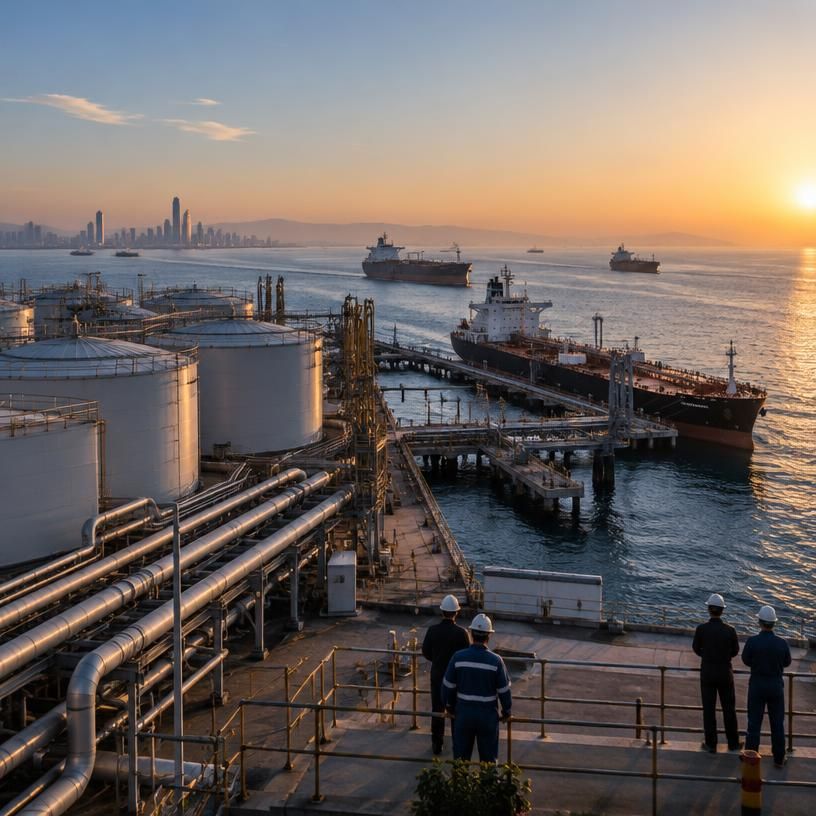
Oil produced around the Gulf reaches international markets through a chain of wells, gathering systems, processing plants, pipelines, storage tanks and export terminals. After treatment, crude moves to coastal facilities, where tankers load cargoes bound for refineries in Asia, Europe and elsewhere. Spare production capacity matters, but so do the pipelines, port berths and vessels needed to turn extra output into delivered barrels.
Maritime routes add another layer of uncertainty. Much of the region’s seaborne oil passes through the Strait of Hormuz, while some exports rely on routes through the Red Sea and the Suez Canal. Security risks, shipping costs, insurance premiums or congestion can delay deliveries even when production is rising. That distinction helps explain why plentiful oil at the source does not always translate into lower prices for buyers.
More Supply, Persistent Price Pressure
Factor
Gulf production
Export capacity
Inventories
What could add supply
Higher output from available capacity
More tanker loadings and reliable terminals
Stock releases that bridge shortfalls
Why prices may stay high
Demand growth or production cuts elsewhere
Route disruptions, freight costs and insurance
Low stocks that leave little buffer
What to watch
Actual production, not announced targets
Cargo departures and delivery times
Reported stock changes and refinery demand
Oil Figures Worth Putting in Context
These are reference figures and estimates, not a live market snapshot. Global oil demand was estimated at roughly 103 million barrels a day in 2024; around one-fifth of global petroleum liquids consumption passed through the Strait of Hormuz in 2023. For a current assessment, compare dated Gulf production and export data with the latest reported inventories and benchmark crude prices. Export volumes are not the same as output, inventory reports lag the market, and prices change throughout the trading day.
Production estimate: roughly 103 million barrels a day in global demand (2024)
Export route estimate: about one-fifth through Hormuz (2023)
Inventory check: use the latest dated stock report
Price check: use a live, dated Brent or WTI quote
“More oil in one region does not erase shipping risks, refinery bottlenecks, or fears of future shortages. Prices reflect what traders expect next, not just what is flowing today.”
Albert Pham, Albert Report
Questions Behind the Price of Oil
Oil prices respond to more than production alone. These answers unpack the forces shaping the global market and their effects on everyday costs.
Why can oil prices stay high when production rises?
Additional barrels may be offset by strong demand, disruptions elsewhere, limited transport capacity, or concern about future supply. Markets price those risks alongside current output.
What determines the price of a barrel of oil?
Global supply and demand set the broad direction, while producer decisions, inventories, shipping costs, currency movements, and geopolitical events can move prices quickly.
Does more crude oil mean cheaper gasoline right away?
Not necessarily. Crude must reach refineries and become fuel before drivers see an effect. Refining capacity, fuel demand, taxes, and local distribution costs also influence pump prices.
How do supply disruptions affect consumers?
Disruptions can raise fuel and transport costs, which may feed into prices for food and other goods. The impact depends on how long the disruption lasts and whether other suppliers can fill the gap.
Why do events far from home affect local fuel prices?
Oil trades in a connected global market. A production cut, conflict, or shipping delay abroad can change what buyers are willing to pay, even where local supplies remain steady.
What could change the oil market outlook?
Watch for shifts in global demand, producer output, inventories, refinery capacity, and shipping conditions. Policy changes and progress on alternative energy may also reshape demand over time.




0 Comments