
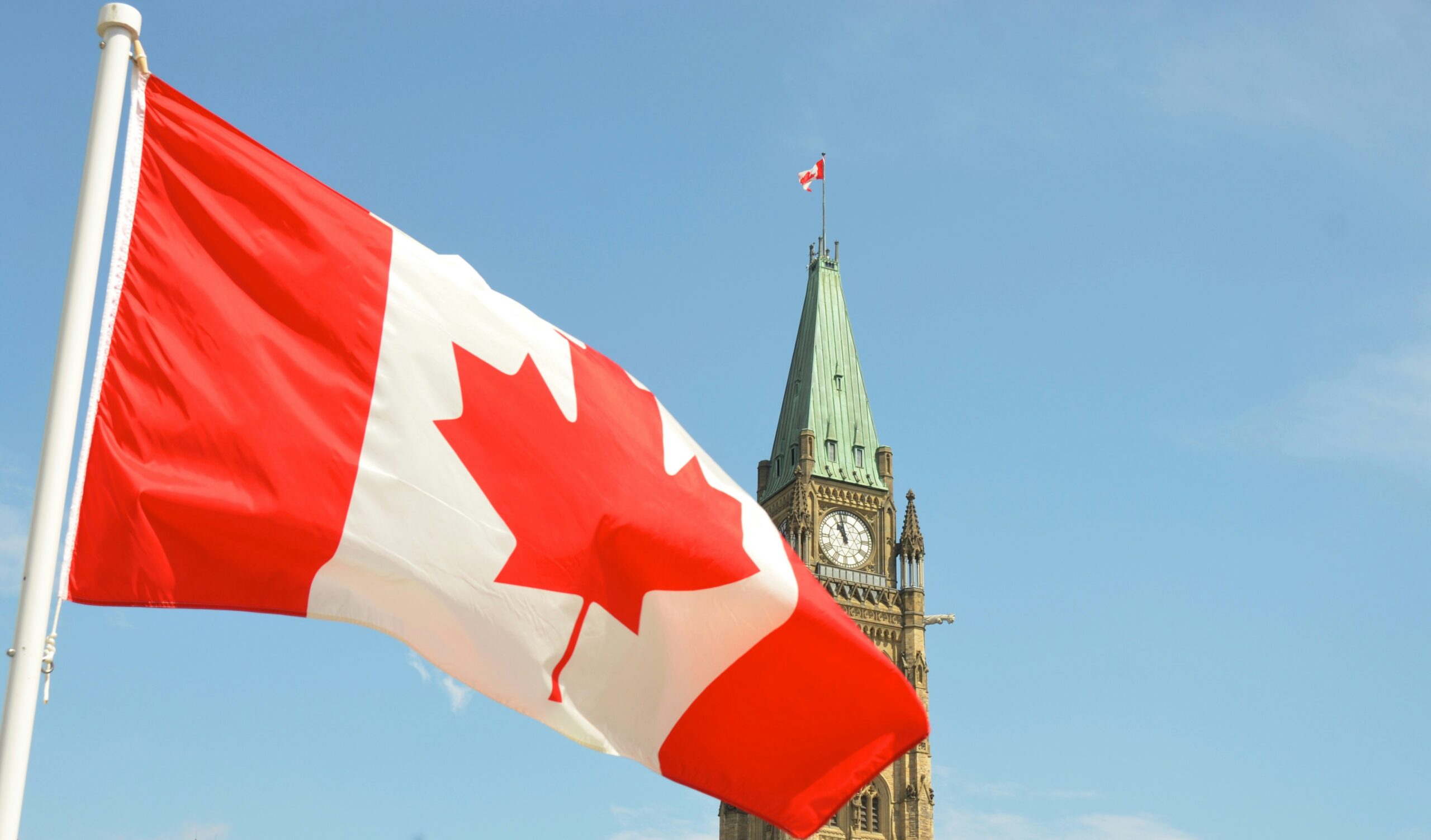
Alberta’s October 19, 2026, referendum could reshape Canada’s political debate. Explore separatism, oil and gas, economic risks and national unity.
Focus Keyword: Alberta independence vote 2026
Related Keywords: Alberta separation referendum, Alberta separatism, Canada national unity, Alberta oil industry, Canadian economy, Danielle Smith, Mark Carney, Alberta federal relations
🇨🇦 Alberta Independence Vote Puts Canada’s National Unity Under Pressure
Canada is approaching a consequential political moment as Alberta prepares to vote on whether its government should begin the legal process required to hold a future binding referendum on independence. The October 19, 2026, vote is bringing renewed attention to the relationship between Canada's energy-rich western province and the federal government in Ottawa.
Although the referendum will not directly make Alberta an independent country, its outcome could influence Canada's constitutional debate, energy policy, business confidence and long-term political stability.
Alberta has long been a centre of Canada's oil and natural gas industry. However, disagreements over federal environmental regulations, resource development, taxation and the distribution of public revenues have contributed to a persistent sense of alienation among some residents.
The political stakes extend beyond Alberta. The province's relationship with the rest of Canada affects national energy infrastructure, investment decisions, interprovincial trade and the country's ability to respond to economic pressures from the United States.
According to reporting by The Wall Street Journal, the independence debate has also created divisions within communities, illustrating how a constitutional question can affect relationships among neighbours, businesses and families.
The central question is whether Alberta's independence movement will remain a protest against federal policy or become a more significant challenge to Canada's constitutional structure.
🗳️ What Is Alberta Voting On October 19, 2026?
One important distinction is that Albertans are not voting directly on independence on October 19.
The referendum asks whether Alberta should remain a province of Canada or whether the provincial government should begin the constitutional legal process necessary to hold a future binding referendum on separation. Elections Alberta has published the official wording and voting information.
A vote supporting the commencement of that process would not automatically separate Alberta from Canada. Instead, it would create a political mandate to pursue the next steps toward a potential independence referendum.
This distinction matters for investors, businesses and international observers evaluating the implications of the vote.
The outcome could nevertheless have significant political consequences. A strong showing for the independence movement might encourage separatist campaigners to continue organizing, while increasing pressure on provincial and federal leaders to negotiate changes to Alberta's relationship with Ottawa.
Conversely, a clear preference for remaining in Canada could weaken the immediate momentum behind separation, although it would not necessarily eliminate the underlying grievances.
The referendum also includes nine other questions concerning provincial powers and public policy. These issues reflect broader disagreements about the division of authority between Alberta and the federal government.
Source: Elections Alberta, official referendum information.
🛢️ Why Alberta Separatism Has Gained Attention
Alberta's independence movement has deep historical roots.
The province joined Canadian Confederation in 1905. Disputes over control of natural resources, federal decision-making and economic policy have contributed to western alienation over subsequent decades.
Energy remains central to the disagreement.
Alberta is one of Canada's most important oil and natural gas producers. Its economy depends heavily on the development, transportation and export of energy resources, making federal decisions about environmental regulation, pipelines and emissions particularly consequential.
Many Albertans who oppose federal energy policies argue that Ottawa has restricted the province's economic opportunities while benefiting from revenues generated by its resource industries.
Others believe that remaining within Canada provides greater economic security, access to national institutions and a more stable framework for investment.
Equalization payments have also become a recurring political issue. Alberta's comparatively strong fiscal position means it has historically contributed to Canada's broader system of federal redistribution without receiving equalization payments itself. Critics of the existing arrangement argue that this creates an imbalance, while supporters maintain that the system helps finance public services across the federation.
The debate therefore involves more than a simple choice between independence and national unity. It reflects competing views about economic fairness, environmental policy, regional representation and the responsibilities of a federal government.
📊 What Polls Say About Alberta Independence
The independence movement has attracted attention, but support for remaining in Canada remains substantial.
A Leger poll cited by The Wall Street Journal found that approximately 70% of Albertans supported staying in Canada. That suggests independence remains a minority position, even as separatist activists have become more politically visible.
However, the referendum's significance cannot be measured by polling alone.
Turnout, campaign organization and voters' interpretation of the question could influence the result. Some residents may support beginning the legal process as a way to protest federal policies without necessarily wanting Alberta to become an independent country.
That distinction creates uncertainty for political leaders.
A vote for a future referendum process could represent genuine support for separation, a demand for greater provincial autonomy or a combination of both.
The eventual political response will depend not only on the percentage of voters supporting the proposal but also on the reasons behind their decisions.
💰 The Economic Risks of Alberta Separation
The economic consequences represent one of the most important dimensions of the Alberta independence debate.
An independent Alberta would need to address complex questions involving currency, taxation, public debt, pensions, federal transfers, trade arrangements, citizenship and regulatory systems.
The province would also have to negotiate its future relationship with Canada and determine how goods, services, people and energy would move across any new international boundary.
These challenges would not necessarily make independence impossible, but they could create years of uncertainty.
1. Business investment could face greater uncertainty
Businesses make investment decisions based on predictable laws, access to markets, labour availability and long-term financial expectations.
A prolonged independence process could complicate those calculations.
Companies operating across provincial borders might need to evaluate potential changes to taxation, licensing, transportation and employment regulations. Some businesses could delay investment until the political and legal situation becomes clearer.
The Calgary Chamber of Commerce has reported concerns among businesses about the possibility of relocation if the province moves toward another referendum.
The effects would depend on the outcome of negotiations and the degree of uncertainty surrounding Alberta's future status.
2. Energy exports would remain a major strategic issue
Alberta's oil and gas industry is deeply connected to North American energy markets.
An independent Alberta would still need access to pipelines, rail networks, ports and customers in other jurisdictions. Its landlocked geography would make cooperation with neighbouring provinces and the United States particularly important.
Energy companies would also need clarity about regulatory approvals, existing contracts, environmental obligations and cross-border infrastructure.
Even if an independent Alberta sought to maintain close commercial ties with Canada, the terms of those arrangements would have to be established.
This is especially important because energy investment frequently involves large amounts of capital and long planning horizons.
3. Public finances could face substantial transition costs
Separation would require decisions about which assets, liabilities and responsibilities belong to Alberta and which remain with the Canadian federal government.
Potential areas of negotiation include pension arrangements, federal property, government services, debt allocation and the financing of institutions that currently operate nationally.
A report commissioned by the Alberta government, as cited by The Wall Street Journal, estimated that establishing an independent country could cost as much as C$170 billion over five years and reduce long-term economic output by up to 16%.
These figures are estimates rather than guaranteed outcomes. Actual costs would depend on the legal structure of separation, the terms of negotiations and the economic response of households and businesses.
Nevertheless, the scale of the projected costs illustrates why the independence question has implications beyond political identity.
🏛️ Can Alberta Legally Leave Canada?
Alberta cannot become independent simply because voters support beginning the process toward separation.
Canada's constitutional framework imposes additional requirements.
The Supreme Court of Canada addressed provincial secession in its 1998 Quebec Secession Reference. The decision established that a clear majority responding to a clear question in favour of secession would create an obligation for governments to negotiate constitutional change. It did not establish an automatic right to unilateral independence.
The federal Clarity Act subsequently established a framework for determining whether a referendum question and its supporting majority are sufficiently clear to trigger negotiations.
Consequently, even if Alberta eventually votes in favour of independence in a future binding referendum, the province would still face substantial constitutional and political negotiations.
Questions concerning the Canadian Constitution, the division of powers, borders, public debt and the rights of affected parties would have to be addressed.
The October 19 referendum is therefore an early potential step in a much longer process, not a final decision on Alberta's international status.
Source: Government of Canada, Clarity Act.
🇺🇸 Why the United States Is Watching Alberta
Alberta's relationship with the United States adds another international dimension to the debate.
The province's energy industry is closely connected to American buyers, while cross-border trade is an important component of Canada's wider economy.
Separatist advocates have sought contact with American officials to discuss potential economic relationships. However, discussions with foreign representatives do not establish that the United States would support Alberta's independence or guarantee favourable trade arrangements.
An independent Alberta would still need to resolve practical questions concerning market access, pipeline infrastructure, border administration and international agreements.
For Washington, the issue could involve energy security and trade policy. For Ottawa, a prolonged constitutional dispute could complicate efforts to strengthen Canada's economic position and diversify its export markets.
The broader lesson is that provincial constitutional disputes can have international consequences when the region involved is a major producer of globally traded commodities.
🇨🇦 Mark Carney and Danielle Smith Face Competing Pressures
Prime Minister Mark Carney has argued against Alberta separation, warning that the political debate risks weakening Canada at a time of international economic uncertainty.
Carney's government has an interest in maintaining national unity while addressing concerns about energy development, infrastructure and economic competitiveness.
Alberta Premier Danielle Smith, meanwhile, initiated the referendum process despite supporting the province's continued membership in Canada.
Smith has faced pressure from separatist supporters within Alberta's conservative political landscape. Calling the vote has provided a mechanism for addressing those demands, but it has also brought the independence question into the centre of provincial politics.
The challenge for both leaders is to respond to regional dissatisfaction without deepening political divisions.
For Ottawa, that may require continued negotiations over energy policy, major infrastructure projects and provincial authority. For Alberta's government, it means balancing demands for greater autonomy with the economic and institutional benefits of remaining in the Canadian federation.
The result could influence relations between the two governments well beyond the referendum itself.
🌎 What Alberta's Vote Means for Canada's National Unity
Alberta is not the only province where questions about Canada's constitutional future have returned to the political agenda.
Quebec has its own longstanding independence movement, rooted in a distinct linguistic, cultural and political history. The renewed prominence of separatist politics in both provinces highlights the continuing challenge of balancing regional identities with national institutions.
However, Alberta and Quebec have different economic structures, historical circumstances and political objectives. Their independence movements should not be treated as identical.
The Alberta debate is particularly connected to natural resources, federal energy policy and perceptions of economic fairness.
If separatist sentiment remains politically significant, federal leaders may face pressure to reconsider how the federation manages resource development, taxation and regional representation.
Even without independence, the movement could influence policy negotiations and the balance of political power in Canada.
The cancellation of Sundre's traditional rodeo parade amid controversy over a proposed Alberta-flag float, described in The Wall Street Journal's reporting, also illustrates the social consequences of the debate. Political disagreement can move beyond legislatures and elections into local traditions and personal relationships.
National unity ultimately depends not only on constitutional rules but also on public confidence in shared institutions.
📈 What Investors and Businesses Should Watch Next
For investors and business leaders, the most useful approach is to distinguish immediate referendum developments from longer-term economic risks.
Several indicators deserve attention:
-
Referendum results: The share of voters supporting the start of the separation process will help determine the movement's political momentum.
-
Federal-provincial negotiations: Changes in energy policy, infrastructure approvals or provincial powers could affect the direction of future disputes.
-
Business confidence: Investment delays, relocation plans and hiring decisions may reveal whether constitutional uncertainty is affecting commercial activity.
-
Energy infrastructure: Pipeline development, export access and regulatory decisions will remain important to Alberta's economic outlook.
-
Constitutional developments: Any future move toward a binding independence referendum would raise additional legal and political questions.
Investors should avoid assuming that the October 19 vote will automatically produce either independence or an immediate economic crisis.
The direct referendum question concerns whether to begin a legal process. Its economic significance lies largely in what it could set in motion and how governments, businesses and households respond.
🔎 Frequently Asked Questions About Alberta Independence
Is Alberta becoming an independent country in 2026?
No. The October 19, 2026, referendum asks whether the Alberta government should begin the legal process required to hold a future binding referendum on separation. It does not directly make Alberta independent.
Why does Alberta want independence?
Supporters cite disagreements with Ottawa over energy policy, natural resources, taxation, federal authority and regional representation. Some voters also view the independence process as a way to demand greater provincial autonomy.
What would Alberta independence mean for Canada's economy?
Potential consequences include uncertainty over energy exports, investment, public finances, taxation, trade and federal-provincial relations. The eventual impact would depend on the terms of any separation and the arrangements negotiated between the governments involved.
Could Alberta keep using the Canadian dollar?
That would depend on future political and economic arrangements. The October referendum does not establish a currency policy, and an independent Alberta would need to determine its monetary and financial framework.
Can Alberta legally separate from Canada?
A future separation would involve constitutional requirements and negotiations. Under Canada's existing legal framework, a referendum result does not automatically create independence.
Does Alberta's independence debate affect international investors?
Yes. Investors in energy, infrastructure and businesses exposed to Canadian markets may monitor the referendum and subsequent negotiations for signs of regulatory or economic uncertainty. The scale of any effect remains uncertain.
Conclusion: Alberta's Referendum Is About More Than Independence
Alberta's October 19 referendum is an important test of Canada's ability to manage regional grievances within a national federation.
The vote will not immediately determine whether Alberta leaves Canada. Instead, it will help establish whether the provincial government should begin a legal process toward a future binding independence referendum.
The broader issues are economic and political: control over natural resources, provincial autonomy, the costs of separation and the future of Canadian national unity.
For businesses and investors, the key concern is whether the debate creates prolonged uncertainty around energy development, public finances and cross-border commerce. For political leaders, the challenge is to address Alberta's grievances while preserving the stability of the federation.
Whatever the result, the referendum is likely to keep questions about regional identity, economic fairness and federal authority at the forefront of Canadian politics.
Sources and Further Reading
-
The Wall Street Journal — Alberta's Secession Vote Opens Up a Bitter Divide in Canada
-
The Associated Press — How Alberta Separatism Went From Fringe Cause to Referendum
Editorial note: This article is news analysis and is not legal, investment or financial advice.




0 Comments