
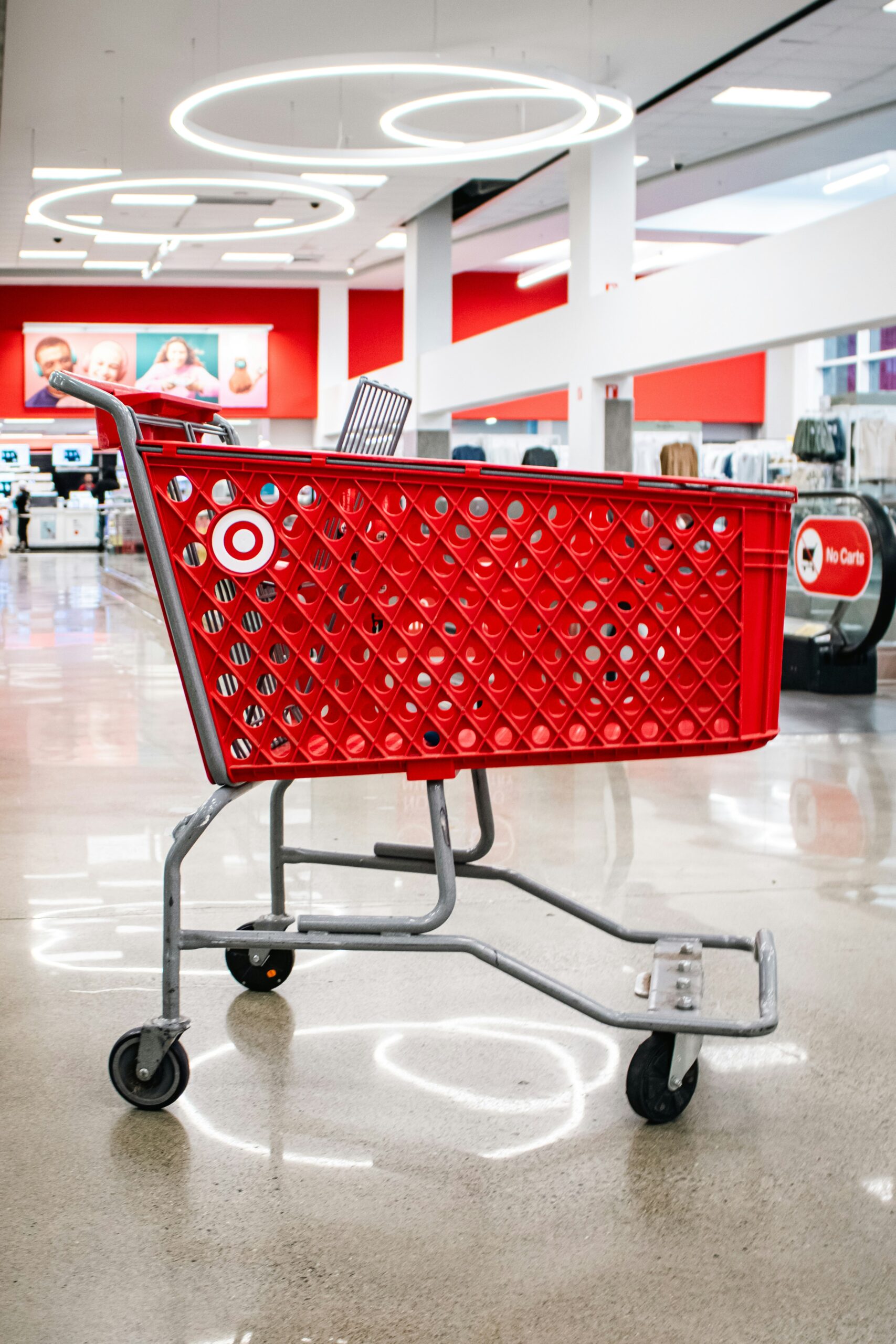
Major retailers including BJ’s, Lululemon, Under Armour and Dollar General are cutting product selections to reduce excess inventory, limit discounts and improve profitability.
Focus Keyphrase: retailers cutting product assortments
Category: Business, Retail, Economy
Tags: Retail Industry, Consumer Spending, Lululemon, BJ’s Wholesale Club, Under Armour, Dollar General, Nike, Inventory Management, Business Strategy
🛍️ Retailers Are Rethinking Their Product Strategies as Consumers Cut Spending
Major retailers are reconsidering how many products they offer as businesses face pressure to improve profitability, manage inventory and respond to increasingly cautious consumers.
From warehouse clubs and discount chains to premium sportswear brands, companies are reducing the number of individual products they sell. The strategy, known as SKU rationalization, involves eliminating selected products, variations, colors, sizes or other options to concentrate on items that generate stronger sales and better financial returns.
According to CNBC’s October 10, 2026, report, Dollar General, Under Armour, BJ’s Wholesale Club and Lululemon have all pursued product assortment reductions. Their approaches differ, but the underlying objective is similar: make their businesses more efficient without sacrificing the customer relationships that support long-term growth.
Higher gasoline and food prices are putting pressure on household budgets, encouraging shoppers to become more selective about discretionary purchases. For retailers, that environment makes it increasingly important to understand which products deserve valuable shelf space, inventory investment and marketing resources.
The challenge is straightforward but significant: retailers want to sell more efficiently, even if that means offering fewer choices.
📉 Why Retailers Are Cutting the Number of Products They Sell
Retailers traditionally expand their selections to attract more customers, reach new market segments and encourage shoppers to spend more. However, adding products can create operational costs and financial risks when demand fails to meet expectations.
Every product variation requires planning, purchasing, storage, transportation and inventory management. Products that fail to sell as expected may eventually need to be discounted or cleared from shelves.
These markdowns can reduce profit margins, particularly for fashion and athletic apparel brands that depend on selling products at full retail prices.
By removing weaker-performing products, retailers can concentrate resources on items with stronger demand and reduce the likelihood of ending up with excess inventory.
The potential benefits include:
-
Improved inventory management: Fewer slow-selling products can reduce excess stock and storage requirements.
-
Lower discounting pressure: Better alignment between supply and demand may reduce the need for aggressive promotions.
-
More productive shelf space: Stores can give greater visibility to popular products.
-
Simplified operations: Smaller assortments can make purchasing, replenishment and distribution more efficient.
-
Potentially stronger profitability: Companies may improve margins if cost savings and full-price sales outweigh any lost revenue.
However, reducing product variety does not automatically translate into higher profits. The results depend on whether retailers eliminate genuinely unnecessary choices or remove products that customers still want.
🏬 Dollar General: Simplifying Discount Retail
Dollar General has been reducing its assortment to improve store productivity and supply chain performance.
CNBC reported that the discount retailer had removed approximately 1,500 stock-keeping units, or SKUs, by March 2026. The company has indicated that it expects further assortment adjustments to become more targeted.
For a retailer operating a large network of stores, the benefits of eliminating underperforming items can extend beyond the sales floor.
A more focused product selection can help employees replenish shelves more efficiently, simplify distribution and ensure that popular merchandise is available when customers need it.
The strategy is particularly relevant to discount retailers, whose customers often prioritize affordability, convenience and essential household goods.
Nevertheless, Dollar General must preserve the breadth of everyday necessities that makes its stores attractive. Removing too many relevant products could encourage consumers to shop elsewhere.
🏋️ Under Armour: Focusing on Products That Can Sell at Full Price
Under Armour faces a different challenge. Rather than focusing primarily on shelf productivity, the sportswear company is attempting to improve the quality of its business by reducing product complexity and limiting excessive discounting.
CNBC reported that Under Armour had reduced its SKU count by approximately 25% over several years and planned an additional reduction of roughly 25%.
The company has faced profitability challenges, with operating income turning negative in fiscal 2025 and fiscal 2026.
For an athletic apparel brand, excessive promotional activity can weaken profitability and potentially affect how customers perceive the value of its products.
Under Armour's strategy emphasizes fewer products with clearer purposes and stronger execution. The goal is to concentrate on merchandise that customers are willing to purchase at regular prices rather than relying heavily on discounts to generate sales.
This approach could help the company strengthen its brand positioning if customers respond positively to the remaining assortment.
However, fewer products alone cannot resolve every business problem. Product design, quality, innovation, marketing, distribution and competition will continue to influence the company's performance.
🧘 Lululemon: Protecting a Premium Brand
Lululemon illustrates why assortment reductions can be especially important for premium apparel businesses.
The athletic clothing retailer has built its reputation around premium products, brand identity and a customer base willing to pay higher prices for selected merchandise.
Yet growth does not always translate into stronger profitability.
According to CNBC, Lululemon increased sales by more than $500 million between fiscal 2024 and fiscal 2025, while operating profit declined by approximately $300 million over the same period. The company also reduced its North American SKU count by 15% in September 2026.
These figures highlight the distinction between generating revenue and generating profitable revenue.
If a company sells more products but depends increasingly on markdowns, its financial performance may deteriorate despite higher sales.
Lululemon's assortment strategy is therefore about more than removing unpopular items. It also involves protecting product differentiation and maintaining the premium perception that supports its pricing.
The company must ensure that its products remain desirable enough to justify their prices. If consumers increasingly view its merchandise as interchangeable with lower-priced competitors, fewer product options will not necessarily restore pricing power.
For premium brands, maintaining a recognizable identity can be just as important as improving inventory efficiency.
🛒 BJ’s Wholesale Club: Less Choice, Better Product Selection
BJ’s Wholesale Club is pursuing assortment reductions to improve the productivity of its stores and make better use of available shelf space.
CNBC reported that BJ’s planned to reduce its SKU count by approximately 20%.
Unlike premium apparel brands, warehouse clubs operate in a business model that emphasizes value, bulk purchasing and a broad selection of household essentials.
Reducing unnecessary variations can help a warehouse club concentrate sales on products that customers buy most frequently. It can also create room for additional product categories.
For example, a retailer might reduce the number of nearly identical variations within one category while introducing products that address a different customer need.
BJ’s leadership has indicated that the goal is not simply to remove products, but to eliminate unnecessary choices while improving sales and margin dollars.
That distinction matters. A poorly executed assortment reduction could reduce sales, while a carefully targeted one could increase the productivity of the products that remain.
The company's experience also illustrates that retailers must monitor customer behavior closely when changing their selections. Removing products that customers consider essential can undermine the intended benefits.
👟 Nike and the Challenge of Managing a Global Brand
Nike is also adjusting its product portfolio as it works to strengthen its business.
CNBC reported that the athletic footwear and apparel company reduced revenue from classic footwear franchises by more than $2 billion in fiscal 2026 as part of its broader portfolio-rebalancing efforts.
Nike demonstrates that assortment management can involve difficult decisions about established product lines, not just eliminating slow-selling items.
A large global brand must balance its best-known products with new designs, changing consumer preferences and competition across different markets.
Reducing dependence on particular franchises may create room for new products and help the company improve the relevance of its portfolio. However, the transition can also create risks if customers lose access to products that have historically attracted them to the brand.
Nike's scale also makes its situation different from that of smaller retailers. A company with substantial international reach and extensive brand recognition may be able to sustain a broader portfolio than a business operating in a narrower market.
Ultimately, successful portfolio management requires identifying which products reinforce the brand and which ones consume resources without generating sufficient returns.
💰 How Product Cuts Could Improve Retail Profitability
The financial logic behind SKU rationalization depends on several interconnected factors.
First, retailers can reduce the amount of capital tied up in merchandise that sells slowly. Inventory requires cash, and unsold goods can become a burden when consumer demand changes or products lose relevance.
Second, companies may reduce markdowns. When merchandise sells at full price, retailers generally retain more revenue per item than when they must use substantial discounts to clear inventory.
Third, simplifying the assortment can improve operational efficiency. Fewer product variations may make ordering, stocking, forecasting and distribution easier to manage.
However, there is an important limitation: cutting products does not guarantee that customers will purchase the remaining items instead.
Some shoppers may switch to a competitor that offers the specific brand, size, color or style they prefer. Others may decide that the retailer no longer meets their needs.
The most successful strategy is therefore not necessarily the one that removes the largest number of products. It is the one that improves the relationship between customer demand, inventory investment and profitability.
🛒 What This Means for Consumers
For consumers, the immediate effect could be a more streamlined shopping experience.
Stores may offer fewer variations of familiar products, while placing greater emphasis on their best-selling merchandise. Shoppers might find popular items more consistently available, but have fewer alternatives within certain categories.
The effects will vary by retailer.
At discount chains, customers may see fewer overlapping household products. At warehouse clubs, the selection of certain brands, sizes or flavors may become more limited. At premium apparel companies, retailers may focus more heavily on core collections and products that support their brand positioning.
There could also be consequences for consumers who rely on specific products. If a preferred item disappears, shoppers may need to switch brands or purchase it elsewhere.
Whether consumers consider these changes positive will depend on what they value most: broad selection, convenience, availability, quality or price.
🌎 The Wider Economic Context: Pressure on Household Budgets
Retailers' decisions are taking place in an environment where essential expenses can limit the amount consumers have available for discretionary purchases.
When households spend more on food, transportation and other necessities, they may postpone clothing purchases, compare prices more carefully or reduce spending on nonessential goods.
Businesses must therefore adapt their inventory plans to changing demand rather than assuming that every product category will continue to grow.
For investors and industry observers, the trend highlights the importance of looking beyond headline sales figures. Revenue growth can conceal weaknesses in margins, inventory management or the effectiveness of promotional spending.
Retailers that manage these pressures successfully may be better positioned to protect cash flow and respond to changes in consumer behavior.
At the same time, cutting product selections cannot solve every underlying economic challenge. If shoppers reduce spending substantially, even a more efficient assortment may not be enough to deliver meaningful sales growth.
⚠️ The Risks of Cutting Too Deeply
Assortment reductions require careful execution because retailers can damage their businesses if they remove products that matter to customers.
Several risks deserve attention:
1. Lost customers: Shoppers may move to competitors that continue offering their preferred products.
2. Lower revenue: Removing items that generate meaningful sales can offset savings from lower inventory costs.
3. Weaker brand differentiation: A narrower selection may make a retailer less distinctive if its remaining products fail to meet specific customer needs.
4. Supplier concentration: Buying fewer products or relying more heavily on selected suppliers can increase dependence on a smaller group of vendors.
5. Short-term pressure on investors: A strategy designed to improve long-term profitability may initially result in slower sales growth or declining revenue.
The challenge is particularly complex for public companies, which must explain their strategy to investors while demonstrating measurable progress.
Retailers need to track inventory turnover, gross margins, markdown rates, product availability and customer retention to determine whether their decisions are working.
📊 What Investors Should Watch Next
The next stage of this retail strategy will be measured by financial results rather than the number of SKUs eliminated.
Investors following Dollar General, Under Armour, BJ’s Wholesale Club, Lululemon and Nike should pay attention to several indicators:
-
Gross margin trends: Are companies selling more merchandise at full price?
-
Inventory levels: Are inventories becoming more aligned with sales?
-
Comparable-store sales: Are existing stores generating healthy demand?
-
Operating profitability: Are efficiency improvements translating into stronger operating income?
-
Customer demand: Are shoppers accepting the reduced selections, or switching to competitors?
-
Management guidance: Are executives reporting sustained benefits or announcing further corrective measures?
These indicators can help distinguish genuine operational improvement from measures that merely reduce the scale of a business.
For investors, it is also important to recognize that retailers face different challenges. An assortment reduction at a discount chain may primarily improve logistics and shelf productivity, while a premium apparel brand may be attempting to restore pricing power and strengthen brand perception.
Those strategies should not be evaluated as though they were identical.
This article is for informational purposes only and does not constitute investment advice or a recommendation to buy or sell any security.
🔎 Conclusion: Can Retailers Sell More by Offering Less?
The decision by major retailers to cut product assortments reflects a broader shift toward operational discipline in a challenging consumer environment.
Dollar General and BJ’s Wholesale Club are seeking to improve inventory management and store productivity. Under Armour and Lululemon are placing greater emphasis on product quality, full-price sales and brand positioning. Nike is adjusting its portfolio as it works to strengthen its competitive position.
The underlying principle is that more products do not automatically produce better financial results.
A carefully selected assortment can improve efficiency, reduce unwanted inventory and help businesses concentrate on what customers actually purchase. But the strategy can backfire if retailers eliminate products that shoppers value or fail to address deeper problems with demand, pricing or product quality.
The coming quarters will reveal whether these companies can translate narrower product selections into stronger profitability and sustainable growth.
For the wider retail industry, the message is clear: success increasingly depends not simply on how much merchandise a company offers, but on whether the right products reach the right customers at the right price.
Frequently Asked Questions (FAQ)
Why are retailers cutting their product assortments?
Retailers are reducing product selections to improve inventory management, limit excessive discounting, simplify operations and focus on products that generate stronger sales and profitability.
What does SKU rationalization mean?
SKU rationalization is the process of reviewing and reducing a company's stock-keeping units, which identify individual products or product variations. Retailers use it to remove unnecessary or underperforming items and improve inventory efficiency.
Which retailers are reducing their product selections in 2026?
According to CNBC's October 10, 2026, report, Dollar General, Under Armour, BJ’s Wholesale Club and Lululemon are reducing their assortments. Nike is also adjusting its broader product portfolio.
Will consumers have fewer choices in stores?
Potentially, yes. Retailers may remove overlapping or slower-selling products, leaving customers with fewer options in some categories. The impact will depend on the retailer and the products removed.
Can cutting products increase profits?
It can, if the changes reduce inventory costs and markdowns while preserving customer demand. However, excessive cuts can reduce revenue, weaken customer loyalty and send shoppers to competitors.
Why is Lululemon reducing its product assortment?
Lululemon is seeking to improve its product strategy and business performance after operating profit declined despite sales growth. Reducing its North American SKU count is one part of a broader effort to strengthen the business.
What should investors watch when retailers cut SKUs?
Investors should monitor gross margins, inventory turnover, comparable-store sales, operating income and customer demand to determine whether assortment reductions are creating sustainable improvements.
Sources and Further Reading
-
CNBC — From BJ’s to Lululemon, retailers are trimming assortments to boost business
-
Dollar General — Official corporate website
-
Under Armour — Investor Relations
-
BJ’s Wholesale Club — Investor Relations
-
Lululemon — Investor Relations
-
Nike — Investor Relations
Editorial note: Company-specific figures and developments are based primarily on the cited CNBC report. Consult company filings and earnings releases for the latest official financial information.




0 Comments