
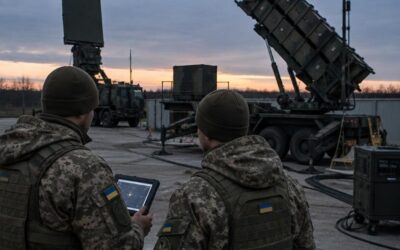
The U.S. Army’s desert technology test reveals the challenges of AI warfare, including drone failures, overheating equipment, battlefield connectivity and military modernization.
Focus Keyphrase: U.S. Army AI warfare
Secondary Keywords: military artificial intelligence, autonomous weapons, U.S. Army modernization, military drones, Project Convergence, future of warfare, battlefield technology
🇺🇸 U.S. Army AI Warfare: Why Military Modernization Remains a Major Challenge
Artificial intelligence, autonomous drones and advanced battlefield communications are becoming increasingly important to the future of military operations. However, a major U.S. Army exercise in California's Mojave Desert has highlighted the considerable distance between developing advanced military technology and deploying reliable systems under real-world combat conditions.
According to a report published by The Wall Street Journal on October 10, 2026, the Army's Project Convergence exercise exposed practical challenges affecting its ambition to become a more technologically advanced fighting force. Extreme heat, drone malfunctions, battery limitations and unreliable communications demonstrated that even promising defense technologies can struggle in demanding operational environments.
The exercise offers an important perspective on the future of AI warfare. While the United States is investing in artificial intelligence, autonomous systems and military technology startups, successfully integrating these innovations into everyday military operations remains a complex task.
The broader implications extend beyond the Pentagon. The evolution of military technology is becoming an increasingly important factor in global security, defense spending, strategic competition with China and the changing balance of power between established military forces and technologically agile adversaries.
1. Project Convergence Tests the Future of Military AI
Project Convergence is designed to help the U.S. Army evaluate emerging technologies and understand how they might improve battlefield operations.
The exercise at Fort Irwin, California, brought approximately 9,700 infantry soldiers together for a 10-day simulated battle. Participants tested technologies intended to improve intelligence gathering, battlefield awareness, operational planning and coordination between soldiers and autonomous systems.
The technologies included aerial and ground drones, artificial intelligence applications, advanced communications systems and augmented-reality headsets designed to provide soldiers with additional battlefield information.
The exercise also simulated a conflict against an opposing force representing China's People's Liberation Army, reflecting the importance of preparing for a potential confrontation with a sophisticated military competitor.
However, the results highlighted a fundamental challenge: technology that performs well in controlled demonstrations does not necessarily deliver the same results under difficult field conditions.
Some drones experienced technical difficulties, while communications equipment struggled in the desert environment. Batteries required charging, and certain systems could not operate as efficiently as their manufacturers or military planners might have hoped.
These problems do not necessarily mean the technologies are ineffective. Instead, they demonstrate why military experimentation must examine reliability, usability and integration alongside technological sophistication.
For the Army, the objective is not simply to purchase advanced equipment. It is to ensure that soldiers can use it effectively when environmental conditions, electronic interference and operational pressure make military missions more difficult.
2. Extreme Heat Exposes the Weaknesses of Military Drones
One of the clearest lessons from the California exercise concerned the reliability of unmanned aerial vehicles.
Military drones can perform a growing range of missions, including reconnaissance, surveillance, target identification and support for battlefield operations. They can also reduce the need to expose personnel to certain risks.
Nevertheless, drones depend on batteries, electronic components, communications equipment and software that must function under demanding conditions.
During the desert exercise, extreme temperatures contributed to overheating and other technical problems. Some drones encountered difficulties maintaining operations, while other systems faced limitations involving battery performance and communications.
The desert environment provided a particularly demanding test because military equipment must remain functional when exposed to heat, dust, rugged terrain and limited opportunities for maintenance.
These concerns are not unique to the U.S. Army. Any military seeking to expand its use of autonomous systems must consider the practical challenges of operating electronic equipment across different climates and combat environments.
A drone that works effectively during a demonstration may require additional engineering, software adjustments or improved thermal management before it can become a dependable operational asset.
Military planners must also consider how quickly personnel can deploy drones, replace batteries, repair equipment and restore communications after a malfunction.
In a fast-moving conflict, these seemingly small operational details can determine whether a technology provides a meaningful advantage.
3. The Ukraine War Highlights the Importance of Rapid Innovation
The war in Ukraine has demonstrated how quickly drones, electronic warfare and battlefield software can influence military operations.
Both sides have adapted technologies to meet changing battlefield requirements, while drone operators and engineers have continued to develop new approaches to reconnaissance, targeting and tactical coordination.
This environment creates pressure on established militaries to shorten the time between identifying a technological need and delivering an effective solution.
The U.S. Army possesses substantial financial resources, industrial capacity and advanced research capabilities. However, translating those advantages into operational effectiveness requires more than purchasing equipment.
Military organizations must also develop appropriate training programs, establish reliable supply chains, update operational procedures and ensure that soldiers understand how to use new systems under pressure.
The difference between peacetime experimentation and wartime adaptation is particularly important. A military conducting a controlled exercise can identify weaknesses and schedule future improvements. A military fighting for survival may have to address the same weaknesses immediately.
Ukraine's experience therefore offers lessons for the United States and other NATO members seeking to modernize their armed forces.
The central question is not simply which country possesses the most advanced drone or AI model. It is which military can adapt its technology, personnel and operational methods most effectively as battlefield conditions change.
4. Artificial Intelligence Is Changing Military Intelligence and Decision-Making
Artificial intelligence has the potential to transform how military organizations process information and coordinate operations.
Modern battlefields generate enormous volumes of data from drones, satellites, surveillance systems, sensors and communications networks. Analyzing this information manually can consume valuable time.
AI-enabled software can help military personnel organize intelligence, identify patterns, evaluate potential threats and accelerate planning.
These capabilities may allow commanders to understand changing conditions more quickly and coordinate forces across larger areas.
However, AI systems depend on the quality and availability of their underlying data. If communications networks fail or different military platforms cannot exchange information, the benefits of sophisticated software may be significantly reduced.
This makes battlefield connectivity a central component of military modernization.
A highly capable AI application cannot provide its full value if soldiers cannot transmit relevant information, access updated intelligence or communicate with other units.
Military organizations must therefore treat AI, communications infrastructure, cybersecurity and data management as interconnected priorities rather than separate procurement projects.
Human oversight also remains essential. AI-generated recommendations can contain errors, and military decisions can involve incomplete information, rapidly changing circumstances and significant consequences.
The challenge for defense planners is to use AI to improve human judgment and operational efficiency without creating excessive dependence on systems that may become unavailable during combat.
5. The Pentagon Wants Faster Military Innovation
The U.S. Department of Defense has been pushing for a more agile approach to military modernization, including greater use of commercial technology and products developed by defense startups.
Commercial companies can sometimes develop software, drones and electronic systems more quickly than traditional defense contractors operating through lengthy procurement processes.
This approach could help the military benefit from advances in artificial intelligence, robotics, computing and communications without waiting for every technology to emerge from a traditional weapons-development program.
However, rapid procurement introduces its own challenges.
Commercial products may not initially meet the reliability, cybersecurity, durability or interoperability requirements of military operations. Equipment must also be compatible with existing systems and capable of functioning when access to communications networks is restricted.
The desert exercise illustrates why procurement speed and operational readiness are not the same thing.
Purchasing an innovative product can be relatively straightforward compared with ensuring that thousands of soldiers can deploy it reliably, maintain it in the field and integrate it into established military procedures.
Defense startups also face the challenge of scaling production. A successful prototype does not automatically translate into the ability to manufacture large quantities of equipment, maintain inventories and provide support during an extended conflict.
The Pentagon's modernization efforts will therefore depend on its ability to combine faster experimentation with rigorous operational testing.
6. Military Communications Could Determine the Success of AI Warfare
Reliable battlefield communications are among the most important requirements for an AI-enabled military.
Modern military operations increasingly depend on sharing information between soldiers, drones, command centers, vehicles and surveillance platforms.
When these systems communicate effectively, commanders can potentially coordinate operations more quickly and maintain a clearer understanding of battlefield developments.
When communications fail, however, even sophisticated technologies can become isolated from the information they need.
The Army has been working to improve data sharing and battlefield command systems. Its Next-Generation Command and Control initiative is intended to help military personnel coordinate planning, logistics and operations more efficiently.
Improved connectivity can also support dispersed military formations, allowing units to operate across larger areas without relying entirely on traditional centralized command structures.
Nevertheless, future adversaries are likely to target communications networks through electronic warfare, cyber operations and other disruptive techniques.
The U.S. military must therefore prepare for situations in which satellite connectivity, radio networks or data links become unreliable or unavailable.
This means soldiers need the ability to continue operating when advanced systems fail. Traditional communication methods, independent decision-making and effective training remain important even as the military adopts more automation.
The strongest military technology strategy will combine advanced digital capabilities with resilient backup systems.
7. AI Weapons and Autonomous Systems Raise Strategic Questions
The growing use of autonomous technology is also changing the economic and strategic calculations surrounding warfare.
Traditional military platforms, including advanced aircraft and large weapons systems, can require substantial investment. Smaller drones and commercially inspired technologies may offer alternative ways to perform particular missions at lower costs.
Lower-cost systems could enable militaries to deploy larger numbers of platforms, replace damaged equipment more quickly and experiment with new tactics.
However, the total cost of a military system extends beyond its purchase price. Operators require training, equipment needs maintenance, communications infrastructure must be protected and supplies must remain available.
Autonomous systems also raise important questions about accountability and human control.
Military leaders must determine which tasks can safely be automated, how AI recommendations should be evaluated and what safeguards are necessary when systems are used in situations involving potential lethal force.
These questions become more complicated when communications are disrupted or when AI systems operate with incomplete information.
The future of military AI will therefore depend on a combination of engineering, operational doctrine, human judgment and clear rules governing the use of force.
8. What the Desert Test Means for U.S.-China Strategic Competition
The modernization of the U.S. Army is closely connected to Washington's broader concerns about strategic competition with China.
Preparing for a technologically advanced adversary requires more than maintaining large numbers of conventional weapons. Military forces must also be able to process information quickly, protect their networks, counter drones and coordinate operations in environments where communications may be contested.
The Project Convergence exercise reflects the Army's effort to evaluate whether emerging technologies can contribute to those objectives.
However, technological investment alone does not guarantee battlefield superiority.
A military's effectiveness also depends on training, logistics, maintenance, leadership, industrial capacity and the ability to adapt when initial plans fail.
The United States must determine how to integrate advanced technologies without creating new operational vulnerabilities or allowing complex procurement processes to slow its response to emerging threats.
The exercise's shortcomings should be viewed in this context. Identifying technical problems during training can help the Army make improvements before the systems are required in an actual conflict.
At the same time, persistent difficulties could create risks if new capabilities are adopted faster than military personnel can learn to use them effectively.
For policymakers, the priority is to ensure that investments in AI and autonomous systems translate into measurable improvements in operational readiness.
9. The Business Opportunity Behind Military AI
Military modernization is also creating opportunities for technology companies, software developers, robotics specialists and defense startups.
Companies developing drones, AI applications, communications infrastructure and battlefield data platforms may benefit as governments seek to improve military capabilities.
The growing role of commercial technology could also change the traditional defense industry, bringing software companies and smaller manufacturers into projects previously dominated by established defense contractors.
However, defense markets carry distinctive risks.
Companies must navigate government procurement requirements, security standards, testing procedures and lengthy contracting cycles. Technologies that attract significant attention during demonstrations may still require substantial investment before they become reliable products.
For investors and business readers, the distinction between technological promise and commercially sustainable demand is especially important.
Military AI may represent a long-term growth opportunity, but individual companies can face execution challenges, competition, changing government priorities and uncertain contract timelines.
The Army's experience at Fort Irwin reinforces the importance of evaluating real-world performance rather than relying exclusively on ambitious product demonstrations.
Conclusion: The Future of AI Warfare Depends on More Than Advanced Technology
The U.S. Army's desert technology test highlights a central challenge facing modern militaries: developing advanced systems is only the first step toward building an effective AI-enabled fighting force.
Drones, artificial intelligence, autonomous platforms and improved battlefield communications could reshape military operations. Yet these capabilities must function reliably under extreme environmental conditions, operate within secure networks and remain useful when unexpected problems arise.
The experience at Fort Irwin also highlights the importance of training, organizational flexibility and rapid adaptation. The military that successfully combines technological innovation with disciplined execution may gain a significant advantage over competitors that struggle to translate new equipment into practical capabilities.
For the United States, the challenge is to modernize quickly while ensuring that new technologies are dependable, interoperable and appropriate for the missions they are expected to support.
The future of warfare will not be determined by artificial intelligence alone. It will depend on how effectively human decision-makers, military organizations and technological systems work together under pressure.
Frequently Asked Questions (FAQ)
What is the U.S. Army's Project Convergence?
Project Convergence is a military experimentation initiative designed to evaluate emerging technologies, including AI-enabled tools, drones, sensors and communications systems, and assess how they can improve battlefield operations.
Why did the U.S. Army's desert technology test encounter problems?
The exercise exposed challenges involving extreme heat, overheating equipment, drone malfunctions, battery limitations and communications reliability. These issues illustrated the difficulty of deploying advanced technologies in demanding field conditions.
How is artificial intelligence changing modern warfare?
AI can help military personnel analyze intelligence, identify potential threats, process battlefield information and accelerate operational planning. Its effectiveness depends on reliable data, secure communications and appropriate human oversight.
What lessons can the U.S. military learn from Ukraine?
Ukraine's battlefield experience demonstrates the importance of rapidly adapting drones, electronic warfare techniques, software and operational methods. It also highlights the need to respond quickly to changing threats and technological developments.
Why are military communications important for AI warfare?
AI-enabled systems rely on access to information and the ability to share data. Reliable communications help connect drones, sensors, soldiers and command centers, while resilient backup systems are necessary when networks are disrupted.
What does military AI mean for defense technology companies?
Growing military investment in AI, robotics, drones and communications could create business opportunities. However, companies must demonstrate reliable field performance, meet defense requirements and overcome manufacturing and procurement challenges.
Sources and Further Reading
- The Wall Street Journal — The U.S. Army's Desert Tech Test Shows Long Road to AI Warfare
- CBS News — AI Warfare Is Here, and CBS News Got a Look at the U.S. Military Training to Use It on the Battlefield
- Breaking Defense — California Wargames Show Army's Electronic Weakness — and a Human Fix
Editorial note: This article is an independent news analysis based on reporting about the Army's technology exercise. It does not imply that every AI-enabled or autonomous military system failed, nor that the exercise alone establishes the overall effectiveness of U.S. military technology.



0 Comments